
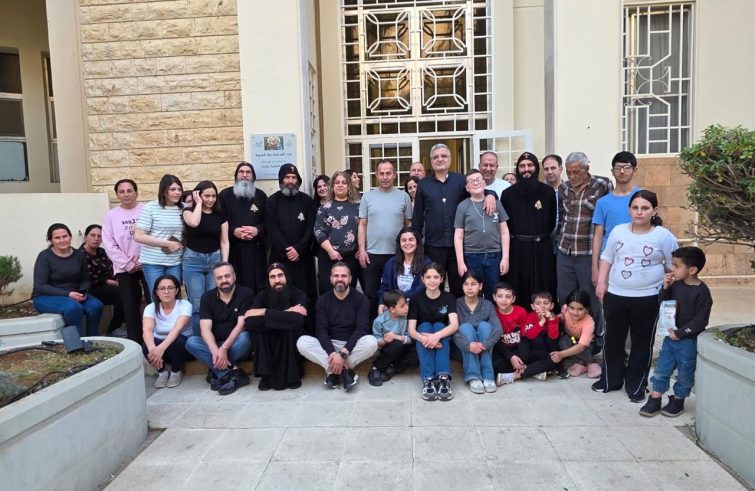
Some displaced people took advantage of the ceasefire to return to their villages and see the situation with their own eyes. What they found, however, was rubble and destruction, entire communities levelled to the ground. For them, returning “home” is becoming increasingly difficult. They took photographs and, once back, showed them to those hosting them. “Yesterday, I met them with these images in their eyes and on their phones”, says Marianne Najm, a member of the Focolare community in Lebanon, speaking from Beirut. “I saw deep sadness, along with fear for an uncertain future and a widespread sense of insecurity. But I did not see total despair or constant weeping. In a way, this is a sign of hope, or perhaps of trusting abandonment to Providence, to faith, which helps people not to collapse completely”. Together with families, young people and children from the Movement, Marianne supports those involved in running a reception centre north of the capital, where — thanks to the Greek Catholic Church — around 125 people, about thirty families, all from the city of Tyre, are being hosted at the St Anne Seminary in Rabweh. Volunteers from various associations go there almost every day to assist the priest in charge and support families with their daily needs. The young people organise play sessions with children, creating a space for encounter, dialogue and relationships. “There is enormous exhaustion”, Marianne confides. “They feel it, and so do we.
Bambini sfollati a Beirut dal Sud del Libano (Foto Focolari)
“This is not a situation that has ended, nor does it seem likely to end soon. What we are experiencing is very intense; it drains all our energy. We are all extremely tired”.
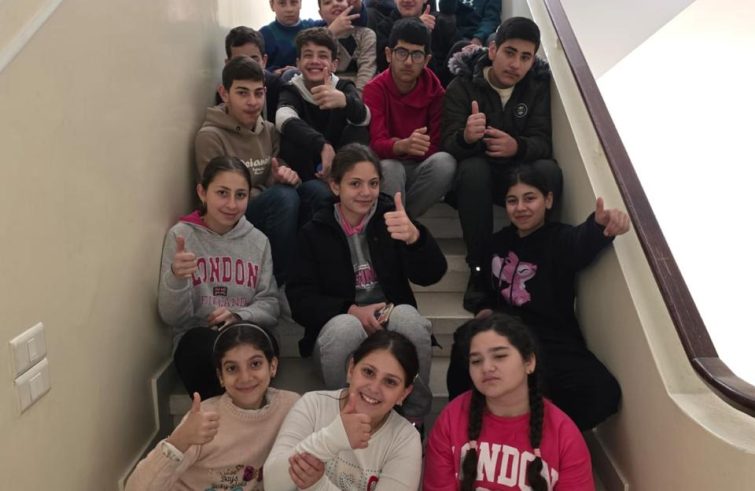
What is life like in Beirut?
In the area where I live, the situation is almost normal. People go to school, they work. Of course, it is not possible to do everything one would like, and movement is limited, but life seems to go on in a fairly ordinary way. In reality, however, many difficulties remain.
How do you cope with this uncertainty, with a ceasefire that is constantly hanging in the balance?
We live in a sort of limbo. We do not know what will happen; we are waiting.
Those who have faith pray; others simply try to carry on. But it is not entirely accurate to speak of a cessation of hostilities: drones can be heard over Beirut, almost a déjà vu of what happened in past years. We expect that this violence will not end completely; we hope at least that it will decrease in intensity and scope. But even this is uncertain, especially if the ceasefire were to collapse.
What about the displacement crisis?
Most of the displaced are still in the places where they sought refuge after leaving their homes. At the beginning of the war, many families were forced to flee suddenly, some even at three in the morning, without being able to take almost anything with them: only a few clothes, their phone and documents. They took refuge in safer regions. In the areas they come from, especially in the south of the country, near the border, villages have often been razed or completely destroyed.
They do not even know whether they will ever be able to return, and for now they remain where they are.
And the children? Are they able to go to school?
Schools in the border areas have largely switched to online learning, as have universities. Most children and young people are still studying remotely. However, the connection is often weak, especially when many people are connected in the same place, and it becomes difficult to follow lessons properly.
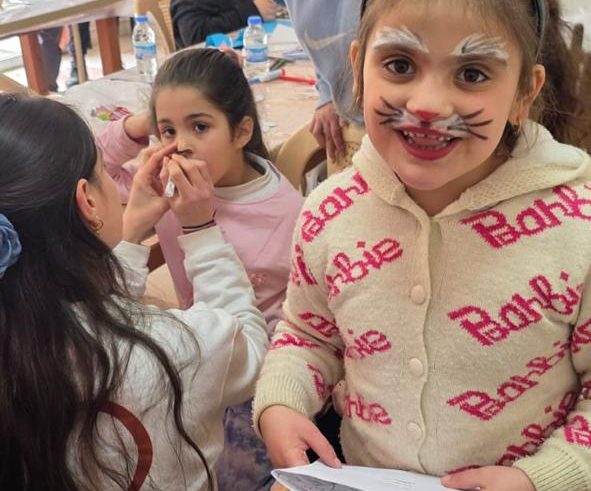
Beirut, attività per bambini nel centro sfollati (Foto Focolari)
The Pope continues to follow your situation: how important is this closeness?
It is very important. One senses that there is at least one voice raised against injustice and violence, a voice that understands the suffering of our people. The presence of the Nuncio is also significant: he has visited the most affected villages, including the most isolated Christian ones, where some people have remained despite everything, so as not to abandon their land.
This presence is not only a light but also a breath of fresh air: a sign of hope in the darkness of war and in the face of so many injustices.
Is there still room to dream?
Nel Seminario greco -cattolico Ste-Anne a Nord di Beirut (Foto Focolari)
What strikes us — and in a certain sense unsettles us — is how widespread the idea is that bombardments and wars can be instruments for achieving justice or peace. Even among Christians, there are those who think this, and it is difficult to understand how it can be considered justifiable. For us, instead, the true dream is to reach justice. It is a path that concerns everyone: justice is born when people, in every part of the world, begin to believe that the future is built through small daily gestures, by creating bridges between people, by listening to their sufferings and joys, by sharing difficulties and challenges together… everything matters in building a future without violence.