

A shared and firm commitment to peace based on justice. On Monday, 16 September, the Pope received Catholicos Karekin II of the Armenian Apostolic Church for a private audience at Villa Barberini, the papal residence in Castel Gandolfo. Peace was the central theme of the meeting. “They had a private conversation that lasted almost half an hour,” Archbishop Khajag Barsamian, Representative of the Armenian Apostolic Church of Etchmiadzin to the Holy See, told SIR. “Thereafter, the Pontiff greeted all the members of the Catholicos’ delegation. Karekin II later told me that he was very impressed by the Pope, by his personality, humility, and of course, by his strong spirituality.”

Was this their first meeting?
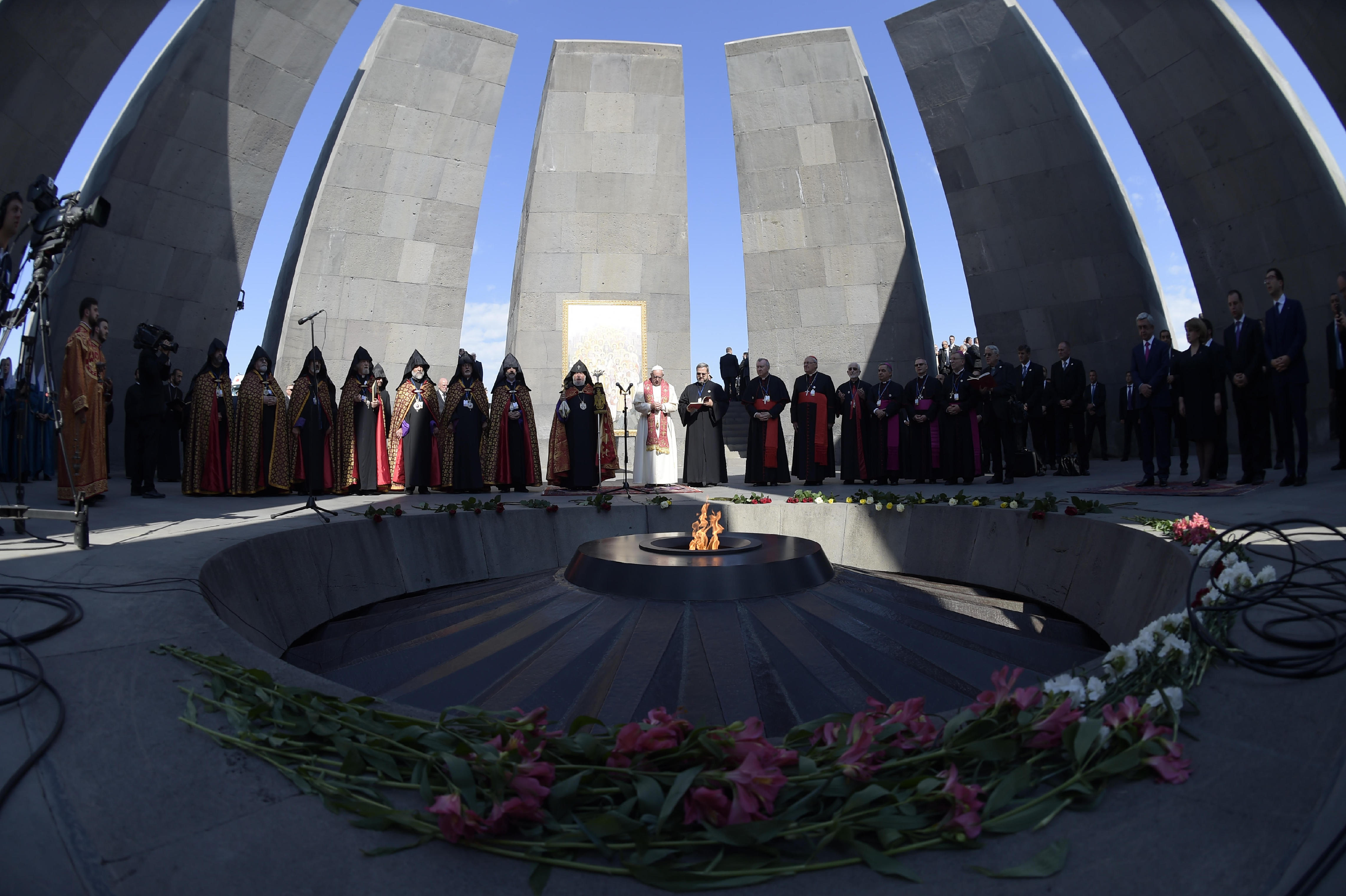
Catholicos Karekin II maintained a close relationship with Pope Francis, marked by the late Pope’s visit to Armenia in 2016, following in the footsteps of Pope John Paul II, who visited the country in 2001. Whenever the Catholicos came to Italy, he would always visit Pope Francis. When the new Pope was elected, Karekin unfortunately could not attend the first inaugural Mass because he had another commitment and could not change his schedule. However, he expressed a strong desire to meet Pope Leo in person and convey his respects. It was a great pleasure to see the meeting finally take place in such a cordial atmosphere at Castel Gandolfo, where the Pope also appeared very relaxed.
What was the outcome of the meeting?
It was an extremely positive and productive meeting, marked by deep and meaningful conversation.
The Catholicos congratulated the Pope, and they discussed how to further strengthen the relationship between the Armenian and Catholic Churches. The Pope expressed interest in the challenges facing Armenia and the global community. They discussed global issues and the ways in which spiritual leaders and Christian Churches can contribute to peacebuilding. They both highlighted the importance of peace, specifically peace based on justice. In short, it was a very positive meeting and a truly meaningful conversation.
Could you tell us more about the impression your Church has of this Pope and his pontificate, even though it is still in its early stages?
The personalities of Pope Francis and Pope Leo differ significantly.
The impression I have of Pope Leo is that he is a deeply spiritual, humble, yet at the same time extremely concrete and pragmatic figure.
His wish to restore some balance is clear, and it appears that he is succeeding. Pope Francis prompted renewal and sought greater relevance for the Catholic Church in the contemporary world. This momentum made a notable impact and it was a necessary change. In my opinion, Pope Leo intends to follow that path, but with a more balanced approach. While pursuing some of Pope Francis’ policies, he appears primarily concerned with fostering unity by finding common ground and offering reassurance. That is my impression of his pontificate so far.
Could you please tell us about the current situation in Armenia, particularly with regard to the Armenian refugees who fled Nagorno-Karabakh? What is the situation lile after the peace deal? Was this issue discussed with Pope Leo?
I was not present during the private conversation, but I am sure that this issue was discussed. Moreover, the question of the refugees — those expelled from Nagorno-Karabakh (or Artsakh, as we call it) — was raised during the nearly hour-long meeting with Cardinal Parolin the previous evening. These refugees are now in Armenia and require spiritual, psychological and material support. Their situation was discussed, as was that of the prisoners detained in Baku. The Catholicos expressed his full support for the peace process during the meeting with Cardinal Parolin, but he also emphasised that peace must be based on justice. As the Catholicos said, the peace process agreed in Washington is nevertheless still in jeopardy due to Azerbaijan’s continued demands. Nevertheless, the Catholicos is completely committed to peace, both with Armenia’s neighbours and worldwide.
Did you ask Cardinal Parolin for the Holy See’s assistance in securing the release of the Baku prisoners?
The Catholicos broached the subject during their conversation and voiced his concerns. He pointed out that resolving these challenges – the issue of prisoners and Azerbaijan’s demands, among others – could contribute significantly to the peace process. He presented the situation in such a way as to highlight the need for concrete solutions; for example, releasing prisoners would be an important step towards reconciliation between Armenia and Azerbaijan.
He undoubtedly requested the support of the Holy See and also expressed his sincere gratitude for the efforts it has already made, albeit discreetly, to promote peace between the two countries.
 Did the Catholicos extend an invitation to Pope Leo to visit Armenia? Why?
The previous two Popes received a very warm welcome when they visited Armenia. The people of Armenia still fondly remember the visits of Pope John Paul II and Pope Francis — both were received with great warmth. Strengthening relations is the first step. Armenia is a Christian country, and during their visits, both Pontiffs emphasised that Armenia was the first Christian nation. It’s also important to promote unity. Our hope is that the Pope will soon be able to visit Armenia again. The Catholicos told me that he had invited the Pope. The Pope replied that it is very difficult at the moment, but he hopes that there will be an opportunity in the coming years.