
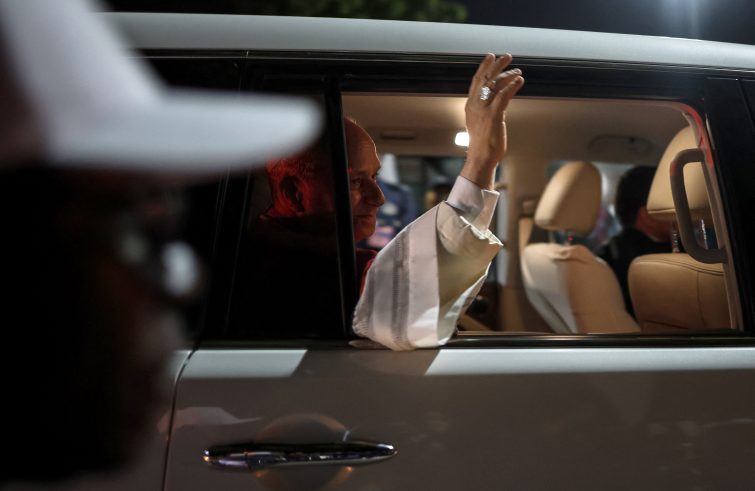
“He is a gentle man, capable of listening and welcoming others, yet firm on the principles of faith”. Fr Alejandro Moral Antón, who led the Order of Saint Augustine from 2013 to 2025, previously served for twelve years as Vicar General to Leo XIV, working alongside him in the governance of the Order. Having completed his mandate, he is now serving in Buenos Aires, where he is experiencing parish life for the first time: “I am serene and happy”. One year after the election, he reflects on the Pontiff’s profile.
The recent journey to Africa showed a smiling Pope, at ease, almost among family. What image has stayed with you?
That of a shepherd who knows deeply a continent too often forgotten. As his vicar, I travelled throughout Africa alongside him on several occasions during his twelve years of service as Prior General of the Order: he knows its wounds, its hopes and its vitality.
He feels with urgency the need to reach peoples awaiting a message of hope.
Africans live in a different dimension: they lack many things that we take for granted, yet they welcome what is essential with a freshness that challenges us. From the beginning, he had said that his first journey would be to Africa. For him, it was decisive: a pilgrimage conceived for the people, to be physically among them.
The theme of peace runs through the pontificate like a common thread. From where does this insistence arise?
For him, peace is the great challenge to which the Gospel calls us. It is no coincidence that his first greeting from the Loggia was “Peace be with you all”. For believers, peace is the fruit of fraternity, of communion in the Risen Christ. The Pope repeats this forcefully: peace must be built, because war destroys everything and everyone, and nothing is gained from it. This is also at the heart of the Augustinian charism: making fraternity the measure of every human relationship.
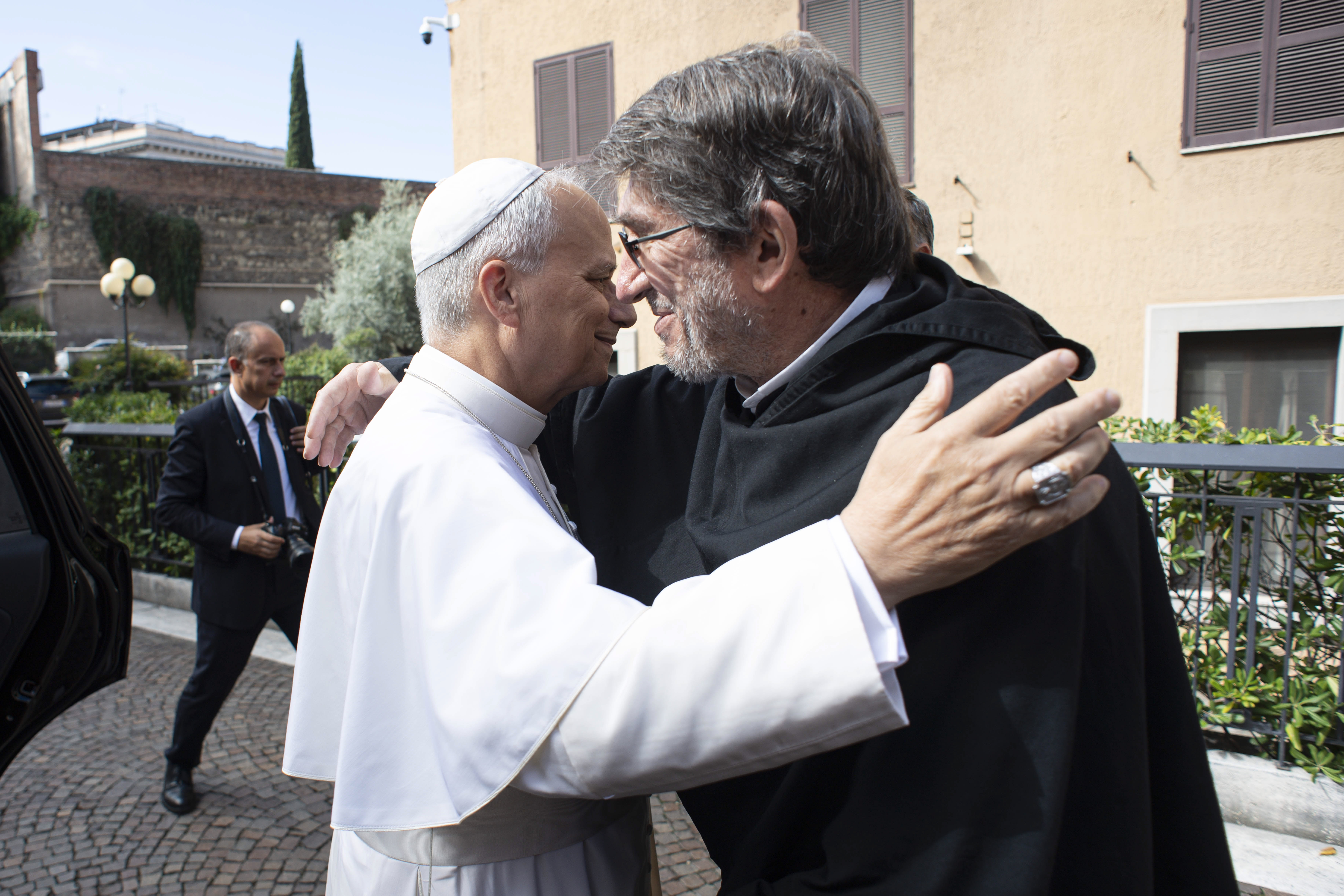
(Foto Vatican Media/SIR)
On his flight back from Cameroon, he clarified that he did not wish to engage in polemics with Trump, though he did not shy away from proclaiming the Gospel. Is this a trait you recognise in him?
Absolutely. His style is crystal clear. He did not intend to target anyone in particular: he wished to affirm a universal principle, namely that building peace is the duty of all.
There is a risk of mistaking his calmness for weakness, but he is a man firmly rooted in what he does.
He is firm, but intervenes only after having fully understood reality. As a fellow Augustinian, I cannot conceal my regret: certain decisions in Washington and Tel Aviv are bringing destruction. Terrorists are evil, there is no doubt about that, but the response is at times disproportionate, and civilians always pay the price.
We are witnessing a pontificate immersed in a wounded world: Ukraine, Gaza, Iran and entire regions of the African continent.
Today, there are around fifty open conflicts. An escalation in Iran would produce global economic repercussions. Yet there are other equally devastated regions where nothing is being done, because there are no economic interests involved. There is a lack of willingness to engage in dialogue. The illusion is cultivated that by eliminating one’s adversary the problem will be solved. But nothing ends that way: others will come, often worse. We saw this in Iraq after Saddam Hussein, and we see it today in Syria, where Christians are persecuted amid general silence.
What work is Leo XIV carrying out within the Church?
A great work ad intra. He proceeds gradually, with the wisdom characteristic of him. He knows reality well and is placing the right people in the right positions so that the Vatican machinery may function properly. Some interventions have been incisive, yet always carried out with discretion.
He is a strong personality who never humiliates his interlocutor: he acts with firmness and serenity at the same time.
His aptitude for building bridges clearly emerges: within the Church, but also beyond the boundaries of Catholicism.
He is working intensely on this. The decision to begin the African journey in Algeria linked Augustinian places with a strong message directed towards the Muslim world: interreligious dialogue is possible, despite tensions in the Middle East. Likewise, regarding the German Synodal Path, Pope Francis had wanted him on the front line as Prefect of the Dicastery for Bishops precisely because of his style: addressing tensions without creating ruptures. What he is also doing with the Anglicans is extraordinary.
Do you find him unchanged from the man you have known for many years, or has something in him changed?
He has not changed at all. Speaking with him, he told me: “You know me, you know what I am like”. And, as happens between true friends, I do not ask him questions about matters I know he could not answer.
He is exactly as he appears.
Apart from the enormous weight he carries on his shoulders, he is the same as ever.
If you had to identify one aspect of this year that deserves particular emphasis, which would you choose?
The dialogue he is fostering with the cardinals, as also confirmed by the letter he addressed to them. It is a dialogue of which the Church has profound need. We experienced this also among us Augustinians: it is vital. That dialogue, together with interconfessional and interreligious dialogue, represents the key both to the journey towards peace and to ecclesial communion.