
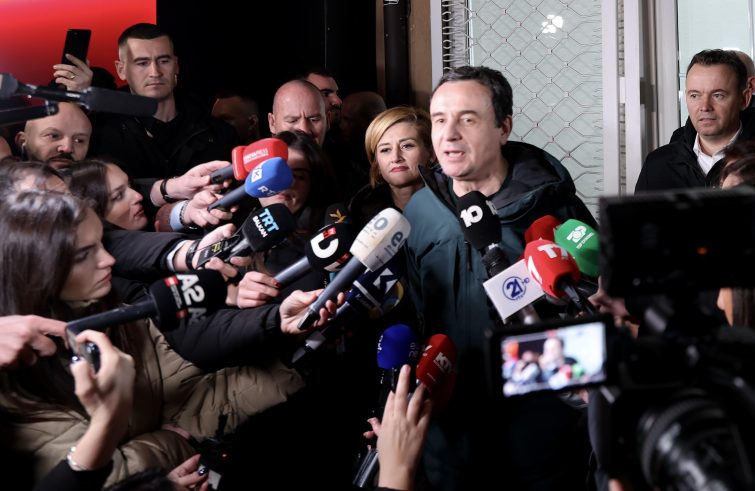
“Even if Albin Kurti’s Vetevendosje party (leftist-nationalist, self-determination movement) won the elections, it will be very difficult if not impossible for him to form a government”, Balkans analyst Nikolai Krastev told SIR news agency immediately after the parliamentary elections held in Kosovo. With 90% of the ballots counted and 41% of the votes in favour, the party led by Kurti (pictured) fails to win a majority in parliament. The right-wing Democratic Party of Kosovo (PDK), led by former president Hashim Thaci, came in second with 22.37% of the votes, while the Democratic League of Kosovo (LDK) was the third most voted party with 17.57% of the votes. “Throughout the election campaign, Mr Kurti (the outgoing prime minister – editor’s note) declared that he would rule alone and harshly attacked everyone”, Mr Krastev explains. “But now that a compromise becomes necessary to form a government, it becomes difficult” for him to find allies. In his view, “it is unlikely that the opposition will successfully join forces and form a new government, as the latter would be very unstable and with no political prospects”. The analyst recalls that not only is “Kosovo the youngest country in Europe, having gained independence from Serbia in 2008, but also the poorest”.