
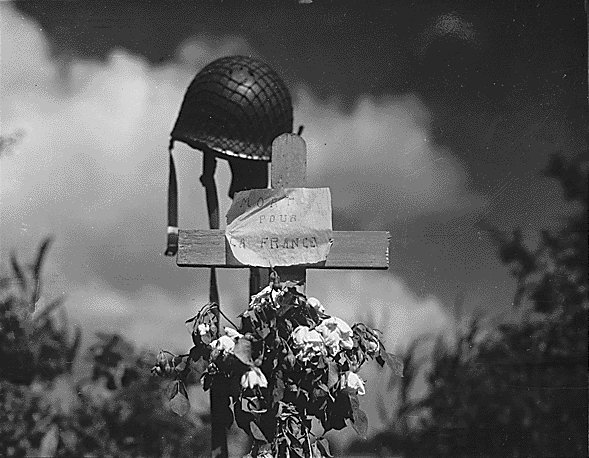
The first German soldiers that screened the horizon in the early morning hours of 6 June 1944 from bunkers where they were quartered along the Normandy coast, saw the huge Allied fleet arriving from the sea, which marked the beginning of D-Day. Eighty years have passed since an overwhelming bewilderment mixed with feelings of terror and surprise, a direct consequence of the German army generals’ unwavering conviction that an invasion could never have only come from the sea. To some extent they were right. In point of fact, the landings on the Normandy beaches of Utah, Omaha, Gold, Juno, and Sword were preceded on the night of 5 June by the launching of thousands of British paratroopers. American and Canadian paratroopers were dropped behind the German enemy lines, many of them alone, missing or drowning in the marshes of the Cotentin Peninsula or at sea due to navigation errors. Nevertheless, those paratroopers, whose emblem was John Steel, who remained hanging from the steeple of the church of Sainte-Mère-Église, played a pivotal role in enabling the Normandy landings and subsequent invasion to occur. Along with the individual soldiers, men, and boys, they had been called to fight thousands of kilometres from their homes for the freedom of their country from Nazi-Fascist rule. The story of the D-Day landings in Normandy is above all the story of an historic event. It is set against the backdrop of the tragic violence of war, with its horrors, dehumanisation, radical hatred and widespread death, and the rediscovered freedom and peace that followed on from those horrors, giving Europe eighty years of serenity, which today is once again being betrayed and abused by the ignorance of those who believe that weapons alone are the answer to problems. The D-Day Landings, whose 80th anniversary is being marked these very days by important ceremonies in the places where they occurred, is an event that cannot be recounted without also highlighting the spectacular and powerful dimension that was ultimately decisive in the victory of the Allied Forces.
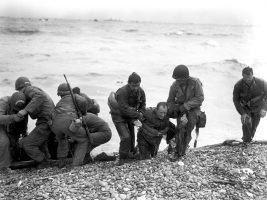
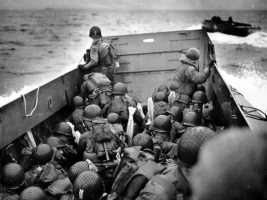
Let us not forget that what appeared before the German sentries as they screened the horizon, what the inhabitants of the towns on the Normandy coast, such as St. Marie du Mont, Virville sur Mer and Port-en-Bessin, who had not escaped, could see from the ruins of their homes, was first and foremost a spectacular display of human and military power and might. Indeed, an impressive 6,483 ships, including 4,000 landing craft, 9 battleships, 23 cruisers, 104 destroyers, 11,000 fighter, bomber and transport aircraft took part in the landings. The Allied Air Force dropped 4,000 tonnes of bombs in a matter of hours, while naval guns bombarded the coast incessantly. But all this was not enough to ensure an immediate, low-casualties victory. It was a massacre on both sides: from the day of the landing to the end of the Normandy campaign, which liberated Paris on 25 August 1944, some 200,000 Allied troops and over 350,000 Germans were confirmed dead. The war did not end with the D-Day landings; it continued for another year, including moments of heroic service for many of the soldiers who were among the protagonists of D-Day, such as the legendary Easy Company of the Parachute Infantry Regiment, part of the U.S. 101st Airborne Division, which was instrumental in the liberation of Carentan and during the siege of Bastogne, in the German counter-offensive in the Ardennes in the winter of 1944. Easy Company also captured the Eagle’s Nest, Hitler’s infamous mountain retreat in Berchtesgaden, Bavaria.
Steven Spielberg and Tom Hanks’ 2001 10-part TV drama series ‘Band of Brothers’, which told the story of this small group of US troops, was dedicated to ‘Easy’. The miniseries, based on historian Stephen E. Ambrose’s historical narrative of the ‘Easy’ survivors, portrays the tragic and devastating spectacle of war with raw clarity, without embellishing it with heroism or ideology: war is about death, blood, slaughter, explosions, freezing cold, hunger, pleas for mercy, strategy and friendship, violence and the yearning for peace. American soldiers came from many different backgrounds: Italians, Germans, Danes, French, Poles, Catholics, Protestants, Jews, Native Americans, boys from the farm states or members of middle-class families from the East Coast. Their meticulous and exhausting military training spares them and places them as deadly machines in front of the German soldiers, whom they face without mercy, the same mercy they would not have received. Band of Brothers, with its retelling of the veterans’ story, echoes two films that dealt with the Normandy landings in different ways: The Longest Day, a 1962 film based on Cornelius Ryan’s 1959 non-fiction book of the same name, directed by a quartet of filmmakers, focuses almost entirely on the Allies’ perspective of the landing and the days that followed.
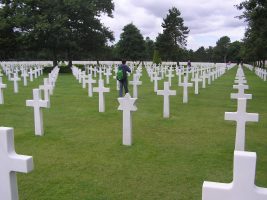
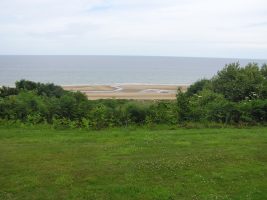
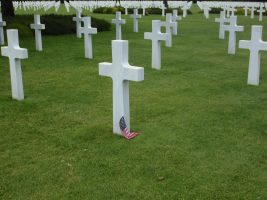
What makes the film so special is that many of the actors (including Henry Fonda, Rod Steiger and Richard Todd) were soldiers who actually took part in the landing. Their guidance made the film realistic, if definitely one-sided. It was Steven Spielberg’s 1998 film ‘Saving Private Ryan’, however, that took death as a tragic spectacle of human wickedness to unforgettable, sometimes unbearable heights: the first 20 minutes of the film describe the massacre of the first US soldiers to land on Omaha Beach. The eight-kilometre stretch of the Normandy coast became a graveyard of young men who died before reaching the beach, drowned in the landing craft that had been downed by the deadly German artillery, unscathed by the naval cannon fire. These images should make us reflect: as Pope Francis wrote to Monsignor Jacques Habert, Bishop of Bayeux and Lisieux, on the occasion of this anniversary: “The landing generally evokes the catastrophe of this terrible global conflict, in which so many men, women and children suffered, so many families were torn apart and so much destruction was caused. It would be futile and hypocritical to remember it without condemning and rejecting it outright, without repeating the cry of St Paul VI from the podium of the UN on 4 October 1965: ‘Never again war!