
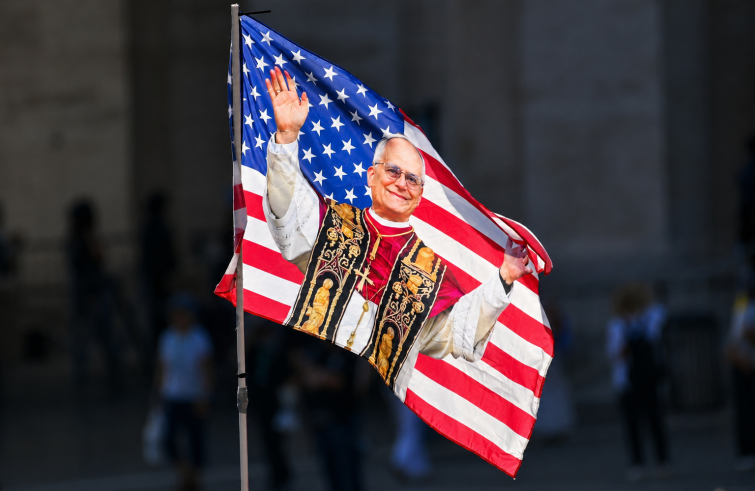
“Pope Leo is one of us: a man attentive to the poor, aware of global challenges, and firmly anchored in the faith”. One year after the election of the first American Pope, Msgr Paul S. Coakley, Archbishop of Oklahoma City and president of the United States Conference of Catholic Bishops (USCCB), reflects on Pope Leo XIV’s pontificate.
Your Excellency, which word, gesture, or moment of Pope Leo XIV has spoken most directly to the Church in the United States in this first year of his pontificate?
“La pace sia con tutti voi!” – the first words spoken by Pope Leo XIV to the world when he stepped on to the balcony at St. Peter’s Basilica last May as the Successor of Saint Peter was to wish us peace.
Pope Leo has emerged as a strong and consistent voice for peace, just like his predecessors over the past century.
Amid ongoing international conflicts, he has called for unity, dialogue, and respect and his message is for all of us, not only for those in distant nations, but also to our own leaders and to those of our allies and of our enemies.
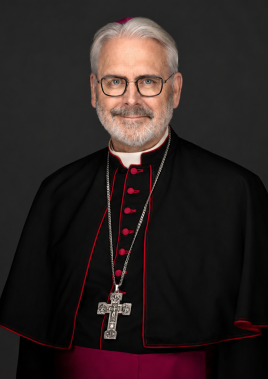
(Foto Usccb)
Leo XIV has made peace one of the defining themes of his pontificate. In a country marked by deep tensions, how can his magisterium help American Catholics move beyond partisan logic?
When the Catholic Church speaks out on international affairs or matters of public policy, we are not being “political”. Regardless of how an issue falls across political lines, the Catholic Church is guided by the Gospel, which calls us to uphold human dignity and work for the common good. Throughout the first year of his pontificate, Pope Leo, consistent with his predecessors, has made consistent appeals for peace in various parts of the world that are experiencing conflict. He also stated recently that “God desires peace for every nation: a peace that is not merely an absence of conflict, but one that is an expression of justice and dignity”.
And what role does the American episcopate play in this context?
As the president of the bishops’ conference in the United States, I represent my brother bishops and try to express our collective voice to uphold human dignity and the common good.
It is important to remember that as bishops, we are pastors, not politicians. We agree with elected officials on some matters of public policy, and on others, there is hopefully an openness to conversation as to why the Church is speaking up. But the Church’s teachings do not change with elections or with whomever holds an elected office, or what political party has the majority.
I encourage all American Catholics to pray, always, for our elected leaders, and as responsible citizens to treat each other with dignity and respect and to form their consciences and let their faith guide them to support the common good as they engage in public life.
The name Leo recalls the Church’s social doctrine. Which “new things” of our time most urgently call for greater attention from the magisterium today?
Pope Leo XIV has spoken frequently about artificial intelligence. Like his 19th century predecessor Pope Leo XIII, who guided the Church through the Industrial Revolution, this Pope Leo recognizes the challenge and potential of AI as the new cultural and technological development. He has built on what Pope Francis emphasized in Antiqua et Nova, of both the potential and the limits of AI. He encourages thoughtful engagement with technology, but he is also clear that AI can assist, but it cannot replace the human act of faith. This is an important theme that I suspect he will continue to talk about as this rapidly evolving technology continues to reshape society and the global economy.
Migration, poverty, healthcare, and the protection of life shape public debate in America. How does the teaching of Pope Leo XIV help hold these concerns together?
The Church is made up of many voices, and we bishops are united in our support of our Holy Father and in our mission to preach the Gospel. Pope Leo’s apostolic exhortation, Dilexi Te (I have loved you) shows continuity with his immediate predecessor Pope Francis. The Church’s social doctrine remains at the heart of pastoral life with Pope Leo who has called the Church to “always be mindful of the poor”. And under our Holy Father’s pastoral guidance over the last year, the Church has continued to respond to political, economic and technological shifts while remaining a clear voice for the vulnerable.
On migration, the United States episcopate has taken very clear positions…
The Church’s foundational teaching calls us to uphold the sacredness of human life and the God-given dignity of the human person. That is why the bishops have spoken up on issues such as public policies that impact the unborn, but we have also spoken up when we see other vulnerable populations impacted, such as the U.S. government’s increased immigration enforcement actions that have prompted fear and anxiety in our communities.
On the issue of immigration, my brother bishops and I have opposed the indiscriminate mass deportation of people and raised concerns about existing conditions in detention centers, including lack of access to pastoral care for detainees, and how the expansion of family detention has harmful impacts on children.
Our Holy Father has also made multiple statements on this topic in the context of the American political environment, and he has affirmed our special pastoral message where we sought to assure those experiencing fear and anxiety in our communities that they are not alone in their suffering.
Looking at this first year as a whole, where do you see the greatest opportunity that Leo XIV’s pontificate offers to the Church in the United States?
Excitement and anticipation always accompany a new pope, but what a surprise last May to find that we had an American pope! Around the world, it was being reported that this Easter saw an increase in those being received into the Catholic Church. In my own archdiocese of Oklahoma City, we welcomed 1,016 people into the Church – a 63 percent increase from last year. There are many reasons for this, of course, and it may be too early to attribute these numbers to a change in the pontificate. But there’s an undeniable hunger for truth and authenticity in the world, and people are finding it in the Catholic Church. Pope Leo is an especially powerful catalyst for the Church in the United States, and we have a great opportunity for spiritual renewal with the added energy and enthusiasm of knowing that we have an American-born pontiff.
In the face of tensions within the country, how is the pastoral voice of the Holy Father being translated into practice?
The Holy Father’s steadfast leadership and his pastoral voice are vital in this world; his calls for unity, dialogue, and respect in the face of various conflicts is paramount.
Church teaching exhorts us nations to recognize the fundamental dignity of all persons, and here in the United States, we see this playing out with increased immigration enforcement actions.
As we see fear and anxiety among the people in our communities, we bishops must continue to advocate for a meaningful reform of our nation’s immigration laws and procedures and remind our elected leaders that human dignity and national security are not in conflict – both are possible if people of good will work together.
Do you sense, within the American Church, a desire one day to welcome the Pope? And what significance might such a visit have?
Pope Leo has proven to be a reassuring light for the Church, an inspiration to many young people and a faithful steward of the magisterial and liturgical patrimony entrusted to him. Beyond being the first pope to bring a White Sox jersey into the papal household, during his first year, Pope Leo has proven himself to be a compelling representative of our nation. He is one of us. We can be proud that he is a man attentive to the poor, aware of global challenges, and firmly anchored in the faith and liturgical life of the Church. He continues to guide the barque of Peter through the storms of our time, leading the Church toward safe harbor. I certainly hope that we have the opportunity to welcome him for a visit home to the United States in the not-too-distant future – what an exciting moment that will be when it happens!