
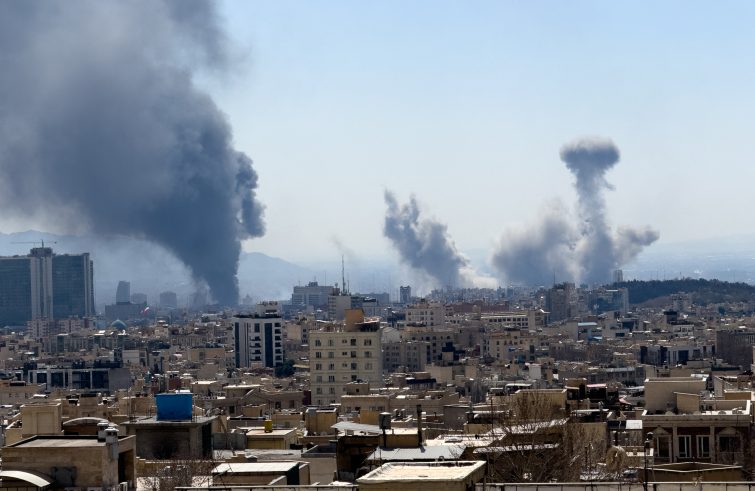
In the climate of heightened tension that followed the joint attack by the United States and Israel against Iran and Tehran’s response — which launched missiles towards Gulf countries including the United Arab Emirates and Oman, causing fear and damage —, Bishop Paolo Martinelli, Apostolic Vicar of Southern Arabia, offers SIR news agency a reflection on what the Christian communities in the region are going through.
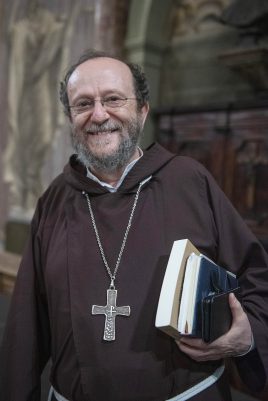
(Foto Siciliani – Gennari/SIR)
“We share the concerns of everyone. Our faithful”, he says, “share the same concerns as all those living in the Gulf today, in this time of conflict. The attack by the US and Israel, and, on the other side, the response by Iran, have generated a climate of deep apprehension. We are worried, as everyone is”. In the face of what is happening, the Bishop forcefully recalls the words spoken by Pope Leo XIV at the end of the Angelus yesterday morning: “I am following with deep concern what is happening in the Middle East and in Iran. Stability and peace – these were the words of Pope Leo XIV – are not achieved through mutual threats, nor through the use of weapons, which sow destruction, suffering, and death, but only through reasonable, sincere, and responsible dialogue. Faced with the possibility of a tragedy of immense proportions, – this was the appeal of the Pontiff – I make a heartfelt appeal to all the parties involved to assume the moral responsibility of halting the spiral of violence before it becomes an unbridgeable chasm. May diplomacy regain its proper role, and may the well-being of peoples, who yearn for peaceful coexistence founded on justice, be upheld. And let us continue to pray for peace”.
For the well-being of peoples. “These are important words that we deeply make our own. The Holy Father has issued a firm invitation to dialogue between the parties, in order to achieve a situation of stability. Mutual threats never lead to lasting solutions”. For Bishop Martinelli, it is indispensable that “diplomacy resume its work, with small or great steps, but without renouncing dialogue”.
“We must sit around a table and discuss in order to find a stable solution, always keeping before our eyes the good of peoples, the good of those who must face daily life, work, livelihood, the education of their children, their future. This is what we must not forget”.

(Foto: ANSA/SIR)
The Yemeni front. Bishop Martinelli does not forget another open front of war within his Vicariate, Yemen, devastated by a conflict since 2015, that receives too little attention and remains an open wound also because of a very grave humanitarian crisis. “Poverty is widespread”, he recalls, “suffering affects above all the elderly and children. The country is divided, and there are no resources to relaunch education and reconstruction. What is happening in these hours rekindles concern for this population already so sorely tried”. In this case too, the Vicar insists, a far-sighted perspective is required:
“We must not forget what is happening in Yemen. Above all, we must desire the good of peoples and peaceful coexistence”.
An invitation to calm and prayer. Bishop Martinelli has written a letter to the faithful of his Vicariate to accompany them in this delicate moment: “The first feeling that may arise is disorientation, loneliness. For this reason, I wished to extend an invitation to calm and serenity”, explains the Vicar, who recalls that the countries in which the Catholic communities of the Gulf live “have shown that they are able to respond and protect their population”, but above all, he invites them to live this time in faith. “We are believers; we trust in Providence”. The invitation is to pray together, in families and in parishes, “especially the Rosary, asking for the gift of peace and wisdom for those who bear political and military responsibility. A moral assumption of responsibility is necessary in order to seek the good of peoples and peaceful coexistence”. And he adds: “Loneliness is a temptation to be resisted. Let us remain united in prayer; let us ask for the intercession of the saints, in particular Saint Francis, a man of peace and fraternity. Let us not allow ourselves to be dominated by immediate emotional reaction, but let us remain rooted in hope”.

(Foto SIR)
Interreligious dialogue, a point of no return. In this time marked by enormous tensions, the Apostolic Vicar recalls the value of the Document on Human Fraternity, signed on 4 February 2019 in Abu Dhabi by Pope Francis and the Grand Imam of al-Azhar. “It is a decisive step, a point of no return.
Religions must avoid every form of nationalistic instrumentalisation.
Authentic religious experience is a relationship with God and the cry of humanity towards Him”. Religions, he emphasises, “are called to show themselves capable of dialogue and of walking together in the search for peace, in promoting a more just and fraternal society. In these days, Christians and Muslims are simultaneously living significant times of the liturgical year: Lent for Christians and Ramadan for Muslims. On several occasions, we have exchanged good wishes. It is a beautiful sign, which can become a concrete opportunity to build relationships of fraternity and cooperation”.
Sobriety and prayer for peace. As for concrete initiatives, Bishop Martinelli calls for discretion: “This is not the time for striking gestures. It is important to live this time with sobriety, making use of the ordinary channels of ecclesial life”. For this reason, he reveals, “a Mass for peace will be celebrated daily in every parish of the Vicariate. It is a simple but meaningful gesture. The ordinary life of the Church thus becomes a place of intercession and hope. The Church in the Gulf is composed largely of migrants from many countries, languages, traditions and different rites. We are one Church, with the same faith and the same Baptism. Our communities are like an intercultural laboratory: united in diversity, a joyful polyphony of faith”. In countries with an Islamic majority, “where space is limited, sharing”, Bishop Martinelli underlines, “becomes an opportunity for mutual knowledge and openness. This experience prevents us from closing in on our own groups. Lack becomes an opportunity for communion”. And he concludes: “It is a gift that we can offer to the universal Church: to show that it is possible to live unity in diversity, and that precisely in this a fundamental feature of God’s glory is manifested”.