
“The region is undergoing a process of transition that did not begin today. But the rewriting of power relations must not be mistaken for genuine transformation”. Paolo Maggiolini, Professor of History and Institutions of Asia at the Catholic University of the Sacred Heart, interprets the outbreak of conflict in Iran following the killing of Supreme Leader Ali Khamenei as an acceleration of dynamics already under way in the Middle East.

(Foto SIR)
How should this moment be read within the broader framework of the Middle Eastern crisis?
The region has been experiencing a phase of marked volatility that predates the present event. There is a tendency to focus on the episode itself, understandably serious, but since 2021 – and more evidently from 2023 – we have witnessed a sequence of parallel escalations that have progressively normalised tension.
The decapitation of the Iranian leadership is a demonstration of force aimed at redefining the balance of power. It is a showdown.
In this context, deterrence seems no longer sufficient to explain what is happening.
Does Khamenei’s death open a succession crisis within the Iranian regime?
The issue of succession does not catch the regime unprepared, as it rests on a consolidated institutional base. It is true that the history of succession is limited, and this constitutes a significant test. However, such a scenario was in all likelihood considered, especially in light of recent tensions. This is not an improvised system. It is a delicate transition, but not an unexpected one.
Is there a risk of the conflict widening? Yesterday, the Pope launched an appeal at the Angelus.
It is always difficult to exclude risks when a spiral of violence is set in motion. Unforeseen consequences are part of such dynamics. At present, however, the moves on the ground still seem to be part of a rational calculation.
By distributing its capacity for intervention across multiple fronts, Iran is issuing a political challenge: to test the resilience of its adversaries over time.
On the other side, it is in no one’s interest to enter fully into the ranks of the belligerents. The so-called “active neutrality” that has emerged in various public statements reflects this caution.
How the Supreme Leader is elected
The Supreme Leader is the highest authority of the Islamic Republic. He is elected by the Assembly of Experts, composed of 88 Shiite clerics chosen by popular vote every eight years. In the event of a vacancy, the Assembly proceeds to designate the new leader. In 1989, upon the death of Ruhollah Khomeini, the Assembly elected Ali Khamenei after a constitutional revision that modified the religious requirements demanded. The Supreme Leader exercises decisive powers over the armed forces, foreign policy and key institutional appointments.
The US foreign policy appears to have changed pace. Is this structural or contingent?
The change of pace is evident in the choice of more direct intervention compared with previous phases, when diplomatic leverage was preferred. Today, the approach appears more tactical.
The decisive question is whether there is a political vision for what comes next. Whether the aim is to set imposed negotiating conditions or to define a new regional order.
Transactional logic is not new in the Middle East, but in recent years, it has progressively replaced forums capable of addressing the underlying political issues.
How is the Iranian population experiencing this moment?
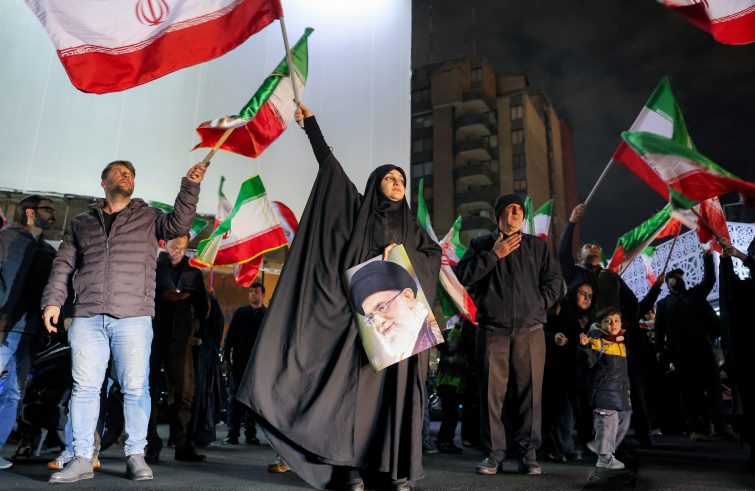
The available information offers contrasting images. A widespread sense of uncertainty and apprehension is plausible. The Iranian society has long been fragmented, marked by generational pressure calling for change. However, spontaneous gestures must not be confused with automatic support for a military operation. It is risky to encourage simplistic interpretations or calls for uprising. Militarising the discourse concerning communities and minorities in such a composite country may produce destabilising effects.
What are the medium-term prospects for the region?
Before this development, there was talk of controlled escalation: not peace, but a mutual recognition of margins of action. Many of those converging interests have not disappeared. Nevertheless, the current phase requires a redefinition of balances. The risk is prolonged instability; the possibility is the opening of a cycle that will require time, leadership and a political investment of a generational nature. Not an immediate transformation, but a process that will have to be built.