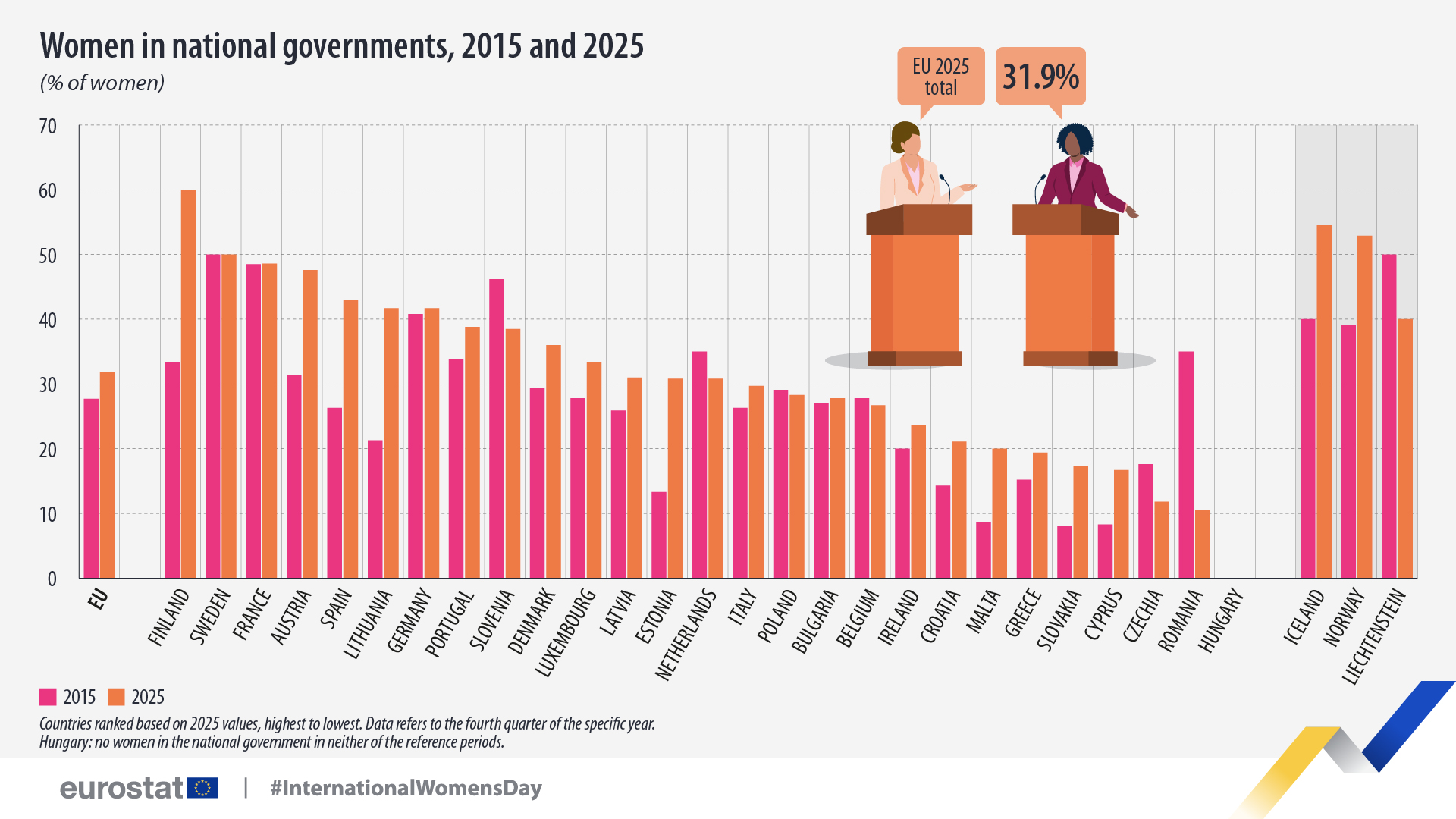
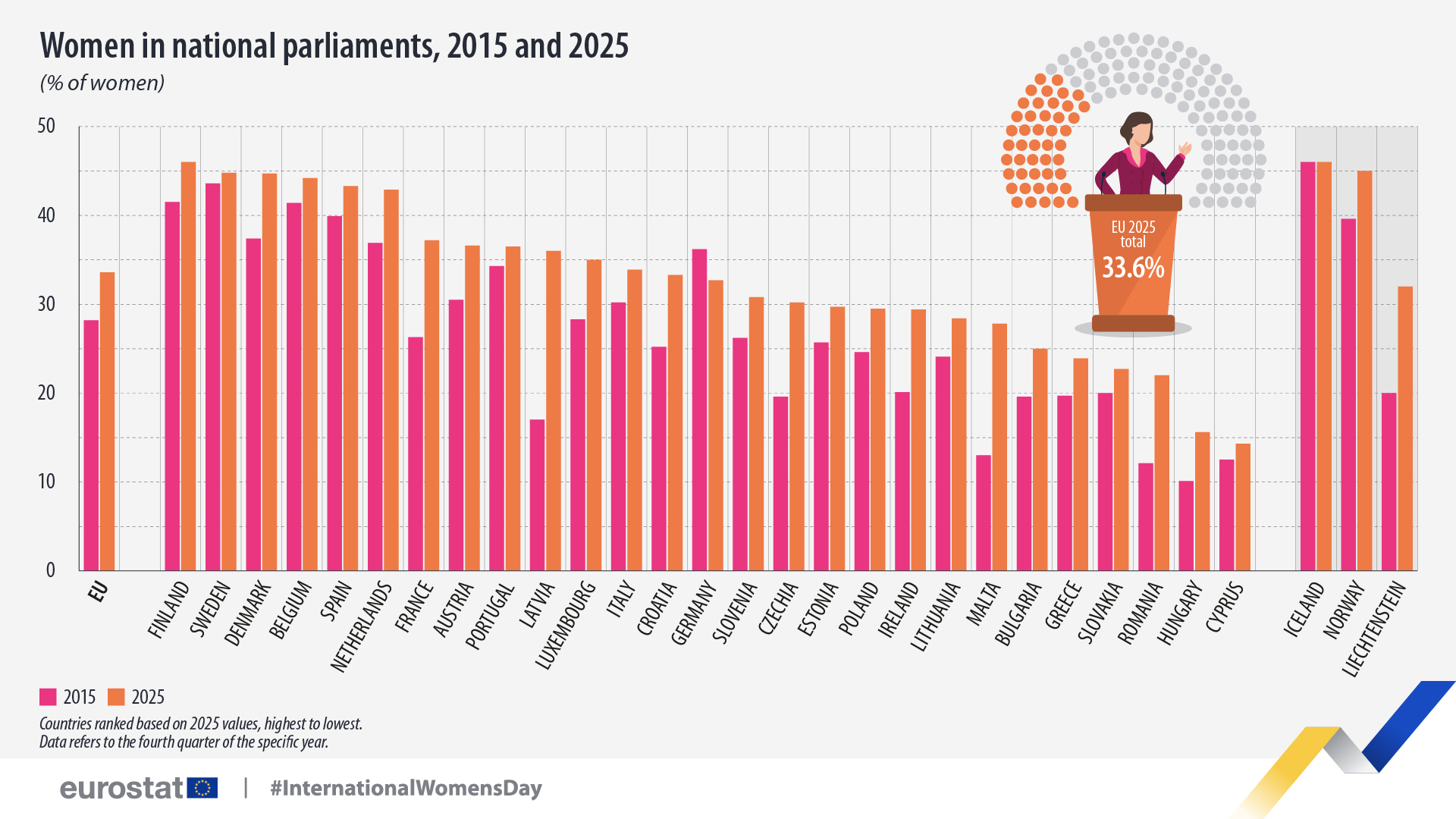
The number of women sitting in national Parliaments is – slowly – growing. From 2015 to 2025, it only rose by 5.45%, though, and women have managed to take – according to Eurostat figures about the year that has just ended, issued in the run-up to International Women’s Day – 33.6% of seats in national Parliaments. They are still under 50% even in the three countries at the top of the list of women’s representation: Finland (46.0%), Sweden (44.8%) and Denmark (44.7%). Bottom of the list are Cyprus (14.3%), Hungary (15.6%) and Romania (22.0%). Over the last decade, there has been some rise everywhere, even if at a different rate: 4 countries saw a rise above 10 percent points: Latvia, Malta, France and the Czech Republic. Only Germany saw such trend reversed and the number dropping by 3.5%. More women in national Governments too: 31.9% across Europe in 2025 (+4.2% compared to 2015). The highest-ranking country is Finland (60%), followed by Sweden (50%) and France (48%). No women in government positions only in Hungary, followed by Romania with a mere 10.5% and by the Czech Republic (11.8%). Italy has made some progress but the female quota is still below 30%.