
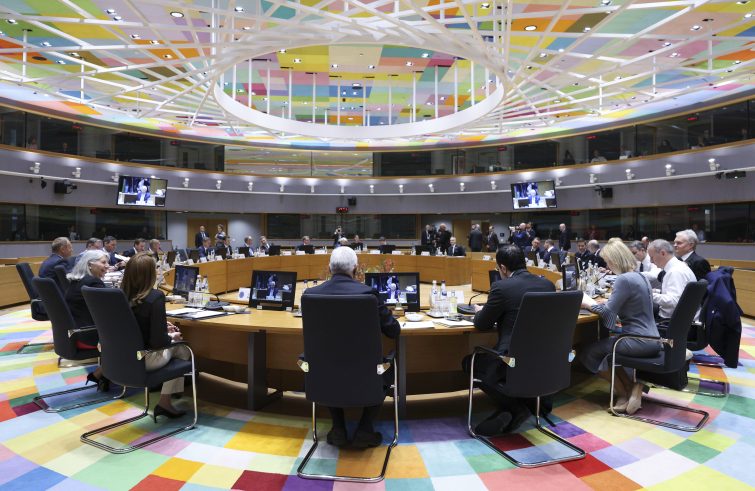
(Brussels) Ukraine, ETS, Hormuz, migration: four issues addressed by the European Council yesterday. Four areas in which the 27 heads of state and government remained divided. The €90 billion loan to Ukraine (to keep the state running and fund vital interventions and services for citizens as well as military defence) has been vetoed by the usual leader, Hungarian Prime Minister Viktor Orbán, alongside his Slovak counterpart Robert Fico. The exchange of views with President Zelenskyy failed to win over the recalcitrant prime ministers. The revision of the ETS (Emissions Trading System), the instrument designed to reduce greenhouse gas emissions, met with resistance in some countries, led by Italy. On the Middle East: states divided over whether to intervene or not; no distancing from the US and Israel’s non-UN intervention (despite the presence at the Brussels summit of UN Secretary-General Antonio Guterres); condemnation of Iran’s reaction (instead, a coalition of seven states is emerging to keep the Strait of Hormuz open, led by the UK and supported by Italy, France, Germany, the Netherlands, Canada and Japan). On potential migration flows of people fleeing ongoing conflicts in the Middle East, a firm stance was taken by Italy and Denmark — backed by the Commission — to close the borders. The objections of those who pointed to the reception of millions of Ukrainians fleeing the Russian war fell on deaf ears; there is no room for those fleeing Iran, Iraq, Lebanon, Palestine, Syria or the Gulf states. The European Council, however, made progress on the single market, competitiveness and energy.