
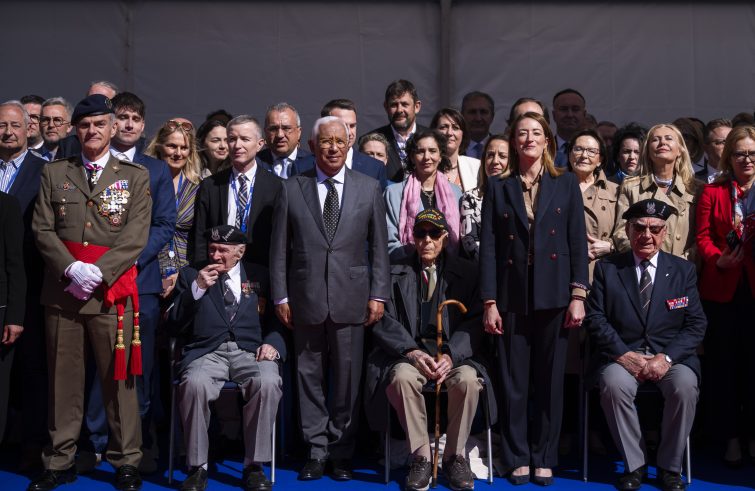
(Strasbourg) In her address marking the 80th anniversary of the end of the Second World War, Roberta Metsola, at times visibly moved, said: “Eighty years ago, in a red-brick schoolhouse in Reims, just a few hours west of where we are now, Nazi Germany signed its unconditional surrender, bringing the war in Europe to an end. By the next morning, the guns had fallen silent. In London, Paris and Prague people poured into the streets. They embraced. They sang. They wept – with joy, with relief, but also with grief. It was a day many feared they would never live to see. After nearly six long years, the war in Europe was finally over”. “But for millions – Metsola added – peace came too late. Tens of millions of lives had been lost. Among them, six million Jews. Entire communities were erased. Entire generations wiped out. Entire cities reduced to ash. Many who survived faced famine, displacement and disease. For a generation, trauma left its mark in silence. Millions of children across Europe would grow without a father. Their mothers without a husband. The war was over, but the wounds were deep. And for millions across Europe, 1945 brought not liberation, but a new kind of oppression. As Stalin’s grip tightened, an iron curtain descended upon Europe, dividing countries, families, and lives. For the people of Warsaw and Riga, Bratislava and East Berlin, the end of one struggle marked the beginning of another. And it would take decades before they could truly be free”. She concluded: “In the aftermath of the war, Europe laid in ruins. But its spirit was unbroken. And across the continent, people began the quiet, dignified work of rebuilding. Not only with bricks, but with hope”.
-
- (Photo European Parliament)
-
- (Photo European Parliament)