
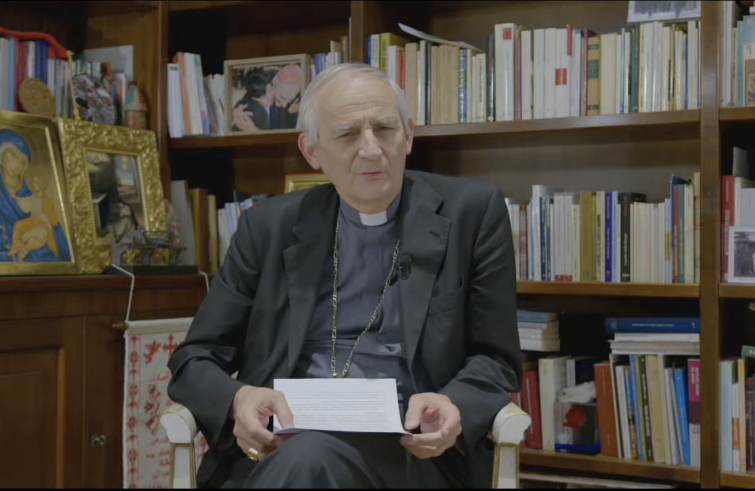
(from our correspondent in Camaldoli) “There is also a common cultural and religious inspiration that, by gaining full historical awareness of the present emergency, can distinctly foster the spirit of a more cohesive and stronger community”. In his message to the Camaldoli conference, Card. Zuppi went on to deepen his reflection. “In this perspective, Christianity today (or different forms of Christianity, since ecumenism, besides being a fact, is a perspective) has a role that, we could say, is to be the critical conscience of Europe. To be critical memory and critical hope. Yesterday and today. Through its historically defined Christian conscience, Europe can fully look at itself in the mirror. It can rediscover and defend those values of civilisation that find their origin in Christianity. The Christian message has historically had individual interpreters at individual times, but its universal character ensures it does not remain confined within them; rather, it appeals to all people, whoever they are”. The cardinal pointed out: “There is a Christian soul in Europe that is open to everything that is reasonable – without assuming an abstract, hypostatised view of the notion of reason –, that has decisively contributed to shaping the idea of freedom and that has given rise to the critical thinking that is at the origin of European culture. The Christian faith has inspired and continues to inspire the great values of civilisation that have informed democratic institutions and societies. Law, peace, justice, and equality find their source in the historical form of Christian inspiration”. Finally: “Only a reason that has a recognised historical and moral identity can fully engage in dialogue and find common values that pave the way for future ways, a new humanism, which is our historical perspective if we want to save democratic coexistence and rediscover the reasons for the common good. And for us, this humanism springs and grows precisely from the idea of the person made in the image and likeness of God”.