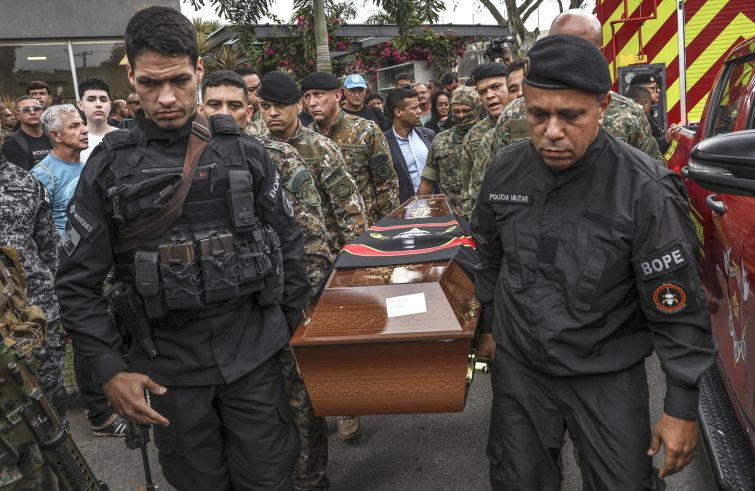
True peace “is not imposed, it is built”. The Church of Rio de Janeiro has been, is and will continue to be present on this path. This is the message that Cardinal Orani João Tempesta, archbishop of Rio de Janeiro, entrusted to SIR a few days after the deadly police raid targeting the Comando Vermelho drug cartel in the northern favelas of Rio de Janeiro on 28 October. According to the latest reports, the police operation resulted in 138 deaths, including four police officers.
Your Eminence, were the events of 28 October in any way foreseeable, and were there any warning signs?
The tragic events of 28 October have brought to light a complex social context that has been building up for over thirty years. Violence and fear are the product of inequalities, exclusion and a lack of opportunities, especially given the severe weakening of the state’s presence in these communities.
Force will never bring true peace. Only dialogue and the patient nurturing of trusting relationships can lead to peace.
Strengthening public policies and a culture of dialogue, love and peace is essential to restoring peaceful coexistence and mutual trust between communities and institutions. The road to peace is always a joint effort, achieved through dialogue, prevention, and a solidarity-based lifelong commitment.
Does this type of response constitute an efficacious strategy, or is it merely a sensationally-charged action? What impact does it have on the people living in these destitute neighbourhoods?
The Church recognises the authorities’ legitimate role in securing public safety and maintaining public order. However, all actions must be conducted with respect for human life and the common good. Peace cannot be imposed; it must be nurtured through dialogue, active listening, and solidarity with those who are suffering. It is not just a matter of evaluating strategies; it is also important to remember that every human life is precious.
The sorrow of the families and the suffering of the communities cannot be treated as just numbers or collateral damage. In every face touched by violence, we see the face of Christ himself, who suffers alongside his people.
This is therefore not an effective response because it fails to resolve the root of the problem.
However, the State’s presence in communities is difficult because criminals operate as a parallel power structure there. The Church remains supportive, as it always has been, seeking to transform pain into love and suffering into communion, by helping communities find paths of reconciliation and hope. In this way, the gift of life and human dignity can flourish.
What are the Church of Rio’s main areas of intervention in deprived neighbourhoods and favelas?
The Church has a deeply rooted and long-standing presence in the communities and favelas of Rio de Janeiro, grounded in faith and solidarity. The Church provides support and guidance to people across the city, sharing in their joys, sorrows and hopes. The archdiocese carries out extensive pastoral, social and educational activities through parishes, chapels and community centres. The Vicariate for Social Charity, particularly via the Pastoral Care of the Favelas and the Social Pastoral Care programme, is dedicated to promoting human dignity, strengthening community bonds, and upholding the sanctity of life in all its forms. The Pastoral Care of the Favelas has been operating in Rio de Janeiro for 48 years. It was established in response to the Church’s concern for the most vulnerable people and its commitment to promoting human dignity and citizenship for the residents of these communities. Various church-related works and initiatives, such as nurseries, shelters, after-school projects, vocational training courses, food programmes and support for vulnerable families, exemplify the Church’s tangible efforts to embody Gospel values and promote the common good.
In addition to carrying out various charity initiatives, the Church actively promotes the cultivation of Christian and civic conscience, encouraging social engagement, compassion for others, and the nurturing of hope, particularly among the younger generation.
The Church’s discreet yet constant presence has been a source of comfort and transformation throughout the city’s most challenging realities. The Church is committed to always remaining close to those whose lives are most fragile, strengthening the culture of encounter and contributing to the rebuilding of peace and mutual trust through simple, continuous gestures.
How can such dramatic events be prevented from happening again?
Preventing the recurrence of such painful incidents requires the commitment of everyone to promoting human life, dialogue, and social inclusion. Civil authorities at all levels must develop strategies to foster development and peace throughout the entire territory, and stand united in the pursuit of the common good. The Church will continue working and praying for Rio de Janeiro to embark on a path of fraternity, serenity and hope. We entrust all the tragedy’s victims, their families, and our city to the intercession of the Virgin Mary, Queen of Peace. May God bestow the gifts of reconciliation and love upon Rio de Janeiro, transforming sorrow into new life and communion.