
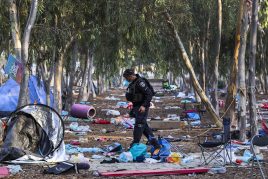
The release of the last Israeli hostages, who were kidnapped by Hamas on 7 October 2023 and held in Gaza until 13 October, brought back memories for many people, not only in Israel, of the dramatic and bloody events of that attack. Several thousand Palestinian terrorists penetrated the kibbutzim of Nir Oz, Be’eri and Netiv HaAsara, as well as other centers around the Gaza Strip. They took hostages, set houses on fire and killed men, women and children. Hamas also attacked the Nova music festival, which was attended by around 3,500 young people, killing 364 people and taking 44 hostages. In total, 1,200 civilians and military personnel were killed and 250 people were kidnapped, including 30 children. For the freed hostages, a long journey of specialist treatment to recover from the trauma now begins.
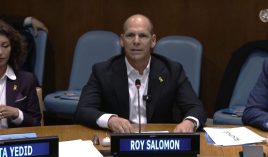 Roy Salomon, a cognitive neuroscientist at the University of Haifa, is pursuing a similar approach with survivors of the Nova Festival. Salomon is the co-founder of SafeHeart, an NGO established on 7 October 2023 to provide these individuals with psychological support through a network of psychologists, psychiatrists, clinical social workers, psychotherapists, and specialist instructors. To date, more than 2,000 young survivors have turned to SafeHeart for help. Prof. Salomon is recognized for his scientific contributions and was invited to speak at the United Nations on innovations in the treatment of trauma.
Professor Salomon, what were the main psychological traumas found among the survivors of the 7 October massacre, particularly among those at the Nova Festival?
All survivors have experienced an extremely traumatic event. At some point in our lives, we all face such experiences, whether it be the loss of a parent, an accident or an illness. However, when trauma is the result of interpersonal violence, the psychological consequences can be devastating.
Generally, most people manage to recover from a traumatic event within six months to a year: sadness remains, but life resumes its course.
However, a significant number develop actual post-traumatic psychopathologies, such as depression, anxiety, and post-traumatic stress disorder (PTSD). In these cases, the risk of suicide increases dramatically. In the case of Nova, the peculiar element is that many survivors experienced the event in an altered state of consciousness; during the party, they had taken substances such as MDMA, LSD, hallucinogenic mushrooms or cannabis. This added complexity and unpredictability to their traumatic experience.
How did you care for them and initiate the therapeutic process?
The idea for SafeHeart, the organization we founded on 7 October, came from the fact that we are all survivors of the same world: we attend electronic music festivals, we know the environment, and many of us are involved in ‘harm reduction’, i.e. interventions to minimize psychological damage at large-scale events. We immediately realized that prompt intervention was crucial: the sooner we address the trauma, the lower the risk of developing post-traumatic stress disorder (PTSD). On 7 October, we connected volunteer psychologists with survivors in their own cities. These professionals were able to treat trauma and understand what it means to live through an extreme experience in an altered state of consciousness. This made people feel welcome and not judged. To date, we have treated over 2,000 people, and more than 1,000 of them are still undergoing long-term treatment.
How long does the healing process take?
The first year is crucial, particularly the first six months. If symptoms remain severe after a year, they often become chronic and difficult to treat. The context in Israel has made everything more complicated: until the war ended yesterday and the hostages returned, it was impossible to talk about healing because the minimum security conditions were not in place.
The first step in the healing process is feeling safe.
How does the trauma experienced by survivors of the massacre differ from that experienced by the hostages?
These are profoundly different experiences. Those who survived the massacre experienced intense trauma, but for a limited time: twelve to fifteen hours at most. The hostages, on the other hand, remained in the tunnels for months or years, depending on their captors for food and safety, without knowing what would happen. This is a completely different type of trauma which requires specific skills to address.
What role does the family play in the healing process?
It is fundamental. Having a solid emotional support network is one of the main factors in resilience: it is essential to have someone to trust, to lean on and to share your pain with. Many survivors have returned to live with their parents because they cannot be alone. However, families also need support: they need to learn how to help and when to be more sensitive. That’s why we work with them, too.
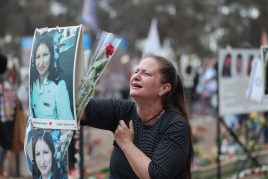
Is it possible to talk about a single, collective national trauma that unites survivors, hostages and other victims?
Everyone has experienced trauma, but of a different nature.
As well as the survivors of the festival, there are those from the kibbutzim, bombed villages, the military and also the Palestinians, whose trauma is just as devastating.
If trauma is not treated, the long-term consequences can be very serious at family, social, and even national levels.
What does the future hold for these people?
Now that the war has ended and the hostages have returned, I hope they can truly begin to heal. However, this will depend on the state’s and society’s ability to provide the necessary conditions, such as qualified personnel, psychologists, psychiatrists and inclusive policies.
Many of them can only work for a few days; others cannot. We must accept this and accompany them with compassion.
What measures has the Israeli state introduced to support them?
The government has created support programs and is funding SafeHeart and the families involved. We have also received contributions from the public and philanthropic organizations. Despite our efforts, however, we cannot save everyone: one of the survivors took his own life this week. Seeing young people full of potential lose all hope is immensely painful.
Is there any data on suicides since October 7?
While we don’t have precise statistics, we are aware of two suicides among the survivors, one of which occurred a few days ago and the other a few months ago. We are also aware of some parents of victims or survivors who have taken their own lives. For the past two years, my mission has been, and remains, to ensure that these people can survive, continue to live, and if possible, regain a full and meaningful existence.