
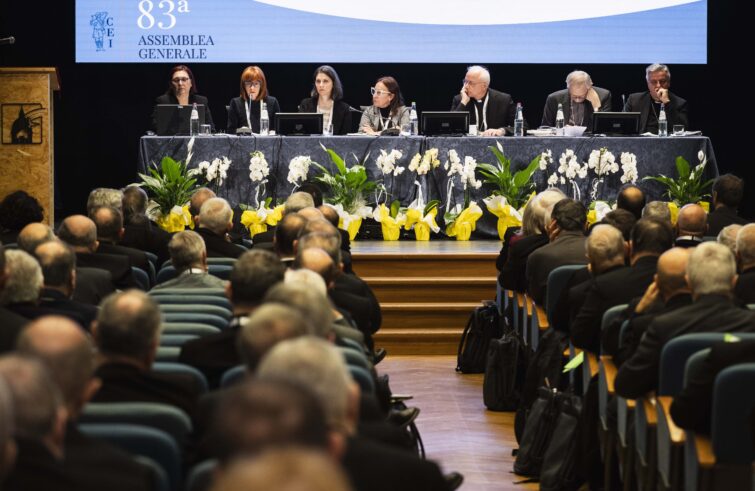
Fourteen years separate the first guidelines of the Italian Bishops’ Conference (CEI) on sexual abuse committed by clerics, approved by the Permanent Council in January 2012, from the Pilot Study on diocesan archives presented today in Assisi, during the 83rd General Assembly. In between lie rules rewritten several times, a network of services built up diocese by diocese, the first data made public and a way of listening to victims that has become a working method. “Opening the archives is like throwing open the windows of a room that has been closed for far too long”, says Cardinal Matteo Zuppi, Archbishop of Bologna and president of the CEI, in the statement issued after the presentation. On Monday, opening the proceedings, Zuppi had taken stock: “We honestly acknowledge the delays and resistances that still remain, but we do not minimise the steps taken”.
From the first rules to the network of Services
The 2012 text responds to the letter in which the Congregation for the Doctrine of the Faith had asked every episcopate to adopt its own guidelines. Criticism focuses on one point: the bishop, it states, has no legal obligation to report cases to the judicial authorities, “save for a moral duty to contribute to the common good”. Updated by the Permanent Council in January 2014, the document was sent to the Congregation and made public. The turning point came in 2018-2019. In November 2018 the National Service for the Protection of Minors was set up, entrusted to Archbishop Lorenzo Ghizzoni of Ravenna-Cervia and now chaired by the psychologist Chiara Griffini. In May 2019 the General Assembly approved the new Guidelines for the protection of minors and vulnerable persons, built on Pope Francis’ Letter to the People of God, on the concluding address of the Vatican summit of February 2019 and on the motu proprio Vos estis lux mundi. The bishops bound themselves to a “moral obligation” to file a report with the civil authority after the preliminary investigation, while regional and inter-diocesan Services and diocesan representatives were created alongside the National Service. Since 2020 the National Service has promoted Listening Centres, and since 2021 a National Day of Prayer for victims and survivors has been celebrated every 18 November. Today the network comprises 16 regional Services, 226 diocesan and inter-diocesan Services and 108 Listening Centres.

From the first data to the opening of the archives
In May 2022, at his first press conference as president, Zuppi outlined five lines of action and claimed “the Italian way in the fight against abuse”. On the eve of the press conference, the ItalyChurchToo coordination group had called for an independent inquiry. Three surveys by the Catholic University followed: 89 alleged victims in the two years 2020-2021, 54 in 2022 and 115 in the two years 2023-2024, with contacts with the Listening Centres rising from 38 in 2020 to 373 in 2024. “No silence or concealment can be accepted on the subject of abuse”, Francis told diocesan representatives in November 2023, a few days after the bishops had heard a victim’s testimony in the Assembly. Since 2024 the materials for the Day have been prepared together with victims and their families. The inquiry into the past, announced in 2022 on the basis of the 613 files that had reached the Dicastery for the Doctrine of the Faith, began in January 2025 with the dioceses’ archives. Of the 226 dioceses, 198 took part: 378 reports between 2001 and 2021, 356 clerics reported, and seven in ten victims were male. Reports submitted by the victims themselves rise to 41.4% in the last five years, while those addressed directly to the judiciary fall from 38.5% to 6.8%. The lines of action voted today emerge from the Study: victimisation surveys entrusted to independent bodies, a National Observatory on abuse and restorative justice, a national inter-diocesan criminal tribunal, training programmes for bishops. The experiences of victims, Leo XIV had recalled on 16 March to the Pontifical Commission for the Protection of Minors, are “essential reference points”. “It is a first step, not an end point”, Zuppi warns.