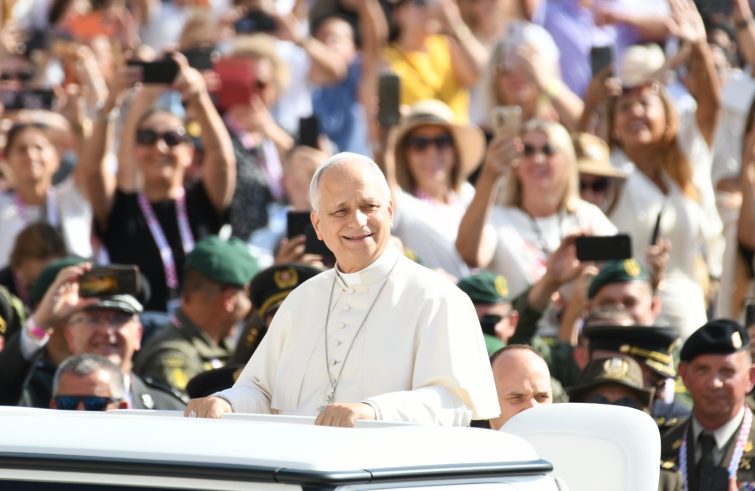
Promote and defend the dignity of the human person, always. This was the appeal with which Pope Leo XIV concluded today’s Audience, held in St Peter’s Square and dedicated to the first chapter of Gaudium et Spes. The dignity of every human being “does not depend on a person’s abilities, wealth or position in life, nor on the right or wrong choices made; instead, it is a gift that precedes and transcends each person, endowed by God as an expression of His unfailing love”, the Pope began. “The journey that made it possible to highlight the fundamental characteristics and rights of human dignity certainly represents one of the most significant chapters in human history”, he explained. “However, the path ahead is not yet complete and must address the contradictions, both old and new, which prevent its full realization”. For her part, the Church “clearly offers her contribution, reminding us that human dignity arises from the very being of the person”, the Pontiff said, quoting his recent Encyclical Magnifica Humanitas: “Every human person is planned and willed by God to enter into communion with Him, with others and with creation”.
Overcome “the many falsifications and manipulations that still disfigure our perception of human dignity and hinder its realization”,
was the Pope’s appeal. “In faith we can understand the ultimate foundation for the dignity of the person”, Leo explained: “The person always implies relationship, communion and participation in relation to God and to others; hence, a filial relationship with God the Father and a fraternal relationship with Christ and with all humankind. It excludes self-centred isolation. To be a person means to perceive oneself as a gift to be shared, growing and maturing through acceptance, reciprocity and service. This dignity is entrusted to the responsibility of each person: at the same time, it also demands solidarity and mutual care, overcoming the many falsifications and manipulations that still disfigure our perception of it and hinder its realization”.
No to “dualistic views” of the person: the human being, “though made of body and soul, is one”,
he warned. “As a result of the choices made throughout history that have run counter to this dignity, even today man is split within himself, and all of human life, whether individual or collective, shows itself to be a dramatic struggle between good and evil, between light and darkness”, the Pontiff reflected, drawing on the Conciliar Constitution: “This fragile and limited condition, however, can be regarded with hope, because the Lord Himself came to free and strengthen man, renewing him inwardly and casting out that ‘prince of this world’ who held him in the bondage of sin”.
“Reducing the body to an object to be disposed of arbitrarily is always a denial of the dignity of the person”,
the Pope warned. As the Conciliar Constitution states, “man is not allowed to despise his bodily life and is obliged to regard his body as good and honourable since God has created it and will raise it up on the last day, while ensuring that it does not become enslaved by the evil inclinations of his heart, since we are all wounded by sin”. There are three “most significant expressions of the dignity of the person” recalled in Gaudium et Spes: “intelligence, which makes the human being an insatiable seeker of the truth; conscience, through which he gives unity and meaning to his life; and freedom, which makes him the responsible agent of his own decisions”. “These dimensions are closely connected to one another”, Leo concluded: “it is in conscience that truth is recognized as such, and freedom can experience it as its foundation and possibility”. “We have received a unique and indelible dignity” was his final appeal: “Let us commit ourselves to promoting and defending it always, with the light and strength of the Gospel”.