
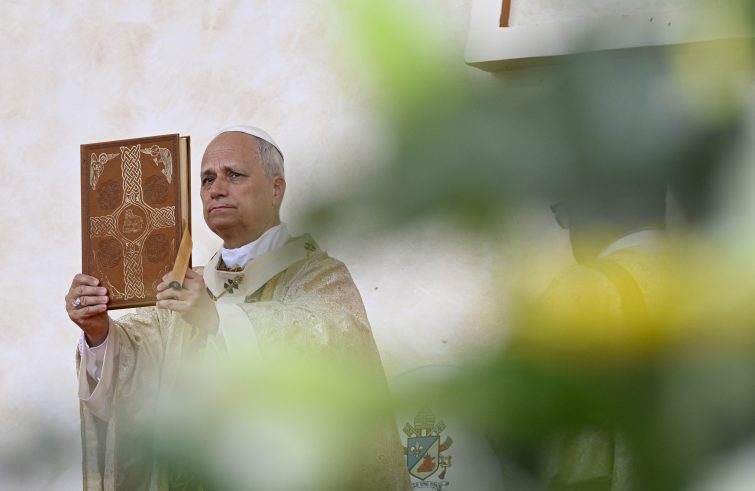
“I leave Africa with an immeasurable treasure of faith, hope and charity: a great treasure consisting of stories, faces and testimonies, both joyful and sorrowful, which will greatly enrich my life and ministry as the Successor of Peter”. Pope Leo XIV’s farewell address at the conclusion of his third international apostolic journey is marked by personal tones. The visit included four countries – Algeria, Cameroon, Angola and Equatorial Guinea – and featured twenty-five addresses delivered in four different languages.
At every stage – beginning with the one in which he set foot on the land once trodden by Saint Augustine in ancient Hippo – he was welcomed by a young people overflowing with joy, expressed in songs and dances with the colourful choreographies typical of the many traditions that form the “mosaic” of the continent.
The African people were not discouraged even by the unrelenting rain that marked the final stage in Equatorial Guinea. This visit will also remain in history as the first time Leo has visited a prison – the Bata prison – since his election to the See of Peter.
“As in the early centuries of the Church, Africa is now called to make a decisive contribution to the holiness and missionary character of the Christian people”,
was the Pope’s final message at the conclusion of the final Mass, celebrated at the Malabo Stadium, where he entrusted families, communities and the entire African people to the intercession of Mary.
“Thank you to all of you, people of God and pilgrims in this land!” he began in Spanish. “Christ is the light of Equatorial Guinea, and you are the salt of the earth and the light of the world”, Leo XIV continued, thanking the religious and civil authorities and “all who have contributed in various ways to the success of my visit”. He then addressed a message to the entire continent. During his eleven-day journey, he strongly emphasised words such as peace, reconciliation, dignity, justice, solidarity, hope and freedom, asking Africans to become the architects of their own destiny, resisting predatory instincts towards their many resources and, internally, avoiding the temptations of corruption and authoritarian drifts.
In the face of closed attitudes, it is “the Lord’s love that sustains our efforts, especially in the service of justice and solidarity”,
was the theme of his homily at the Malabo Stadium. There the Pope took leave of the people gathered before him, encouraging them to “carry on the mission of Jesus’ first disciples with joy”. “As you read the Gospel together, proclaim it with passion”, he urged. “And as you celebrate the Eucharist together, bear witness through your lives to the faith that saves, so that God’s word may become good leaven for all”.
“Our problems do not disappear in the Lord’s presence, but they are illuminated”,
Leo assured them: “Just as every cross finds redemption in Jesus, so too the story of our lives finds its meaning in the Gospel”. “He always loves us first”, he continued. “His word is the Good News for us, and we have nothing greater to proclaim to the world”. This evangelisation involves us all, beginning with Baptism, which is the sacrament of fraternity, the water of forgiveness and the source of hope. “Through our witness, the proclamation of salvation is made visible in action, service, and forgiveness – in a word, it becomes the Church!”. “The joy of the Gospel fills the hearts and the whole lives of all who encounter Jesus”, he said, quoting Pope Francis. “When we share this joy”, the Pontiff added in the words of his predecessor, “we also become more aware of the danger of the desolation and anguish born of a complacent yet covetous heart, the feverish pursuit of frivolous pleasures, and a blunted conscience.
Whenever our interior life becomes caught up in its own interests and concerns, there is no longer room for others, no place for the poor. God’s voice is no longer heard, the quiet joy of his love is no longer felt”.
The path to be undertaken is that of Jesus’ Passover, the definitive exodus, through which
“every people is set free from the slavery of evil”.
“The Lord calls us to make a decisive choice: ‘Whoever believes has eternal life’”, he commented on the Gospel passage. “In Jesus, we are given an astonishing prospect: God gives himself for us. Do I trust that his love is stronger than my death? By deciding to believe in him, each of us chooses between inevitable despair and the hope that God offers. Our hunger for life and justice is then satisfied by Jesus’ words: ‘The bread that I will give for the life of the world is my flesh’”.
“Christ is everything for us!”
Leo XIV exclaimed. “In him we find the fullness of life and meaning”, he said, quoting Saint Ambrose: “‘If you are oppressed by injustice, he is justice; if you are in need of help, he is strength; if you fear death, he is life; if you desire Heaven, he is the way; if you are in darkness, he is light’”.