
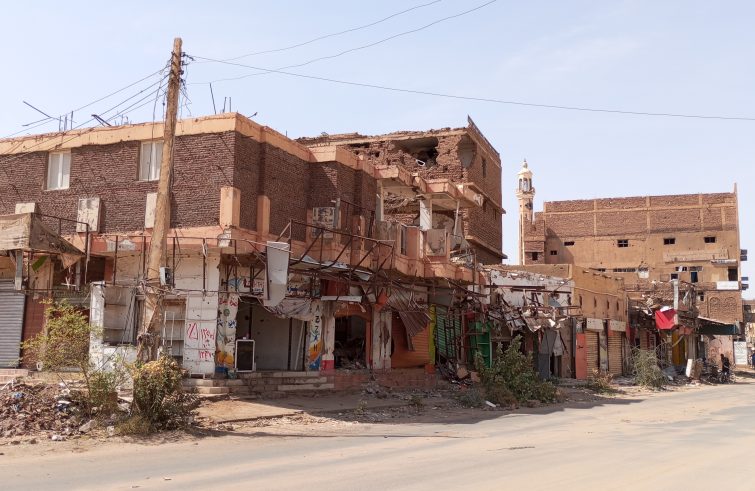
15 April will mark three years since the beginning of the conflict in Sudan. In practice, the country is divided in two. The war has now crystallised into two opposing blocs. The regular army, which also represents the government, controls the north and east of the country, including the capital Khartoum, recaptured about a year ago. The west and part of the south — the regions of Darfur and Kordofan — remain the scene of very heavy fighting. It is mainly the Rapid Support Forces (RSF) that continue to operate in those areas. Recently, the United States issued a statement declaring the Muslim Brotherhood — linked to the Sudanese government and army — a “terrorist organisation”, complicating the situation as it appears to indirectly support the RSF. In reality, major human rights organisations have long shown that both factions have targeted and continue to target civilians. However, the Rapid Support Forces (linked to the former Janjaweed militias, notorious for their brutality during the war in Darfur) are responsible for a greater number of documented atrocities, also because they are composed of mercenaries recruited from various countries. Geopolitics shows how everything is interconnected, and Sudan is also indirectly affected by the ongoing conflict involving the United States, Israel and Iran. The United Arab Emirates are among the main sponsors of the war in Sudan. The country’s vast gold reserves are a powerful attraction. As in all wars, there are enormous international interests in the arms trade, yet there are no peace talks nor any real willingness to negotiate. The fear now is that the front line could shift, with new offensives in the north and east.
In this situation, the Church is trying to resume its activities, especially in Khartoum and in Omdurman, its twin city on the western bank of the Nile. According to statistics from the International Organization for Migration, at least one million people had returned to the capital by January. The bishops are striving to support the population. The Bishop of El Obeid is on the front line, as the city is surrounded by rebels. The Bishop of Khartoum is trying to gradually resume activities in the capital, but everything is proceeding with great caution, as the situation remains uncertain and unpredictable. Before the war, there were 120 religious from various congregations; now about twenty remain. Among them are eleven Comboni missionaries, under the leadership of Father Diego Dalle Carbonare, Provincial of the Comboni Missionaries in Egypt and Sudan. Other congregations are also trying to return.
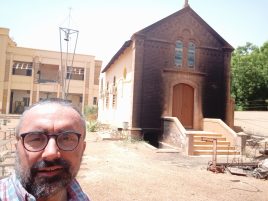
Khartoum, Sudan – (foto: Dalle Carbonare)
“We are about to return to Khartoum”, Fr Dalle Carbonare told SIR news agency. He lives in Port Sudan but is currently in Italy. “Two confreres have been there since December and a third will join them in a few days. I was in Khartoum at Christmas for about a month and I hope to return soon. Other congregations are also trying to resume their activities, such as the Franciscans and the Missionaries of Charity. The whole Church is slowly trying to set itself in motion again”. If fighting were to resume in Khartoum, those who have returned and are trying to rebuild their lives would be forced to flee again. “It would be immense suffering”, he says. “For us as a Church, it would also be a very severe blow.
We are raising funds, reopening schools and parishes. We have only just begun to resume activities since December, and now we do not know what to expect”.
Khartoum is a ghost city. In Khartoum, the Comboni missionaries have found widespread destruction, especially of government buildings, banks, shops and commercial premises. The city centre is still “a ghost town. It is not completely destroyed, but it is empty: there is hardly anyone in the streets. In the morning, you meet a few people and greet one another, but in the evening, everyone leaves because the area is dangerous at night”. “Church structures have mainly suffered looting: less structural damage, but much material has been taken away. Many people had taken refuge in our facilities and then, when they left, they took what they could”, he says. “In the city, there are many cars destroyed and abandoned in the streets. However, there is still a chance to rebuild: the buildings have not been completely razed to the ground, but damaged and therefore repairable”.
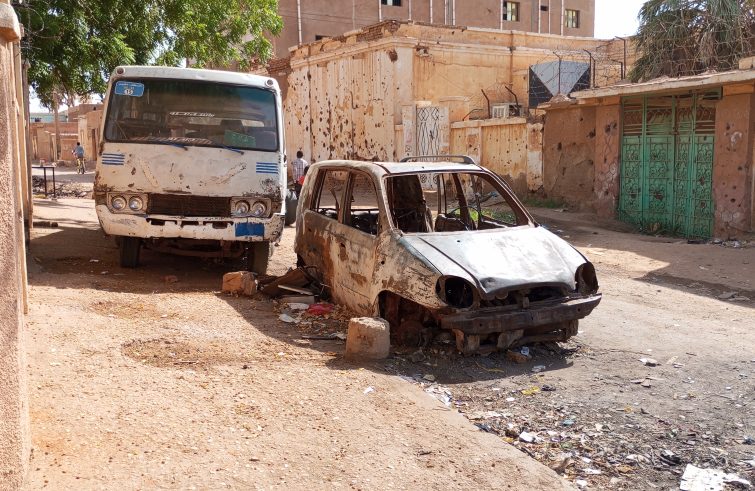
Khartoum, Sudan – (foto: Dalle Carbonare)
An infernal situation in Darfur. In the areas controlled by the army — in the north and east — “life in some way continues”, the missionary explains. “There is a severe economic crisis, of course, as in any country at war, but schools are functioning, people are working and we too, as Church, continue the life of the parishes.
In Darfur and Kordofan, however, the situation is infernal: total chaos, destruction and widespread violence”.
Darfur is now entirely in the hands of the RSF, since they took Al-Fasher at the end of October. The limited information that reaches us speaks of villages burned down, schools and hospitals bombed, and ongoing attacks and violence against civilians. Recently, the RSF have also been advancing towards the White Nile district, in the cities of Kosti and Rabak.
In Sudan, the humanitarian situation is extremely serious, one of the worst emergencies in the world, with around 25 million people at risk of hunger. More than half of the country suffers from food insecurity, and around seven million children have not attended school for three years. “An entire generation risks losing access to education”, the Comboni missionary recalls. NGOs face enormous difficulties in delivering aid, often because of bureaucracy and restrictions. The missionary calls on the international community — starting with European governments — “not to forget this war. It is clear that attention today is focused on Iran, the Middle East and Ukraine, but Sudan cannot be ignored.
In addition to mediation for a ceasefire and for access to humanitarian aid, a diplomatic solution is necessary”.
His appeal has been taken up in Italy by FOCSIV, Pax Christi, the Italian Network for Peace and Disarmament, and other NGOs.