
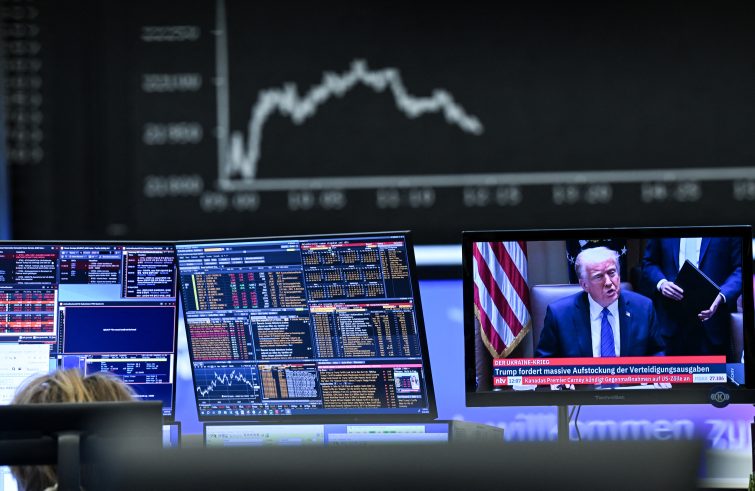
Tariffs, counter-tariffs, coercive measures… These terms are at odds with the free market, these measures have a negative impact on international trade and, ultimately, on economic cooperation between countries. This entire scenario has been set in motion by initiatives recently taken by the Trump administration, which have caused stock market turmoil and, above all, adversely affected businesses, workers and consumers. That is, everyone, without exception: citizens of Europe, the United States and other countries. “Tariffs are taxes”, as Ursula von der Leyen, President of the European Commission, has repeatedly pointed out. Unsurprisingly, this threat from the United States is sparking reactions from Beijing, Tokyo and countless countries that are members of the World Trade Organisation. Even from Moscow. Thus, as the EU-27 votes to impose counter-sanctions in response to US pressure on bilateral relations, the Commission warns that it has a trade “bazooka” up its sleeve, but immeditely adds:
“Let us hope we will not have to use it.”
A preliminary remark. The “bazooka” in question is the “Anti-Coercion Instrument” (ACI) that the EU launched in 2023. The use of this military term is no coincidence, given Trump’s current ‘trade war’ rhetoric. Unfortunately, these are times of real war, and the resulting tensions are spilling over into the economy, an activity that should normally promote cooperation and prosperity.
The term ‘bazooka’ was coined to describe a response to pressure from one or more non-EU countries directed against the European Union or one of its Member States. The use of this instrument is governed by specific institutional procedures involving first the Commission, which brings the case to the Council (Member States), which is called upon to decide whether to activate the Anti-Coercion Instrument. The Commission, in its “executive” role, then adopts the measures in accordance with the established procedures and deadlines.
Which measures? As a first step, the EU engages in a dialogue with the non-EU country or countries concerned. If political dialogue fails, the EU can take what are known as “punitive” measures. These are retaliatory measures in response to external coercion, provided they are proportionate and deemed necessary to protect European interests.
These measures – taken in response to unfair tariffs, boycotts, bureaucratic burdens and specific duties – can affect the import of goods, the provision of services, transnational investments, as well as public procurement, intellectual property, including health and environmental regulations. The bazooka is a powerful tool that can provoke retaliation and has never been used before. Defined as a ‘deterrent’ (another word from the vocabulary of war), it is intended to prevent retaliation from escalating.
For all the above reasons, the EU has no intention of using the bazooka.
Economic cooperation and free trade remain the preferred option. However, should it ever become necessary, the ACI has been regulated. As things stand, some Member States regard its use as possible, if not desirable (especially economically powerful countries such as Germany and France). Others, including Italy, are keen to avoid a confrontation with the US that could take a nasty turn. Much will depend on Washington. The latest signals (and language) from Donald Trump are not encouraging. The EU – as Brussels keeps reiterating – wants to negotiate. The next few days may provide further insight.