
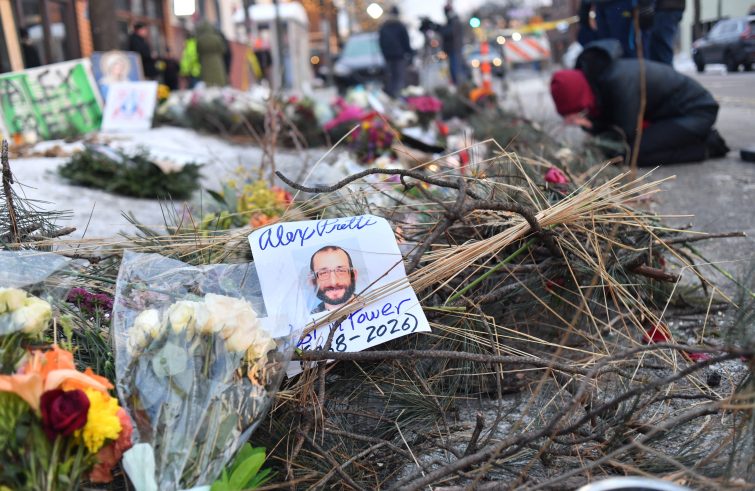
“The images of arrests and violence have driven many migrant families to remain indoors.” This is how Archbishop Bernard A. Hebda describes the consequences of recent federal immigration operations in Minneapolis, where the killing of Alex Pretti and Renee Good has further heightened tensions in Minnesota.
The death of Pretti has had a strong impact on public opinion. What has it meant for your Archdiocese?
Please allow me to begin by expressing my gratitude for the prayers that we are receiving from those in Italy and beyond. Please keep praying!
These are truly challenging days in this Archdiocese, particularly in the city of Minneapolis. While I have seen ICE activity right outside the windows of our chancery in Saint Paul, the deaths of Renee Good and Alex Pretti, as well as the non-fatal shooting of Julio Cesar Sosa-Celis, have all taken place in Minneapolis, just across the Mississippi River from Saint Paul. Most of the violent encounters between federal agents and protestors have therefore taken place in Minneapolis, especially since the Federal Office building is located there.
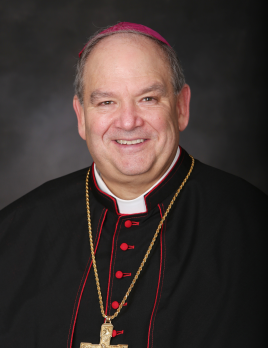
(Foto Archdiocese of Saint Paul and Minneapolis)
What immediate consequences are you seeing in the lives of migrant families?
The images and stories of arrests and detentions, together with the violence in our streets, have caused many of our immigrant sisters and brothers – both documented and undocumented – to go into hiding.
Many are afraid they will be detained and therefore do not leave their homes for work, medical appointments, shopping or even to receive spiritual care.
It is a fear that affects the most ordinary gestures of daily life.
Is this situation also reflected in parish life?
Attendance at Mass in our parishes serving Latino communities has dropped dramatically. Many parents fear that something might happen while their children are at school and therefore keep them at home. It is a real suffering that runs through families, schools and ecclesial communities.
Alongside fear, are gestures of solidarity also emerging?
At the same time, however, we are seeing the light of Christ shine through the actions of those who are helping our immigrant brothers and sisters, Catholic and non-Catholic alike. My staff works tirelessly to inform parishioners about their rights and to encourage parish initiatives aimed at providing food and nappies to families in need, often in collaboration with community organisations.
Every day I receive photographs of parishioners purchasing and delivering groceries to families too afraid to leave their homes, of neighbours accompanying children to school,
of priests and deacons coordinating the distribution of Holy Communion or providing spiritual support to those who are confined at home or detained. Yes, there is fear and anxiety, but people are truly becoming Christ for one another. The crisis has also multiplied opportunities for encounter: there are parishioners accompanying migrants to court or medical appointments, others helping them with the most basic needs.
On 7 February 2025, the bishops of Minnesota, meeting as the Minnesota Catholic Conference, issued a statement on immigration laws, describing the US system as “broken” and calling for comprehensive reform. While affirming the State’s right to protect security, the text criticises indiscriminate actions that separate families and expresses concern about enforcement operations in sensitive locations such as churches and schools. At its heart is an appeal for policies that hold together legality, human dignity and the common good.
What role are the Minnesota bishops playing in the face of this crisis?
In addition to these works of mercy, the bishops of the six dioceses of Minnesota, meeting as the Minnesota Catholic Conference, are seeking to work with our government representatives to alleviate the current crisis and to promote a comprehensive reform of immigration laws.
The Minnesota Catholic Conference is urging the faithful to make their voices heard in the political process.
Only by working together will we be able to resolve the problem and restore a true sense of calm.
What criteria do you consider essential for a reform of migration policies?
What is needed is a comprehensive, long-term solution that allows the country to protect its borders, minimise the possibility of illicit trafficking and reasonably regulate any new arrivals. It is also essential to guarantee legal status to those who are in the country without documents but have lived here for a number of years, can demonstrate that they have put down roots, have contributed to their communities and show a willingness to respect the law. Finally, pathways are needed that promote family reunification and prevent separation.
How do you pastorally accompany a community marked by different and often opposing fears?
The priests of this Archdiocese have done this very well over the past decade, and I seek to imitate them in their pastoral zeal in accompanying everyone.
For some time now we have sought to make our immigrants feel at home, serving them in their own languages and respecting their piety and traditions.
At the same time, we recall Catholic teaching on the right of a State to protect its borders and on the importance of respect for legitimate authority, while also inviting prayer for those who bear responsibility for the enforcement of the law.
What would you ask of Italian Catholics who are following this crisis with concern?
To continue to pray fervently for peace. Pray for peace in our homes, our cities and our country.