

The war in the Democratic Republic of the Congo “can be compared to a tree: the roots are in the West, the trunk is in Rwanda and the leaves are the rebel groups”. This is how Congolese activist Pierre Kabeza describes a conflict that has been going on for thirty years and has seen the Congolese people become victims of “a war of aggression, aimed at the plundering of mineral resources”. Last Sunday, Pope Leo XIV issued a fresh appeal for the Democratic Republic of the Congo, recalling the “great difficulties” experienced by the population of the East, forced to flee and hit by a severe humanitarian crisis. The Pope knows the country well: he visited it in 2009 as Prior General of the Augustinians. In recent days, his first journey to Africa has been announced, which will take him to Angola, a country bordering the DRC. Meanwhile, the pro-government Wazalendo militias have returned to the strategic city of Uvira, following the withdrawal of the M23 armed group, backed by Rwanda.
Pope Leo XIV issued an appeal for peace in eastern Congo on Sunday. What does it mean for you?
It is a sign of great hope. The Congolese people often feel forgotten. Even the visit of Pope Francis had rekindled attention to our plight. Hearing a new Pope speak about the Congo and pray for us today means knowing that the Church continues to walk with her people. Pope Leo follows in the footsteps of Pope Francis, who loved the Congo deeply. His words “Hands off Africa! Hands off the Congo!” remain a very powerful appeal to the international community: to leave Africa – and the Congo – its freedom, dignity and sovereignty.
The Wazalendo have returned to Uvira after the withdrawal of M23. What is the situation?
In war, the situation always remains dramatic. The humanitarian crisis affects both refugees abroad and internally displaced persons. It is true that the return of the Wazalendo has aroused joy among the population, but it must be said clearly that
the Congo is the victim of a war of aggression and plunder.
People welcomed with joy those who defend their land. The return of the national army shows the will to say “enough” to war and occupation.
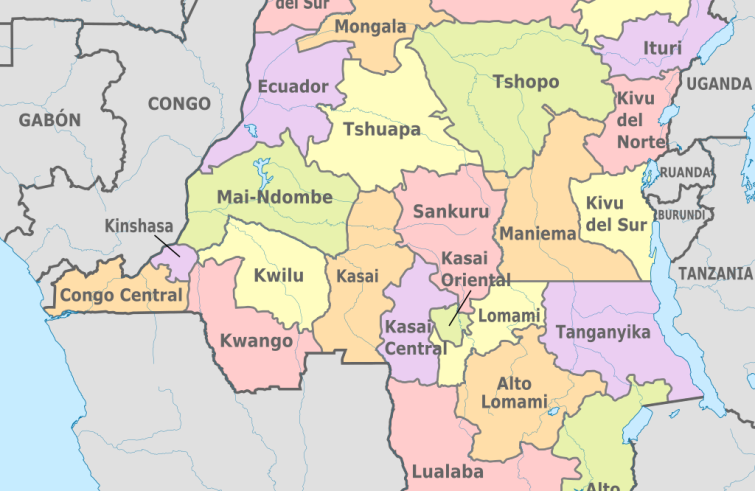
Milenioscuro, CC BY-SA 4.0 <https://creativecommons.org/licenses/by-sa/4.0>, via Wikimedia Commons
It is striking that the M23 rebels first occupied Uvira and then withdrew, claiming to have responded to a request from the United States. What lies behind this?
This is because this war did not originate in the Congo. It is being waged by the great powers and is supported by multinational corporations. What we see on the ground is only the surface. The war in the Congo is like a tree: the roots are in the West, the trunk is in Rwanda, the leaves are the rebel groups. When the roots stop nourishing the tree, the rebels withdraw. Behind this are agreements and geopolitical interests. Rwanda does not act alone: there is the support of the United States and also the growing role of China.
It is the usual dirty war for control of rare earths and minerals. Only the faces of the groups involved change.
Yes, it is a war of exploitation that has lasted for thirty years. Fighting takes place only in areas rich in minerals. Eastern Congo possesses resources that are fundamental for modern technology: cobalt, coltan, tungsten.
This enormous wealth has become the cause of our tragedy.
Is the population aware of these interests?
Yes, people are aware. There may be local dynamics, but the origin of the conflict is the systematic plundering of the country’s wealth.
What has become of the proposal for dialogue launched by the Churches last year?
The Catholic Church in the Congo walks with her people. Together with the Evangelical Church, she has called for an inclusive dialogue among all parties. Some politicians have obstructed it for personal interests. But the objective remains clear: to bring friends and enemies to the same table. This proposal is also supported by civil society and by Nobel Peace Prize laureate Denis Mukwege. It is the only possible path.
Are there concrete signs?
The work continues behind the scenes. In recent days, meetings have taken place in Angola with members of the Church, the opposition and the government. It is a sign that we are moving closer to dialogue.
Can Pope Leo XIV’s journey to Angola help the Congo?
We are convinced of it. The Pope knows the Congo and its civil society leaders. In Angola, he will meet Church representatives and political leaders. This journey can open up new prospects for peace.
We have confidence: the Pope is closely following the situation and this gives us strength.