

A new shipwreck occurred off the Tunisian coast near Mahdia. The boat, which had set off clandestinely for Europe, capsized during the night of 21 October. According to the Tunisian Coast Guard, at least forty migrants, including several children, lost their lives, while thirty others were rescued. Such tragedies are all too common and challenge our consciences. Monsignor Nicolas Lhernould, Bishop of Tunis, spoke to SIR about this humanitarian drama.
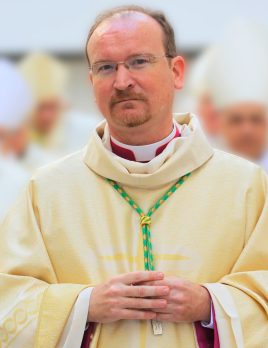
(Foto La Croix)
Your Excellency, the Salakta shipwreck has claimed dozens of lives. How did you experience this new tragedy?
It is a terrible event. This is not just another shipwreck; these are people, unique lives extinguished. As Pope Francis has said, we must never grow accustomed to such things.
Sadly, shipwrecks have been happening for years, and this one involved a particularly high number of victims. But these are not statistics: they are men, women and children.
My thoughts go to their families, who may not even know that their loved ones have died at sea. Faced with such tragedies, the heart bleeds.
As a pastor, how do you face such unrelenting pain?
It is a profound sorrow—one that touches everyone, believers and non-believers alike. Each time, we find ourselves mourning people who sought life, hope, and a future. Such things cannot be attained through dangerous and unlawful means where nothing less than human life is at stake. Yet alongside this sadness arises a question: what compels people to risk their lives in this way—whether aware of the dangers or not—and what can we do collectively to prevent such tragedies from recurring?
Who is Monsignor Nicolas Lhernould
Born in 1975 in Courbevoie, France, he has served as Bishop of Tunis since June 2024. Ordained priest in 2004 for the Diocese of Tunis, he spent over fifteen years in Tunisia, in Sousse and Monastir, where he exercised pastoral ministry among young people and in interreligious dialogue. He also served as parish priest in Sousse and as national director of the Pontifical Mission Societies.
Tunisia is often a transit point for those trying to reach Europe. What is happening in the country today?
We must remember that those who arrive in Tunisia in an attempt to reach Europe have already crossed the Sahara Desert, which has now become the world’s largest cemetery, as Pope Francis reminded us in Marseille in 2023. The reasons people leave are many: poverty, insecurity, lack of prospects. Some depart out of despair; others out of naivety, misled by false promises of a better future that does not exist.
Are there also exploitation networks behind these journeys of hope?
Yes, unfortunately there are trafficking networks that take advantage of people’s desire for hope and lead them into dreadful situations.
Tunisia has taken a very firm stance against illegal immigration and irregular status. One of its objectives is precisely to combat the trafficking of vulnerable persons by such networks.
I felt relieved to read that thirty people were saved thanks to the Tunisian Coast Guard. Sadly, forty others, including children, lost their lives. The tragedy is that these departures take place entirely clandestinely, and we only learn of them once disaster has struck. It is painful, for no one should have to risk their life for a hope that, too often, proves illusory.
What is the face of the Tunisian Church today?
Ours is a small, family-like Church—about thirty thousand faithful in a population of twelve to thirteen million, representing around eighty nationalities. A small reflection of the universal Church. Our commitment centres on three words: contemplation, culture, and charity.
How do you live these three dimensions in practice?
As the monks of Tibhirine in Algeria said, we are “people who pray among other people who pray”. Prayer and silent witness are our first language. Then there is culture and education, through cultural centres and nine schools that we run in the country. Finally, charity: a small Caritas and many initiatives of solidarity, often born from direct contact with those in need.
The number of migrant deaths in the Mediterranean
According to data from the Missing Migrants Project of the International Organization for Migration (IOM) and the United Nations High Commissioner for Refugees (UNHCR), since 2014 more than 33,000 people have died or gone missing in the Mediterranean Sea while attempting to reach Europe. In 2024 alone, approximately 2,450 deaths were recorded, one of the highest tolls in the past decade. Since the beginning of 2025, updated estimates already indicate over 1,000 dead or missing. The Mediterranean remains the world’s most dangerous migration route—a symbol of a humanitarian crisis that demands shared and lasting solutions.
How does the local Church respond to the tragedy of migration?
In the face of migration, our response is based on three attitudes. The first is the “availability of the Good Samaritan”: like the Good Samaritan, we try to do all we can to alleviate the suffering of those we encounter. The second is listening: many have lost the compass of their lives. In our listening centres, we seek to accompany them in discernment, helping them rediscover real, not illusory, hope. The third is support for voluntary return.
For a migrant, returning empty-handed is painful, but we try to support them in collaboration with others, such as the International Organization for Migration and sister Caritas organisations in Africa.
We also assist Tunisians who wish to return after difficult experiences in Europe, helping them reintegrate and regain confidence and roots in their own country.
What strikes you most in your encounters with migrants?
We meet people on the move when they come to us. The greatest gift is the trust they place in us. They come not only to seek material help but also a fraternal word, a human listening ear. In the end, the deepest human need is to feel welcomed and recognised.
What message would you like to send to European institutions after this tragedy?
The political issue is complex, but the compass must remain one and the same: unconditional respect for the human person. Scripture, in the Book of Wisdom, says that “the righteous person must be humane”. Every human being, migrant or not, is made in the image and likeness of God.
The problem is not only political or numerical; it must be approached with a “face-to-face” outlook, person to person, as the Pope reminds us.
What is needed, in your view, to move beyond the logic of emergency and look to the future?
We must go to the roots. It is not enough to be moved by these tragedies; we must address the causes that drive people to leave, through sincere cooperation between North and South. It is also necessary to listen to the fears of European public opinion: only then can fear be transformed into a human and rational relationship directed towards the common good. Managing emergencies is not enough; we must build a shared future.