
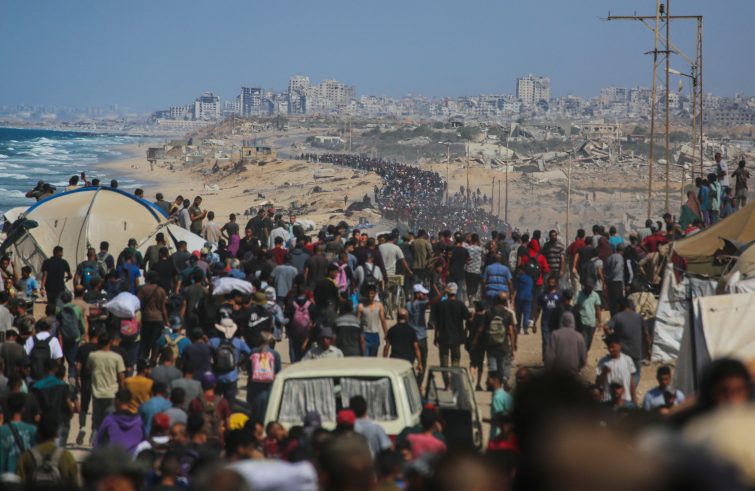
Caritas Jerusalem described the situation in the Gaza Strip as catastrophic, mostly due to extreme food insecurity and widespread homelessness. Tens of thousands of people have been displaced, with 90% of residential buildings destroyed. Severe shortages of water, medicines and hospital care are leading to the spread of infectious diseases. Unemployment is also widespread. In a statement, the Catholic charity, which operates within the Latin Patriarchate of Jerusalem, assessed the living conditions of Gazans after the ceasefire agreement came into force on 10 October. Caritas states that “violations of this agreement are causing ongoing uncertainty. Hamas claims that Israel has not complied with key provisions, including the full reopening of the Rafah crossing and the prompt delivery of humanitarian aid. Israel, for its part, announced the launch of a rocket and an attack near Rafah by Hamas, which prompted a military response. Although the agreement has not been rescinded, its implementation remains precarious, with extremely high pressure to comply with its terms.”
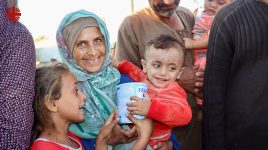
The humanitarian emergency continues. The overall situation remains catastrophic, with food insecurity being a particular concern. Caritas says that experts have confirmed that Gaza has entered Phase 5 of the famine, with more than half a million people still dependent on humanitarian aid, including food, water and basic necessities, as all local food production has been destroyed. Infrastructure throughout Gaza is severely damaged. Many hospitals and medical centres are either entirely out of service or only partially operational. There is a severe shortage of medicines, medical supplies, and mental health services.
Continued efforts are being made by Caritas Jerusalem to obtain medicines and basic necessities through the local market, but supplies remain largely unavailable.
Around 90% of residential homes have been destroyed, leaving tens of thousands of people homeless. The removal of rubble is expected to take years. Once densely populated and vibrant, entire neighbourhoods of Gaza City, such as Tal Al-Hawa and Al-Zaitoun Street, now resemble desolate, barren wastelands. Frozen food products are scarce due to supply chain disruption, which is also contributing to the spread of infectious diseases.
Reconstruction. Caritas reports that no large-scale reconstruction efforts have been initiated to date. The authorities have not yet delivered the promised temporary shelters, and there has been no substantial reconstruction activity on the ground. Billions of dollars will be needed to restore basic infrastructure and services, with a recovery period likely to exceed ten years, according to experts. Building materials, equipment and skilled labour are needed, while public security continues to be a concern, with widespread inter-family conflicts and community tensions.
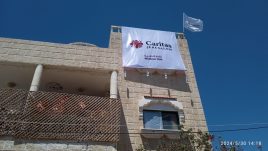
Financial situation. Financial circumstances remain dire. Almost all families in Gaza are facing poverty and most have lost their jobs. Just a few humanitarian organisations are still operating, with a small number of local staff.
Caritas is calling for the blockade to be lifted and for aid corridors to be opened, as these are urgently needed.
Basic necessities such as meat, poultry and eggs remain scarce or unobtainable. For example, one frozen chicken costs more than 160 shekels in the north (about 42 Euros, Ed.’s note), which most families cannot afford.
The Christian community. Members of the Christian community in Gaza are still facing major difficulties. The majority are sheltering inside the church compound, while only a few families, whose homes were not completely destroyed, have returned to their homes. Several Christian families, including some Caritas Jerusalem staff members, especially young people, chose to emigrate, primarily to Australia. Others, Caritas notes, have chosen to stay, expressing their determination to remain and rebuild.
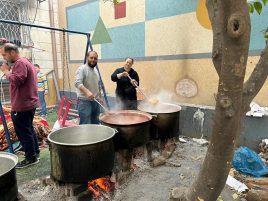
The ongoing exodus of young Christian families poses a serious challenge to the future of the Christian community in Gaza, as the majority of remaining Christians are of advanced age.
Caritas Jerusalem activities. Against this backdrop, Caritas Jerusalem remains committed to serving the Gazan population, with a particular focus on the southern governorates. The charity currently runs seven medical outposts in the south with the help of a dedicated local team. Staff have been advised not to return to the north due to unsafe and inhospitable conditions, including widespread destruction, a lack of electricity and water, and a lack of basic infrastructure. The main medical centre in the north, Al Shatei Medical Centre, has reopened and there is now some limited maintenance and repair work underway. Its facilities have been secured against looting and renovation work is in progress to repair the internal damage caused by bombing. Milk distribution continues in various areas of the Strip.and renovation work is addressing internal damage caused by bombing. Milk distribution also continues in various areas of the Strip.
West Bank. In its report, Caritas Jerusalem highlights heightened tensions in the West Bank due to frequent clashes and a significant increase in checkpoints, roadblocks and barriers restricting Palestinian movement between villages, amid increased settler attacks. Incidents continue to occur daily in Jenin, Tulkarem and Nablus. Despite these challenges, Caritas Jerusalem remains fully operational in several governorates and is adapting its activities and interventions to the highly unstable security landscape. The lack of pilgrims or tourists visiting Jerusalem or Bethlehem seriously affects the livelihoods of families who depend on tourism and small-scale retail.
The start of the olive harvest season is being severely disrupted by settler attacks, which are preventing many Palestinian farmers from harvesting their crops — a vital source of income for their families.
Despite the overwhelming humanitarian and financial challenges in Gaza and the West Bank, Caritas Jerusalem remains steadfast in its commitment to serving the most vulnerable with compassion, professionalism, and faith. The charity ensures a constant presence of hope and solidarity throughout the Holy Land.