

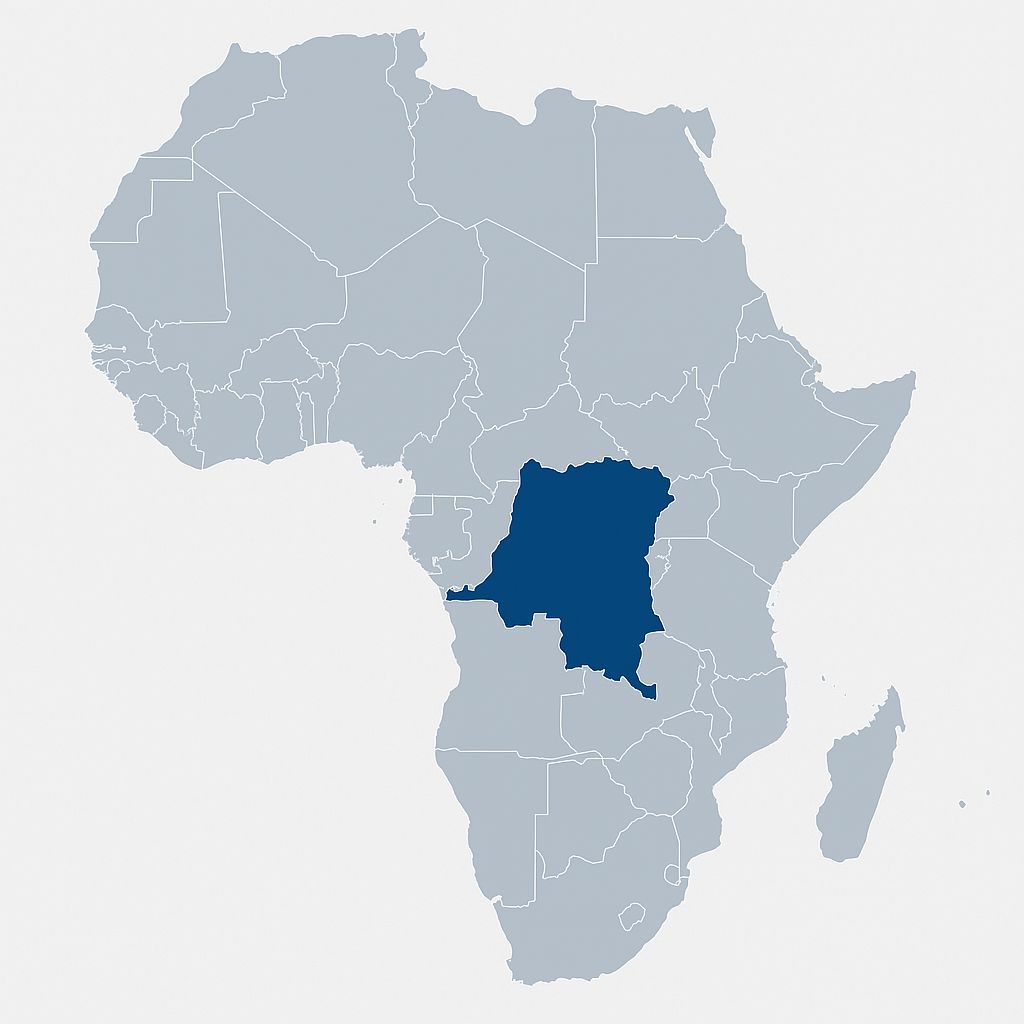
After three months of negotiations, the government of the Democratic Republic of Congo and the M23 rebel group signed a ceasefire agreement in Doha on July 19. The M23 had seized control of towns and villages in the mineral-rich eastern part of the country, especially in Kivu. The deal came after a 30-year war resulting in millions of deaths and widespread displacement. US President Donald Trump took credit for the agreement and even expressed his desire to be awarded the Nobel Peace Prize. However, Congolese civil society and Church leaders remain sceptical and perplexed by this seemingly good news. “In Kivu, violence and displacement are ongoing. Some M23 rebel leaders, supported by Rwanda, have publicly declared their intention not to relinquish power. It’s a peace in words, but not yet in deeds. The agreements do not provide for the reintegration of displaced persons, disarmament, or demobilization,” Pierre Kabeza, a Congolese activist born in Bukavu who has been in living in Italy for many years told SIR. “For us, any peace that is not grounded in justice is a false peace,” he said. The deal risks becoming a “fragile peace” imposed from above, as it failed to involve the local population.
In spite of three decades of killings and acts of violence, Kabeza remarks, “the accords do not refer to the issue of justice, which is not necessarily about prison sentences, but rather recognizing culpability and expressing contrition.” He cites Nelson Mandela’s example in South Africa, noting that Mandela secured truth and reconciliation for his people. “Forgiveness should be sought by those who have done wrong. Instead, it seems as if they are making a mockery of the Congolese people.” This scepticism is largely due to the numerous agreements signed with the same groups over the years, which have simply changed their names. “If you look closely, it’s always the same people.
If the agreements fail to envision justice, peace will always be fragile.”
Civil society not included in the process. Moreover, the peace accord “was not discussed in Parliament or the Senate, and Kivu’s civil society was not involved in the process. The long-suffering Congolese people should have been involved.” The third concern is the U.S. role in securing investment in critical minerals and control over the DRC’s rare earths. “We are preoccupied that our minerals will be sold or surrendered to another party just to retain power.” Kabeza recalls that President Biden visited Angola to sign agreements pertaining to Congolese minerals. “Now, Trump is pursuing the same path as Biden. This isn’t about Republicans or Democrats, but rather about US interests worldwide. And we are still being left behind.” He finds Trump’s idea of running for the Nobel Peace Prize equally absurd: “A man of peace must seek peace everywhere in the world. Instead, Trump seeks peace in Congo while bombing Iran and allowing children to be killed in Gaza. What is happening in Gaza is a denial of our humanity. There are no first- or second-class peoples. We must seek peace for all peoples of the world.” At the national level, he believes that there must be “intra-Congolese dialogue.” “It is necessary to assess Congo’s political, social, and economic issues. We must find solutions to our own problems. Trump is not going to provide us with a solution, as some would have us believe.”
“The terms of the deals provide no benefits for the people. It almost seems like a game being played by those who wish to obtain the minerals and those who crave political power.
A justice-based peace is crucial. “In Congo, unfortunately, the pattern is always the same: those who take up arms become leaders and those who commit crimes become immune to prosecution,” says the Congolese activist. “That’s why we insist on the question of justice. Under these agreements, the perpetrators of massacres and crimes will become the ruling class once again. It’s a way of mocking the victims.” In his view, even the African Union “is not a union for the African people” as it “always sides with those in power.” “We consider it a kind of trade union for African leaders. When the political leaders oppress their people, it says nothing. Only when a leader faces trouble does it take action.”

The concerns of the Congolese Church. During a recent press conference at the Vatican, Cardinal Fridolin Ambongo, the Archbishop of Kinshasa, criticized the peace agreement signed on June 27, 2025, in Washington, D.C., between the Democratic Republic of the Congo and Rwanda, calling it a “false solution” that ignores the situation on the ground and the suffering of the Congolese people subjected to “centuries of extractivism, slavery, and exploitation.” “I am obviously committed to peace. I always support laying down arms and ending violence. But I oppose hypocrisy.”
Congolese civil society: open a humanitarian corridor to save lives. These sentiments were echoed by the civil society of South Kivu. In a lengthy document dated July 21 and addressed to key national and international policymakers, including Trump and EU heads of state, they call for
achieving lasting peace within the next 15 years.
The document emphasizes that the success of the plan depends primarily on ending decades of maladministration, corruption, and warmongering. “Government officials come into office with empty pockets only to become millionaires and billionaires a few years later thanks to the looting of the nation,” states the report titled “The DR Congo, future of the African Great Lakes region.”
According to civil society representatives, the urgent priority is
opening a humanitarian corridor to save the lives of desperate men, women, and children who lack access to food and medicine.
On 19 July, the Consortium Pamoja kwa Amani — an umbrella organisation of civil society groups from North and South Kivu — released a statement calling on “all national and foreign belligerents to strictly and unconditionally honour all their commitments, so that the long-awaited peace is realised, both on paper and on the ground”.