
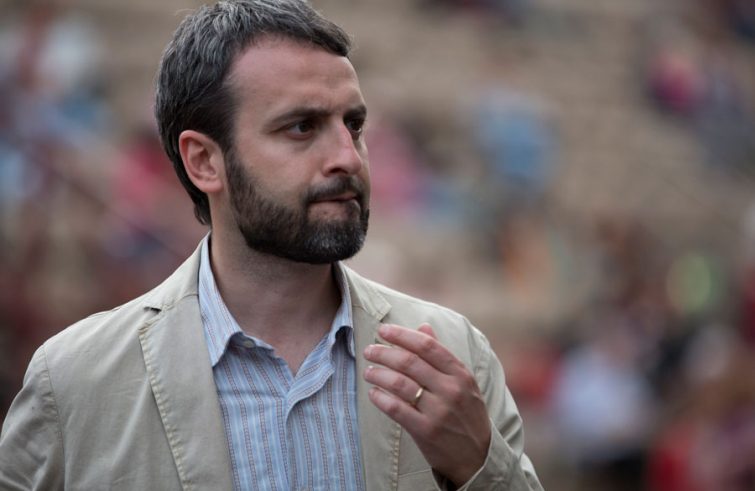
“One of the most detrimental consequences of increased defence spending is diverting attention, resources, and capacity away from non-military approaches to conflict resolution and settlement of international disputes. This is one of the most worrying aspects of the current military build-up.” Francesco Vignarca, coordinator of the Italian Peace and Disarmament Network’s campaigns, shares his concerns over the decisions made at yesterday’s NATO summit in The Hague. NATO members have agreed to increase their defence spending to 3.5% of their respective GDPs by 2035 for “core defence expenditure”, such as military personnel, equipment and operations. They will also allocate an additional 1.5% of GDP towards broader, unspecified security-related investments. “It should be noted, however, that this is not a binding obligation,” Vignarca clarified at once. “In fact, it is basically just another policy document like many that Italy has previously signed without being required to implement them. In the absence of a formally signed international treaty, there is no legal obligation for countries to comply with these commitments. This is a fundamental point that ought to be clarified.”
What impact would this increase in defence spending have on Italy’s finances?
It could have a significant impact, given that it represents a large proportion of our GDP. Assuming constant numerical growth (i.e. equivalent annual increases) and taking into account only 3.5% of core defence expenditure, Italy would incur almost €700 billion in defence expenditure over the next ten years. In other words, approximately €220 billion more compared to spending levels under the current 2% threshold. However, if we consider the overall figure of 5% (including broader security-related investments), the ten-year total would be around €970 billion — an increase of approximately €445 billion compared to current spending levels. On average, spending would therefore be expected to increase by €44 billion per year.
For the sake of comparison, Italy’s budget law normally amounts to approximately €15 billion. Therefore, Italy would commit to spending the equivalent of almost three budget laws every year on defence and security between now and 2035.
Can we afford such a significant amount?
Given that Italy’s national budget amounts to approximately €700 billion, Italy could well have those funds available. Nevertheless, if a considerable proportion of that budget is to be earmarked for a new expenditure item, it will be necessary to divert resources from other budget lines. Italy is not experiencing robust economic growth, nor are tax revenues increasing, partly due to long-standing tax evasion practices. Recent statements by the International Monetary Fund’s director, Kristalina Georgieva, clearly indicate that if Italy plans to increase its defence spending to meet NATO targets — i.e. 3.5–5% of GDP — it will inevitably have to cut expenditure in other areas, including social spending and economic investment.
Italy’s high public debt and the tens of billions of euros in annual interest payments on that debt mean that it cannot afford to take out new loans.
Unfortunately, it is the citizens who will bear the brunt of these measures. Alternatively, the government could choose to limit increases in defence spending in the first few years and postpone the most significant increases until the end of the spending period (by 2035). This would be an ill-advised strategy, as it demonstrates a lack of foresight and commitment.
Is this decision justified by an actual, serious threat?
We believe that fearmongering and fabricating enemies are strategies designed to instil fear, thereby presenting increased defence spending as a reasonable and rational measure when, in fact, it is not.
For us, human security — the security of people in their daily lives and future, and the possibility of peaceful coexistence — is the only true form of security. In this view, security is shared with others, who are not seen as enemies to be fought, but potential partners for cooperation. Even if we were to consider the perspective of those focused on defence and military security, we would still not view arms build-up as a solution. In fact, it fuels the security paradox whereby arms build-up breeds fear and threat, leading to a symmetrical reaction, i.e. further arms build-up. Over the last 25 years, this pattern has led to a twofold increase in global defence spending and an intensification of armed conflicts. Even worse, it has spread the idea that the only way to manage conflicts and disputes between peoples and states is through militarisation. Not only does this conjure up a threatening scenario out of thin air, it also ends up fuelling it and contributing to the very threat it claims to prevent. This is the most worrying aspect of it all.
Weapons have gradually replaced diplomacy in conflict resolution, but who is to blame? Are we to blame our current political leaders?
This attitude not only undermines democracy and diplomacy, but also international law. Rather than relying on power-based solutions, we should establish and strengthen shared legal and regulatory frameworks to promote justice-based resolutions.Moreover, the current push for rearmament is driven by a culture of confrontation, conflict, and a desire for supremacy over others.
How can this trend be reversed?
A concrete and politically feasible alternative must be found urgently. At the same time, however, we need a cultural and intellectual change of mindset. It’s crucial to recognize that true security encompasses more than just military strength. As Pope Leo said during his meeting with members of popular peace movements on 30 May: “If you want peace, prepare institutions of peace.” It is not enough to simply evoke the concept of peace; it must be meticulously planned, organised and put into practice in tangible ways. This is our guiding star and the vision that inspires our proposals and campaigns. The ancient Roman saying, ‘Si vis pacem, para bellum’– “If you want peace, prepare for war” – is still cited today to justify senseless and dangerous rearmament. I think it is time to stop thinking with the mindset of two thousand years ago. It is also important to remember that the peace of the Romans – the Pax Romana – was not a fair, open and positive peace. It was fundamentally a peace imposed by force and a form of domination.
Moreover, Tacitus wrote, “They made a desert and called it peace.” This is not the peace we want, nor is it the way forward or the goal we seek. We strive for true peace that is rooted in justice, rights, and the dignity of every individual and nation.