
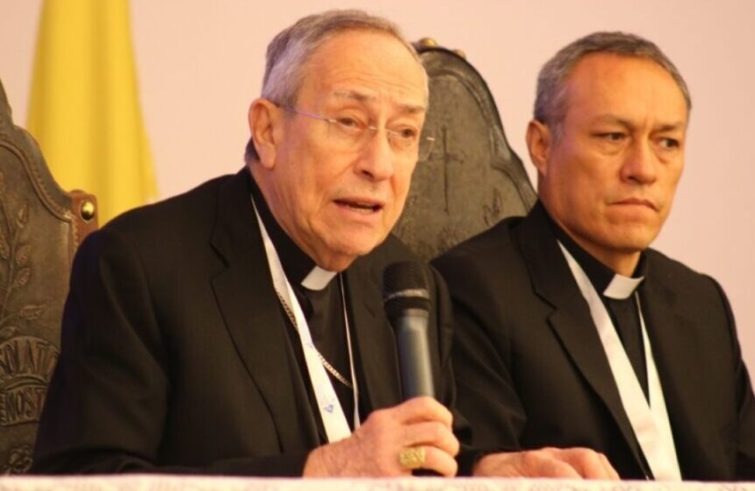
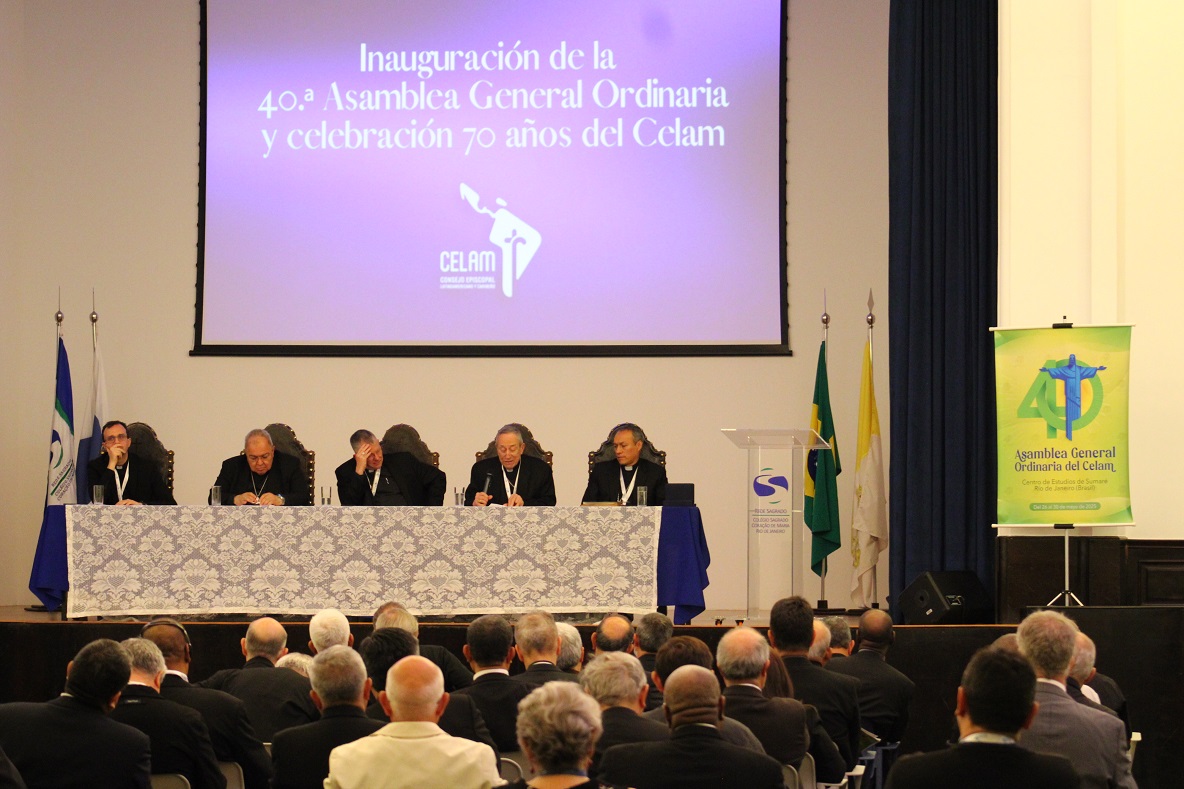
CELAM has served as a body at the service of the Churches of Latin America and the Caribbean, as well as the universal Church, for seventy years, thanks to its insights, the original reception of the Second Vatican Council, and its pioneering practical application of synodality. Cardinal Óscar Andrés Rodríguez Maradiaga, Archbishop Emeritus of Tegucigalpa, described CELAM as “a backbone” in an interview with SIR for the occasion. He spoke to SIR while in Rio de Janeiro, where the 40th assembly of the continental ecclesial body is being held (from 26 to 30 May) to mark the 70th anniversary of its establishment in 1955 by Pius XII. Having served as Secretary General of CELAM from 1997 to 1991 and as its President from 1995 to 1999, Cardinal Rodríguez Maradiaga witnessed many of the events of that period. He taook part in many important ecclesial meetings and coordinated the Council of Cardinals during Francis’s pontificate. He also participated as an elector in two conclaves, in 2005 and 2013. A few weeks ago, at the age of over 80, he attended the general congregations that preceded the election of the Pope. He delivered the inaugural address at the meeting in Rio de Janeiro a few days ago. In the interview, he says that he considers both Francis and Leo XIV to be “popes who come from CELAM”, describing Pope Francis as “a man of the people”. Regarding synodality, he is certain that it will proceed “without hesitation, because the Holy Spirit has no reverse gear.”
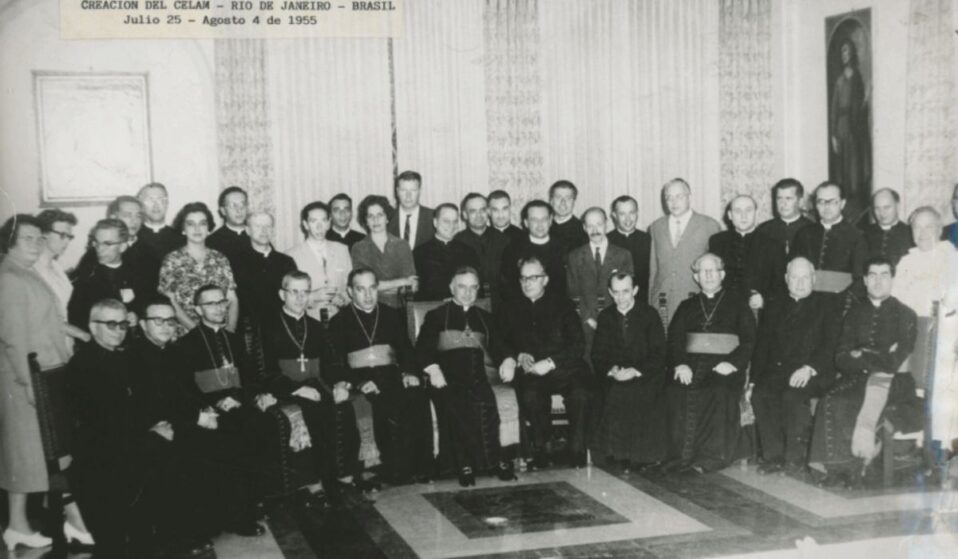
Your Eminence, how would you recapitulate the past seventy years, and what lessons can be learned? In essence, CELAM has been the backbone of the Latin American episcopate. Ever since the Latin American Plenary Council was established, it became clear that the episcopate on this continent was extremely isolated and closed in on itself, with the Vatican as its sole point of reference. The collegiality that preceded the Second Vatican Council was, in fact, initiated by CELAM. Pope Pius XII, who had visited Brazil and Argentina during his time as Cardinal Eugenio Pacelli, recognised the enormous potential of this continent and said that a way had to be found to reunite it. Thus, during the Eucharistic Congress in Rio de Janeiro in 1955, he made the decision to establish CELAM.
 You served as president of CELAM in the 1990s. How would you characterise the evolution of this organisation since that time? What developments do you consider to be the most important?
Firstly, CELAM has continued to grow and develop in its specific mission of serving the episcopates across the continent. Important milestones in CELAM’s history include the General Conferences of the Bishops: Medellín in 1967, Puebla in 1979, Santo Domingo in 1992, and Aparecida in 2007. The Medellín conference applied the teachings of Vatican II to our reality; the Puebla conference promoted Evangelii Nuntiandi; the Santo Domingo conference focused on the fifth centenary of the evangelisation of the continent; and Aparecida opened the door to the new millennium. While these were certainly milestones, we cannot forget the extensive training provided by CELAM over the past 70 years. Initially, this training was delivered in various countries across the continent. Then, with the establishment of ITEPAL, the first training centre operated by the Latin American Episcopal Conference, a wide range of courses were made available to bishops and pastoral workers. Specifically, it involved implementing the path of renewal of the mother Church, for example with the Synods of Bishops. The Holy Father has invited the CELAM president and secretary general to all the Synods, a significant presence. experiences, I was personally invited to participate in eleven Synods, and I must say that these various experiences, taken as a whole, have been a source of enrichment for CELAM and for the episcopates across the continent. Today, CELAM’s remarkable journey is clear for all to see, as is its promising future.
Can it be said that the Latin American Church implemented the Council relatively soon?
The ground was fertile for the Council’s teachings to take root. The enthusiasm for renewal in its various dimensions that followed the Second Vatican Council provided fertile ground for CELAM to sow its seeds. Of course, there were challenges, not least the socio-political problems affecting the continent, including the difficulties experienced by certain forms of liberation theology that were deemed ‘incorrect’. Nevertheless, CELAM moved forward despite these challenges.
To what extent has this ecclesial, pastoral and theological journey shaped the magisterium of Pope Francis, and how will it inform that of Pope Leo XIV?
Unquestionably, it has played a major role, given that the two popes both trace their roots back to CELAM. We must not forget that Pope Francis coordinated the drafting committee for the 2007 General Conference document. Aparecida was in his heart, and present in his pastoral ministry. In the early years of his pontificate, the Pope gifted the Aparecida document to all the heads of state he met. I recall an occasion when he received the incumbent president of a Latin American country, who was attempting to exploit his audience with the Pope to justify his political actions. Francis received him in the Synod Hall and gave him the Aparecida document. Pope Francis built on the reflections of Latin America. However, we should also remember that, in many ways, Pope Leo XIV is also a ‘son of our continent’, having first served as a missionary, then as prior of the Augustinians, bishop in Peru and finally prefect for the Dicastery of Bishops.
 What is your perspective on the election of Pope Leo XIV and his inaugural steps as pontiff? How would you describe his Latin American ‘heart’?
First and foremost, he is a missionary who has committed himself entirely to his Church. It is what he did first in the diocese of Chiclayo, where he served as bishop and where he is fondly remembered. They even dedicated a musical tribute to him with a “cumbia”! He grew up among the people and is a man of the people. Above all, he is a great evangelizer.
Do you think the path towards a synodal Church is irreversible?
Absolutely. The Holy Spirit does not have a reverse gear. Those who think that synodality was just Pope Francis’s whim were mistaken. It is a process, a journey initiated by the Holy Spirit, and it will continue to move forward without ever going back.