
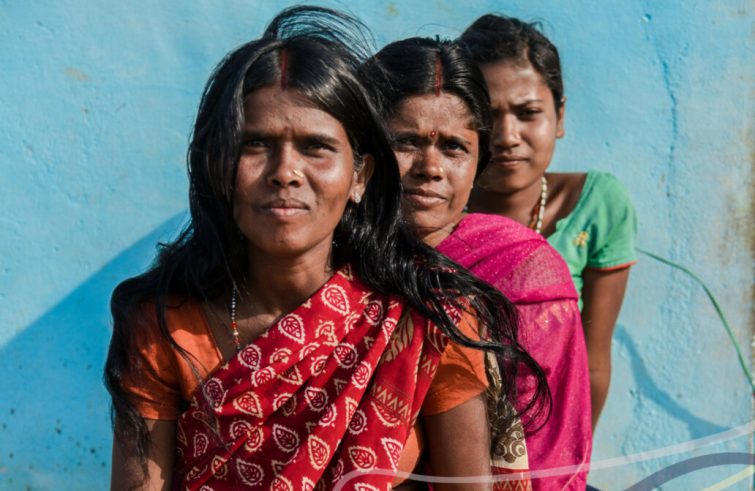
Over 3.3 billion people worldwide live in countries whose governments spend more on debt interest payments than health. The same is true for education, with at least 2.1 billion people lacking access to quality education due to their countries being trapped in foreign debt. The majority of those affected reside in countries in the Global South and are victims of a detrimental economic and financial system that prevents them from leading dignified lives or benefiting from social and healthcare spending. The reason for this is the exorbitant interest that must be paid to creditor countries in the global North, as well as to international banks and private investors. As many as 54 countries currently allocate 10% of their tax revenues to repaying debt interest, which is up 50% since 2015. On top of this comes the climate crisis and ecological indebtedness, which prevent sustainable development. On the occasion of the Jubilee of Hope and the 10th anniversary of Pope Francis’ encyclical “Laudato si”, Caritas Internationalis launched the international campaign “Turn debt into hope” on 23 December last year, disseminated by its 160 national member organisations, with initiatives and activities involving over 100 partners worldwide. A global petition has also been launched, with over 106,000 signatures collected so far. In Italy, it is being promoted through the ‘Cambiare la rotta’ (Change Course) campaign, launched by Caritas Italy in collaboration with a network of Catholic associations and movements. Over 120 faith leaders worldwide have signed a letter urging G20 finance ministers to implement effective debt cancellation. The fourth Conference on Financing for Development in Seville at the end of June, and above all the COP30, to be held in Belém, Brazil, from 10 to 21 November, will provide additional opportunities for Catholic networks and organisations to advocate for change. The Brazilian Church is currently actively involved in the initiative. Additionally, a 33-member commission established by the Pontifical Academy of Sciences will present a report on 20 June, offering recommendations on how to address the debt crisis and proposing reforms to the international financial system.
 “It is necessary to address the root causes of this global injustice. Foreign indebtedness is one of the most critical challenges facing humanity today. Pope Leo XIV shares Pope Francis’ concerns and dedication to lifting the debt burden and reforming the economic system,” said Alistair Dutton, Secretary General of Caritas Internationalis, during an online meeting organized by Caritas Internationalis and the Dicastery for Promoting Integral Human Development on 28 May. “Integral human development means that every person must enjoy the right to a dignified life,” said Sister Alessandra Smerilli, Secretary of the Dicastery for Promoting Integral Human Development. She noted that these issues lie at the heart of the Church’s social justice platform. “This initiative is key to raising awareness within the Church and civil society”, because “when a nation’s resources have been consumed by debt, there’s not much left. This, in turn, forces governments to cut spending on vital sectors such as education, healthcare, water supply and basic infrastructure.” Furthermore, “if a country owes a huge debt, it will be hit hardest by the consequences of climate change. Financial and ecological indebtedness causes wealth to be concentrated in the Global North and deprives the Global South of resources, resulting in poor countries paying twice over. Recognising that financial and ecological debt are intimately intertwined is critical to understanding the need for change.”
Cardinal Jaime Spengler, the Archbishop of Porto Alegre in Brazil and president of CELAM — the organisation representative of all the bishops of Latin America and the Caribbean — reported on the initiatives taken by the Brazilian Church regarding debt cancellation. “The indebtedness of poor countries poses a threat to the lives of society’s poorest and most disadvantaged members,” he said, highlighting serious issues in Latin America such as corruption, drug trafficking, violence, and attacks on the public good. He recalled the dire situation in Haiti: “The UN and the Organisation of American States have forgotten this violent and sad situation.” Cardinal Spengler also mentioned the ecological debt owed by the Global North to the Global South, citing trade imbalances and ecological repercussions caused by the exploitation of natural resources by some nations. “A global compact is needed between nations and generations to cancel public and ecological debt,” he said.” These words and actions should form part of a major ecclesial and social conversion.” In preparation for COP30 in November, the Brazilian Church organised small regional COPs during the fraternity campaign held during Lent.
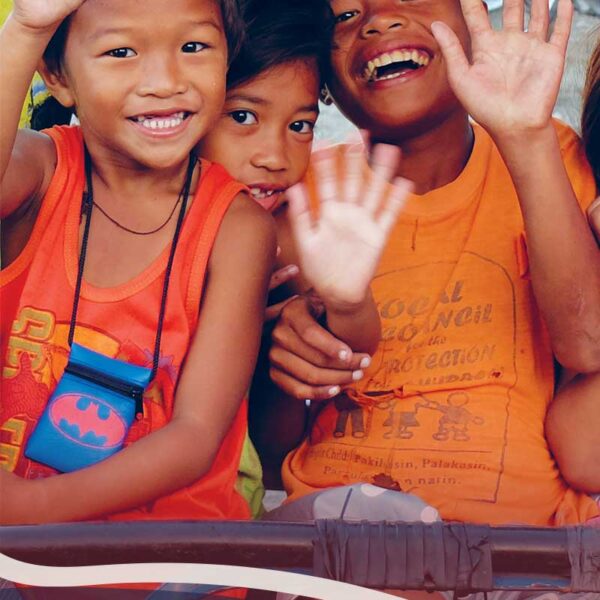
Action is also being taken by the Church at an international level.
“The present debt crisis reflects a serious failure,” said Monsignor Gabriele Giordano Caccia, the Holy See’s permanent observer to the United Nations. That failure “cannot be addressed without seeking economic justice”: “Wealthier nations disproportionately contribute to climate extremes and hold the most debt, thus creating a vicious cycle of injustice.
We should reflect on the kind of financial system we want. Do we want one that protects the interests of a small group of people or one that encourages everyone’s human development?”
“A country’s slow growth impacts the sustainability of its debt,” explained Martin Guzmán, professor at Columbia University and a member of the Pontifical Academy of Social Sciences. “The global economy is having a negative impact on the poorest countries, and the crisis is intensifying. It is the most advanced economies that fare best during times of global uncertainty. That is why debt relief is urgently needed.” Lucy Esipila, executive secretary of Caritas Africa, described how public debt prevents access to quality education, infrastructure, healthcare and staple goods, denying children their dreams, while the African continent is plagued by extractivism and the exploitation of resources. The paradox is that “in Africa, we have 65% of the world’s arable land, yet we import 85% of our food.” Alfonso Apicella and Liam Finn, representing Caritas Internationalis, addressed the meeting’s over 300 participants, detailing the process of engagement with the campaign. The goal is to promote it in the 160 countries covered by the Caritas network.