
The goal is to save lives, to try to help people before it’s too late. Tokyo’s public transport company has taken various measures to prevent suicides in the city’s underground stations. Suicide in Japan is a social scourge that affects adults, young people, teenagers and even children. In many cases, people commit by jumping in front of the trains. As a result, chest-high barriers have been installed at most stations to make it difficult for commuters to jump. Where barriers cannot be installed, stations have placed blue LED lights at the ends of their platforms, as it has been proven that a blue light, with its calming effect, can help relieve stress and thus reduce the urge to commit this tragic act. On the platforms of Shinkoiwa and Shinjuku stations, two of the most notorious suicide sites in the country, posters inform passengers that they can call a free suicide prevention hotline, while staff hand out leaflets with emergency numbers. Alarms and emergency switches are everywhere. Large screens show images of mountains and oceans. These images are meant to relax and ease inner pain. These are all measures taken in the hope of saving human lives.
Suicide, a social problem. The measures taken by the government reflect the fact that suicide is seen as a social problem, raising questions about the underlying reasons that lead so many people to take their own lives. The phenomenon has reached alarming proportions. Figures for 2024 show a record high for teenage suicides, although the national trend has continued to decline slightly. Data from the Ministry of Health shows 20,268 suicides in 2024, about 1,500 less than the previous year.
13,763 men and 6,505 women took their own lives. But 527 of them were minors.
High school students accounted for 70% of the total (349), with 163 secondary school students and 15 primary school students who committed suicide. The reasons that drove these young people to this extreme act include problems with school performance or an inability to see a future plan for their lives, as well as problems with depression related to family responsibilities and pressures, including strained relationships with their parents. Similar studies show that social media and online interactions also play a role, as they can strongly influence children and young people.
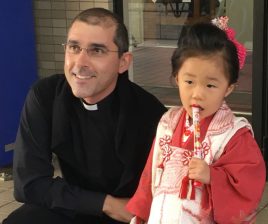
Seeds of Christian spirituality. Andrea Lembo (in the photo), an Italian missionary with the Pontifical Institute for Foreign Missions (PIME), appointed by Pope Francis in September 2023 as auxiliary bishop for the Archdiocese of Tokyo, is committed to addressing the difficulties and suffering of young people in Japan. The 50-year-old prelate shared the experience of Shinsei-kaikan, a Catholic cultural centre located in one of Tokyo’s central districts, which has been under his direction since 2021. The centre is an open space where young university students, including non-Catholics, are invited to “walk together”, taking part in cultural activities, Bible courses and meetings on art and culture. The Centre, whose name means ‘Life and Truth’, was founded in 1934 by a diocesan priest, Father Soichi Iwashita, as a hostel dedicated to St Philip Neri. The priest wanted to sow the seeds of Christian spirituality in young people. “Today, the Shinsei-kaikan centre is open to everyone, especially those who are searching for meaning in their lives or in need of help,” says the missionary.
Cosplay, the double life. The Centre, he continues, is “like a small dot in the large complex of the Soka Gakkai Buddhist Centre”. In its own small way, it carries out its mission with young people amidst “worrying social trends”. A phenomenon that is currently very popular in Japanese society is known as ‘cosplay‘ (from the words ‘costume’ and ‘play’, i.e. the art of dressing up to impersonate a character from a film, TV series, anime or cartoon):
“Young people dress up and pretend to live the life of that cartoon character. It is a way of escaping from reality, of getting away from a very strict mentality that forces children into a very strict system of rules, starting from primary school.”
Father Lembo explains: These people thus start to live a life that isn’t real, but that becomes a real life. They can express their deepest feelings and mould them into a role that becomes their new identity. They create a double life and a network of parallel relationships, which often leads to psychological and social instability.
-
- (Foto Popoli e Missione)
-
- (Foto Popoli e Missione)
Young hikikomori. Suicide is another serious phenomenon among young people: “The number of suicides committed by young people is a terrible scourge that society is confronted with.” The phenomenon of “hikikomori” – young people who remain holed up in their rooms, refusing to go out – is often an early sign of depression and suicide. The underlying cause,” says Father Lembo, “is the fear of not achieving anything in life, or the result of a traumatic experience at school, such as being bullied. I call it ‘Japan’s anorexia’, a psychological anorexia, that is, the severing of all the most fundamental bonds in one’s life.”
“At the Centre”, says Father Lembo, “we care for many of these young people and it takes a huge effort to try to reach out to them, spend time with them, talk to them, in the hope that they will at least consider the possibility of doing something outside their home. They are frightened and debilitated.”
The bishop recalls a painful incident: “One of our young people committed suicide not long ago, a few days before Christmas. He was the son of prominent medical doctors, and his older sister had a degree in medicine. This young man felt he had a sort of “moral obligation” towards his family to get an education. He graduated, and then he fell apart. This young man was due to be baptised at Christmas, but he didn’t make it. These are sad stories. But even out of these tragedies new hope can spring forth from the Lord: the parents sought psychological support and also a deeper understanding of the Christian faith and have been baptised.”
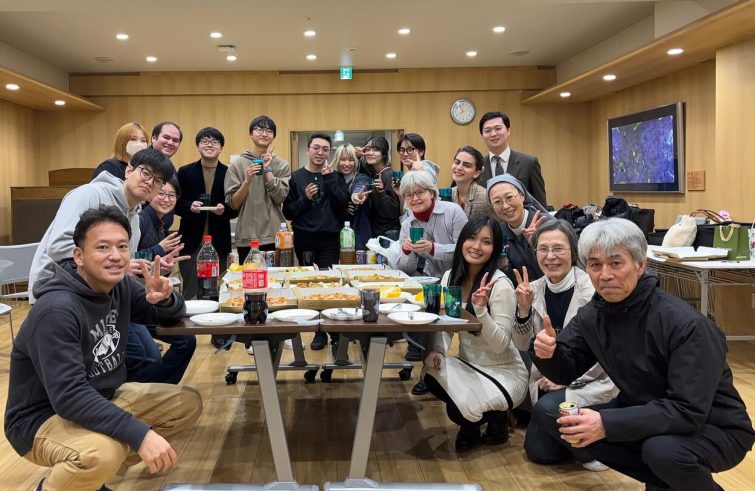
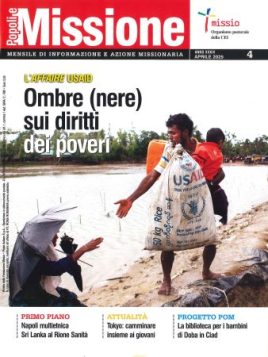 Fruitful interpersonal relations. In a complex reality such as that of Japan, the Youth Cultural Centre offers a program that includes meetings and interpersonal relations that often have a fruitful outcome. The centre also offers evening courses providing an introduction to the Christian faith and the Bible. It opened its doors to adults about 30 years ago, its activities currently cover four main areas: “The first,” the bishop told Popoli e Missione, “is Christian education for young people and adults; the study of Japanese society is another key area: we invite scholars and sociologists to discuss the challenges and issues of interest to everyone; we also have courses in Christian culture, covering art and sacred music, which are very popular; and finally, there is the area of study and reflection on the Church Fathers.” The centre, whose doors are open from Tuesday to Sunday, holds courses in the morning and afternoon. In the evening, a number of activities are organised to encourage interaction among the university students, including prayer, meetings and shared meals. “The purpose of the Shinsei-kaikan centre”, concludes Father Lembo, “is to serve as a space for learning, friendship and relaxation. We help young people rediscover the beauty of their hearts, to experience the joy of fraternity, promoting a sense of mutual trust and harmonious personal development. Along this journey we present the person of Jesus through the Gospel accounts, proclaiming his message of love and new life.”
*Popoli e Missione