

The rubble is being dug up, the dead are being counted, but humanitarian aid is the most serious emergency in the aftermath of the earthquake. It is the Archdiocese of Mandalay – a city that was at the epicentre of the quake on Friday 28 March – that is taking the updated “inventory” of the crisis, sending Sir reports on the situation, accompanied by a series of photographs taken in the city of buildings crumbling to the ground, displaced people in the streets and damaged churches. The archdiocese has set up a relief and emergency team to provide humanitarian assistance to those affected by the powerful earthquake. The two major earthquakes that struck central Myanmar had their epicenters in the cities of Mandalay and Sagaing, the latter of which is in the Archdiocese of Mandalay. Several aftershocks have since been recorded. The two strongest earthquakes in the Mandalay region have affected all townships in the region. According to the archdiocese’s report, more than 1,000 people have died, more than 2,200 have been injured and about 200 are still missing in central and northwestern Myanmar. But the figures are preliminary. Most of the deaths were recorded in the Mandalay region.
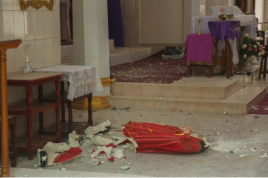
(Foto arcidiocesi di Mandaly)
“At this time,” the archdiocese writes, “the most urgent need is for humanitarian aid, including food, medicine, temporary shelter, hygiene kits and basic household items.” In the future, financial assistance will be essential to rebuild the community. The earthquake caused widespread destruction of homes and severe damage to infrastructure. Thousands of people are spending the night on the streets or in open spaces due to the damage and destruction of their homes and the fear of further earthquakes. Major water and electricity infrastructure and communication towers have also been badly damaged. As a result, services have been disrupted, including in the Yangon region. Fixed, mobile and internet networks remain unstable. Hospitals in Mandalay, Magway, Nay Pyi Taw and Sagaing are reportedly struggling to cope with the influx of people injured in the earthquake. Emergency humanitarian supplies have been mobilised to support affected communities in Mandalay. Humanitarian partners, the UN, international and local NGOs are planning a joint assessment to implement an immediate and coordinated response using resources already available in Mandalay.
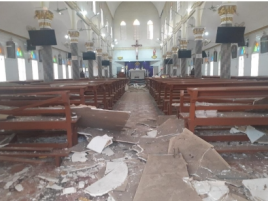
(Foto arcidiocesi di Mandalay)
“In the four years since Myanmar’s military overthrew the democratically elected civilian government led by Nobel Peace Prize winner Aung San Suu Kyi in a coup, the country’s plight has slipped off the international agenda,” notes journalist Benedict Rogers in UcaNews. “Apart from a few rare news reports, the numerous other world crises and the junta’s efforts to isolate Myanmar from the outside world have meant that its plight has been largely ignored. Now,” the journalist writes, “Myanmar is back in the headlines and it is time for the world to act. It is a sign of the seriousness of this catastrophe that junta spokesman Zaw Min Tun has made an unprecedented appeal for international help.” But the most serious fact is that while the military junta is calling for help, it continues to bomb civilians in the earthquake-hit areas. “What kind of people bomb other people whose lives have just been devastated by an earthquake?” asks Rogers. “What kind of government asks for international aid and then bombs its own people?” Even the United Nations has described these air strikes as “totally outrageous and unacceptable”. That is why Card. Charles Bo yesterday called for a ceasefire. “World leaders, including the UN Secretary General, the Pope, President Trump and the governments of the region” – Rogers notes – “must become spokespeople for this appeal. Pressure must be put on the junta to stop the bombing as humanitarian workers try to rescue civilians from the earthquake rubble.”