
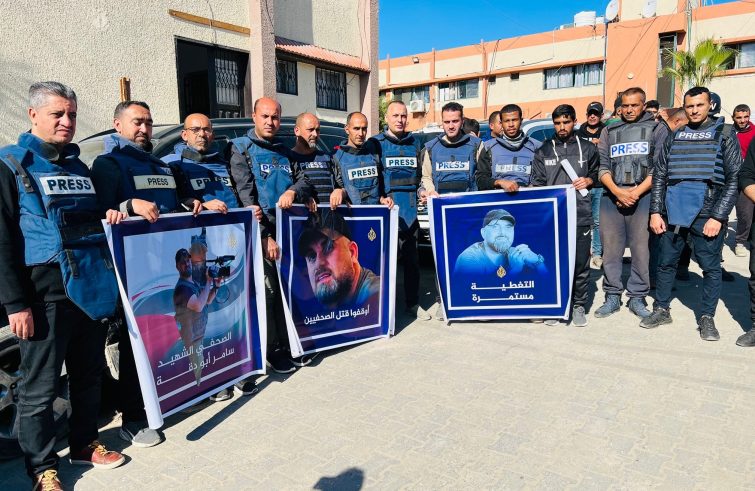
The International Federation of Journalists estimates that 104 journalists and media workers lost their lives last year. More than half of them were killed in the Gaza Strip, which has been devastated by the ongoing Israeli-Palestinian war. In addition to these tragic figures, more than 520 journalists worldwide are imprisoned, an increase from the previous year (427 in 2023). But difficulties are commonplace for journalists reporting from war zones, as evidenced by the recent case of Italian reporter Cecilia Sala, detained in Iran’s Evin prison and the focus of a delicate international affair involving the arrest of engineer Mohammad Abedini at Milan’s Malpensa airport a few days before Sala’s imprisonment.
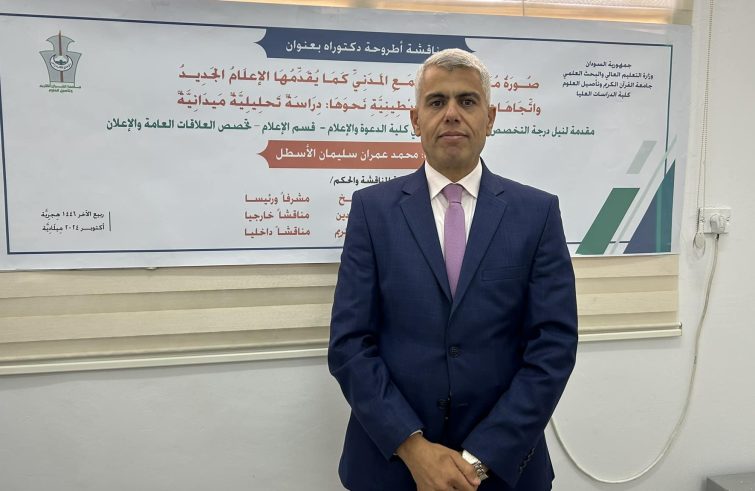
Student and journalist. And yet, some stories have happy endings that offer glimmers of hope at the end of an otherwise dark tunnel, despite the complicated international context that challenges journalistic activities. Mohammed Omran Astal, known under the pseudonym of Mohamed Solaimane, is a reporter based in Gaza who has been sharing his personal testimony of the impact of the humanitarian crisis that has taken its toll on the population of the Strip since 7 October 2023. He announced on social media platforms in recent weeks that he had been awarded a doctorate in Media Studies from the Faculty of Science at the University of the Holy Quran in Sudan, with a thesis entitled “Representation of civil society organisations in the new media and attitudes of Palestinian elites.”
He was publicly congratulated by the Palestinian Journalists’ Union, although his studies faced enormous challenges from the start.
“During the day I reported on the horrors of the war – he said – while at night I worked on my thesis by candlelight,” he told El Pais, which published a personal account of his story.
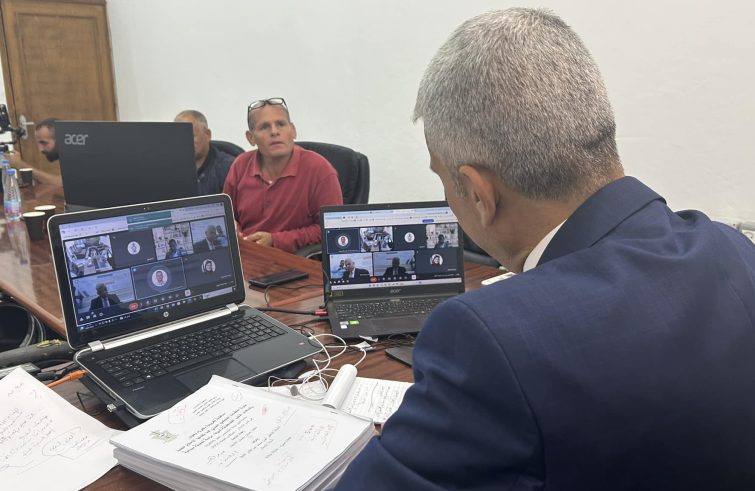
Writing inside a tent. After his home in Khan Younis was destroyed by Israeli shelling, the reporter had no choice but to stay in one of the many tents for internally displaced people in Al Mawasi in order to complete the more than 500 pages he was required to submit to the examination board. His account continues with a description of the defence of his dissertation in a hall at the Strip’s Telecommunications Authority, one of the few places with an internet connection to the outside world. Solaimane says that his family was not present, not wanting to risk a journey along the war-torn roads. “It should have been a happy day, but it unfolded against the devastating backdrop of war: the room was silent, except for the hum of the electricity generators” he pointed out: “It was a stark reminder of the extent to which the ongoing conflict has undermined even the most ordinary moments of joy.”
-
- (Foto FB Mohamed Solaimane)
-
- (Foto FB Mohamed Solaimane)
Marvelling at the blue suit… In addition to the humanitarian crisis, logistical difficulties were always in the background while Solaimane was working on his thesis, the main challenge being communication difficulties, since internet access in the Strip is as precious as it is rare, as is the supply of electricity for essential technological equipment.
“To recharge a mobile phone or a laptop, you often have to wait in long lines at community generators or rely on your neighbour’s solar panel,” the reporter remarked.
Solaimane recalls that as he walked to the place where he was due to discuss his thesis, passers-by stared at him with wondering eyes, as “a spark of hope in the midst of despair”: his navy-blue suit had been recovered from the rubble of his destroyed house, while his shoes had been carefully repaired by his family members.
Schools (and the future) under attack. In one of his latest investigative pieces, Solaimane details the ongoing, repeated targeting of schools, universities, students and teachers in Gaza, seemingly aimed at crippling the entire Palestinian education system. The reporter highlights the plight of young people trapped inside Gaza after the border closure, forced to relinquish their dreams of studying abroad. Farah, who was granted a scholarship to study international relations at Karabuk University in Turkey, is now stranded in the Nuseirat camp: she has missed her first year of studies and perhaps the greatest opportunity of her life. Speaking to Solaimane, she shared with the reporter the gravity of her plight: “We are being punished twice, first with the bombings and the constant risk of death, and then by being denied access to education, which is destroying our future.” Stories like Farah’s and those of so many of her peers, painstakingly collected by those who, in spite of countless hardships, have been able to say ‘I made it’, testify to the resilience of a people whose younger generations are nurturing the hope of a future, at last, under the banner of peace, in which fundamental rights such as education are guaranteed alongside the right to life.