
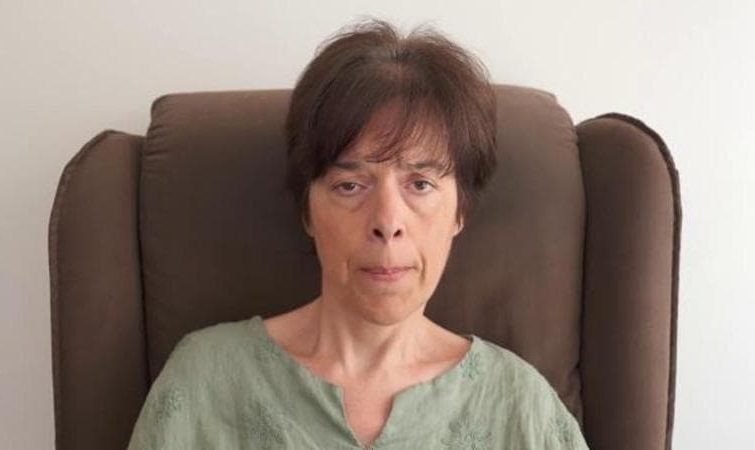
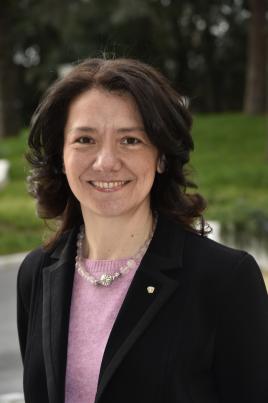
The desire to die “with dignity” to end intolerable suffering. This is the most common rationale for medically assisted suicide. Such was the case of Laura Santi, a 50-year-old journalist from Perugia who suffered from an advanced, progressive form of multiple sclerosis. She died on July 21 at her home after self-administering life-ending medication. Laura met the requirements established by Constitutional Court ruling 242/2019 and is the ninth person in Italy to be granted legal authorization for assisted voluntary death. Her decision prompts deep compassion for the suffering and hardship she must have experienced, ultimately leading her to take such an extreme step. At the same time, however, her choice raises questions about the true meaning of compassion—not shallow pity, but presence, sharing, and supporting those who suffer—and the value of life. Defending the existence of every person reflects how we defend our own, especially the most fragile among us, who may feel abandoned or believe they are a burden to others. While parliamentary (and public) debate on the consolidated text, “Amendment to Article 580 of the Penal Code and Further Provisions Implementing Constitutional Court Ruling Number 242 of November 22, 2019,” continues, SIR asked Marina Casini (in the photo), president of the Italian Pro-Life Movement, to share her thoughts following a few days of silence.
Marina, how did you feel when you heard about Laura Santi’s death, and what would are your thoughs?
I was saddened by her death. I prayed for her, her loved ones and those who helped her end her life. The boldness exhibited by proponents of assisted suicide suggests a loss of our collective humanity. I believe that
“showing solidarity” by helping a person to die through assisted suicide is a defeat. It is not a victory for rights. Nor is it an achievement.
It is the culture and mentality that people are keen to promote through all their talk of dignity, rights, civilisation and freedom that prompt me to say this. However, when I think of Laura and others like her who have asked for and obtained help to end their lives, I turn to silence and prayer. We can never truly know what goes on in the mind and heart of someone who dies, or even chooses to die.
People must always be ‘saved’ and entrusted to God’s mercy. Nevertheless, we must not remain silent about a culture that is deadly, deceitful and misleading.
It is our duty to judge. The question is always about “saving” individuals, humanity, and relationships. There is something disturbing and overwhelming—almost like a toxic form of seduction—in disconnecting the value of life and dignity from life itself.
However, fatigue can sometimes lead to despair, which can lead to thoughts of death.…
That’s true, but it’s not the issue at hand. Specifically, what’s at stake is the disruption of the categories of good and evil. It’s about denying inherent human value. What we are seeing today is rooted in a culture of social and legal permissiveness that begins with abortion and leads to a loss of clarity about the human person. When a person in their utmost fragility and poverty is considered an object rather than an individual, a human person, an end rather than a means, the pillars of our civil coexistence are called into question. Freedom, law, justice, equality, and democracy risk becoming empty vessels that can be filled with any sort of content. Essentially, a clouding of consciences is produced.
The ultimate debate is not about freedom, but about the meaning of life, which is deemed meaningless if it is seemingly mutilated and in pain.
Unquestionably, suffering must be countered through improvements in palliative care, but the focal point remains the meaning of human life. This requires profound reflection on the nature, extent, strength, reason, meaning, and guarantee of the right to life which is precisely what is challenged by a materialistic and individualistic view of humanity.
While death can be accepted, embraced, it should not be administered.
This implies a huge commitment aimed at ensuring full protection for vulnerable people and support for their families across the board and at all levels.
While it is important to respect and not judge situations involving serious illness or disability that could lead someone to seek assisted suicide, is there not a risk that, thanks to the symbolic value of legislation, the draft bill currently under discussion could lead to these situations being viewed negatively and suicide being considered a “possible” if not “desirable” option?
There is a risk of this happening. Unfortunately, the way has been paved by Law 219/2017, followed by the well-known Constitutional Court ruling 242/2019 and the subsequent debate. Laws are a “guide to action” for society and an expression of “collective values”. For most of our members, “legal” is equivalent to “moral”, especially if the government, via its public bodies, assumes responsibility for implementing assisted suicide, which the aforementioned bill excludes. In any case:
No law approving or promoting assisted suicide can be considered ‘just’.
Church teaching provides Catholics with their moral compass: “Abortion and euthanasia are therefore crimes which no human law can legitimise”, reads paragraph 73 of Evangelium Vitae. While it is true that not all laws are unjust, nor are they unjust to the same degree, and that we should not categorise everything together, legislation does enhance the scope of certain behaviours. Having said that, I also realise that, in practice, achieving moral high ground in parliamentary debate, where opposing forces meet and clash, is not at all easy. Furthermore, not everything that is morally good can be achieved immediately, and the greatest good to strive for is not absolute (and therefore “decontextualised”) good, but rather the achievable good — everything that can be achieved here and now given the specific circumstances. While this “contextualised” good may not be sufficient at an abstract level, in practice it remains the best possible good and must not be renounced simply because something better cannot be obtained. A “culture of life” must not only firmly recognise what is absolutely right in relation to human dignity, but also attempt to prevent attacks on human life to the greatest extent possible.
Doing nothing when it is possible to avert evil is tantamount to evil.
Eliminating a certain amount of evil is not the “lesser evil”. If it is the best that can be achieved, it is the greatest possible good. These considerations arise from a particular passage in paragraph 73 of Evangelium Vitae, which should not be overlooked or trivialised. In fact, this passage is very rigorous and must be interpreted with equal rigour. Without serious analysis, there is a risk of colluding with an unjust law under the guise of the “lesser evil”, whereas legitimate and necessary attempts should be made to limit its iniquitous aspects.
What, then, constitutes a possible balance between protecting life and attempting to create conditions in which no one ever feels they “just can’t go on” any longer?
The answer lies in the comprehensive, effective and efficient support and protection of vulnerable persons, ensuring they receive priority care and assistance from the entire National Health Service.
Much remains to be done in the area of palliative care, which is a fundamental aspect. However, this must be accompanied by a set of measures ranging from improving the quality of home and hospital care to ensuring easy access to vital treatment. These measures should also include supporting caregivers, removing bureaucratic barriers within the healthcare system, improving vocational training for healthcare professionals, and increasing financial investment in healthcare services and facilities, including increasing the number of hospices and hospital beds. These are just a few of the issues that need to be addressed. Without support enabling those affected by illness and dependence to live and receive treatment, without support for families caring for sick, disabled or elderly members, and without meaningful relationships that give purpose to their lives, the abyss is just a step away. Can we really talk about “self-determination” in this situation? In reality, we are faced with “self-exclusion through hetero-determination”.
We can only hope that Parliament will do everything in its power to make sure that assisted suicide remains illegal.