
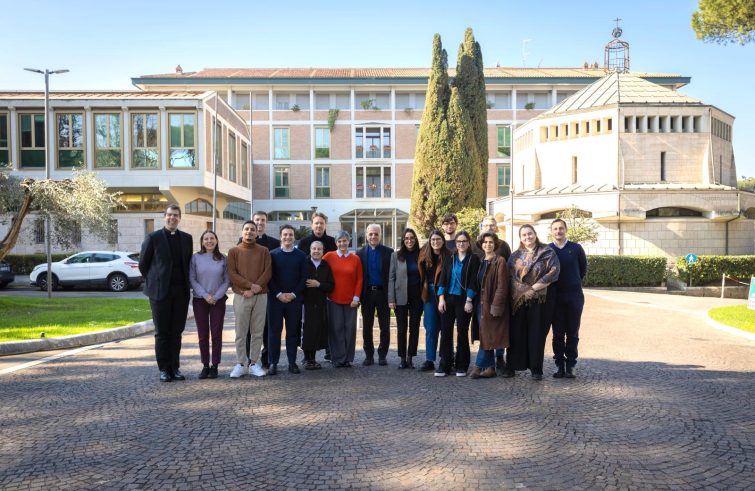
“The idea that young people don’t have a voice and cannot change things is wrong. The transformative potential they have needs to be recognised and valued.” “Young people must spread their wings and fly. We are the drivers of change.” These were the words of Jasmina Cipriani and Celine Gherardini, respectively representing the young women’s group of Soka Gakkai and the Baha’i youth. They were the first speakers at a panel discussion held this morning at the Rome offices of the Italian Bishops’ Conference (CEI) on the theme: “Religions at the service of social cohesion”, which for the first time brought together young delegates from the various Christian denominations and non-Christian faiths in Italy. Representatives of the Italian Jewish community (UCEI) and the Muslim community (Young Muslims of Italy and Coreis) were present, as well as representatives of the Baha’i faith and the Buddhist community (Soka Gakkai). The Christian churches were represented by delegates from the Federation of Pentecostal Churches, the Holy Orthodox Archdiocese of Italy and the Coptic Orthodox Church. The Catholic organisations present were ACLI (Christian Workers’ Association), AMEC (Jewish-Christian Friendship), AGESCI (Italian Catholic Scout Association), CI (Communion and Liberation) and FUCI (Italian Catholic University Students’ Federation).
The Office for Ecumenism and Interreligious Dialogue of the CEI together with the National Service for Youth Ministry promoted the meeting. The initiative was launched last year by religious leaders in Italy and will culminate in a conference on 25 June in preparation for a Symposium of Religions in Italy planned for 2026.
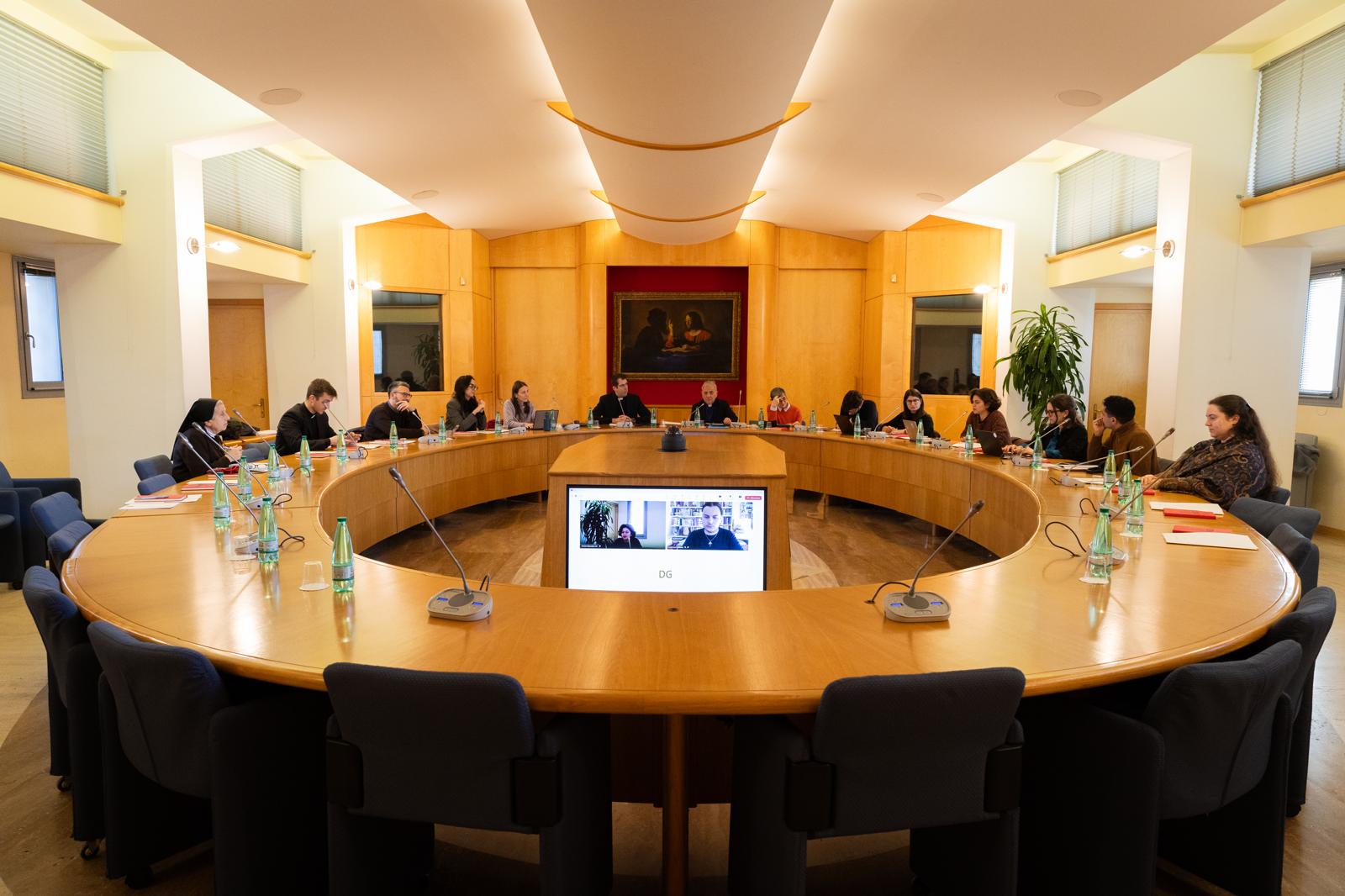
“Young people coming together for a meeting is a sight to behold,” commented Giuseppina De Simone, theologian and moderator of the debate. “It reflects a willingness to work together, to connect, to build friendships and collaborations. And all this is a reason for strong hope for the future. The future is in our hands, and we must not give in to resignation or defeatism.”
“The circumstances we face today may not offer much room for hope. But our response to all this is yet more hope, together with the creative vision to broaden our horizons and gaze far into the future, towards a future that is possible.”
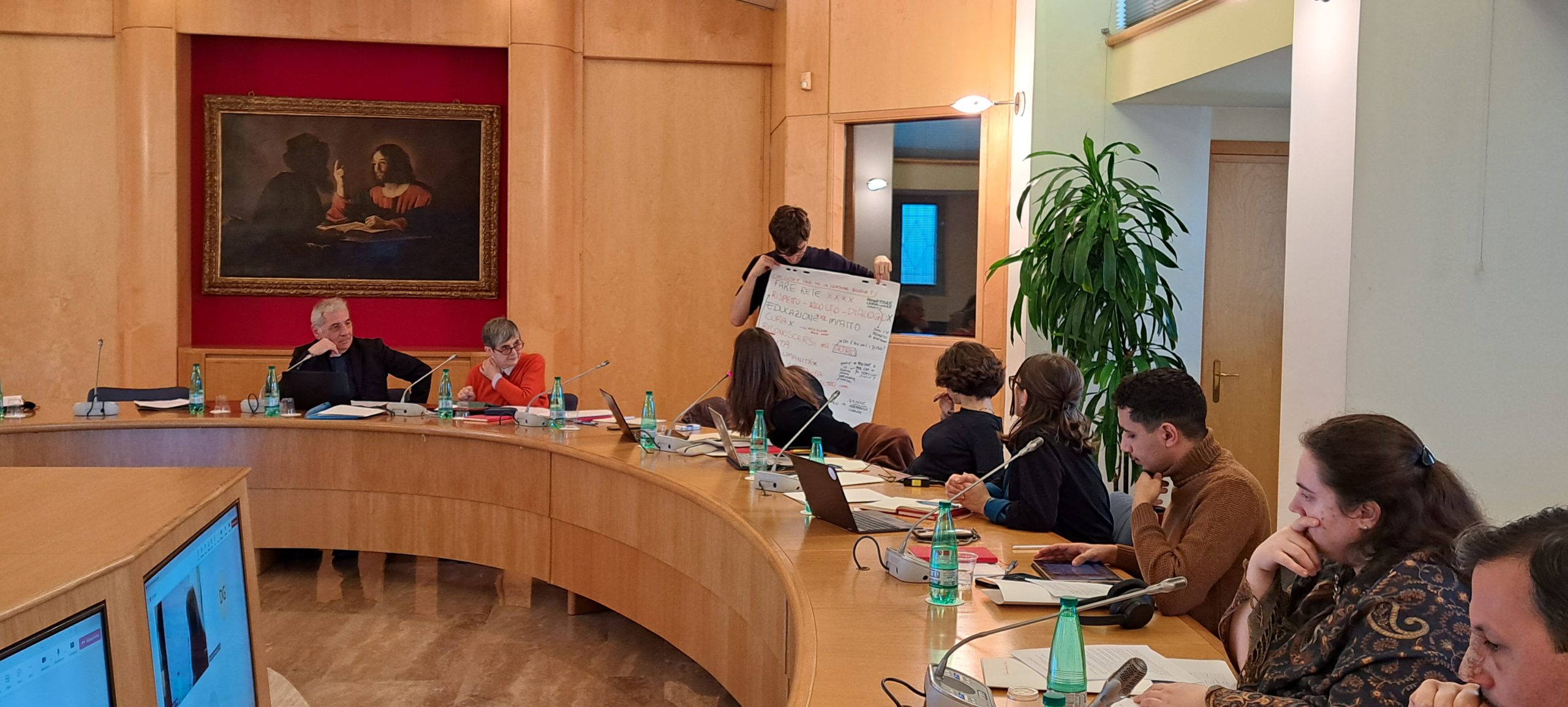
Moments of conversation, attentive listening and silence characterized the “workshop”. “Each one of us is here with their respective stories and cultures, enriched by their respective religious traditions. We are here in this space of dialogue, where everyone is free to be themselves”, said Don Giuliano Savina, director of the CEI Office for Interfaith Dialogue These words were followed by a lively exchange of experiences and visions. “Why are we interested in cohesion and why are we working to create a network?” For Veronica Guidotti (CL), “It’s because each of us, at some point in our lives, has had an experience of a relationship that led to a new beginning and required a new level of awareness.”
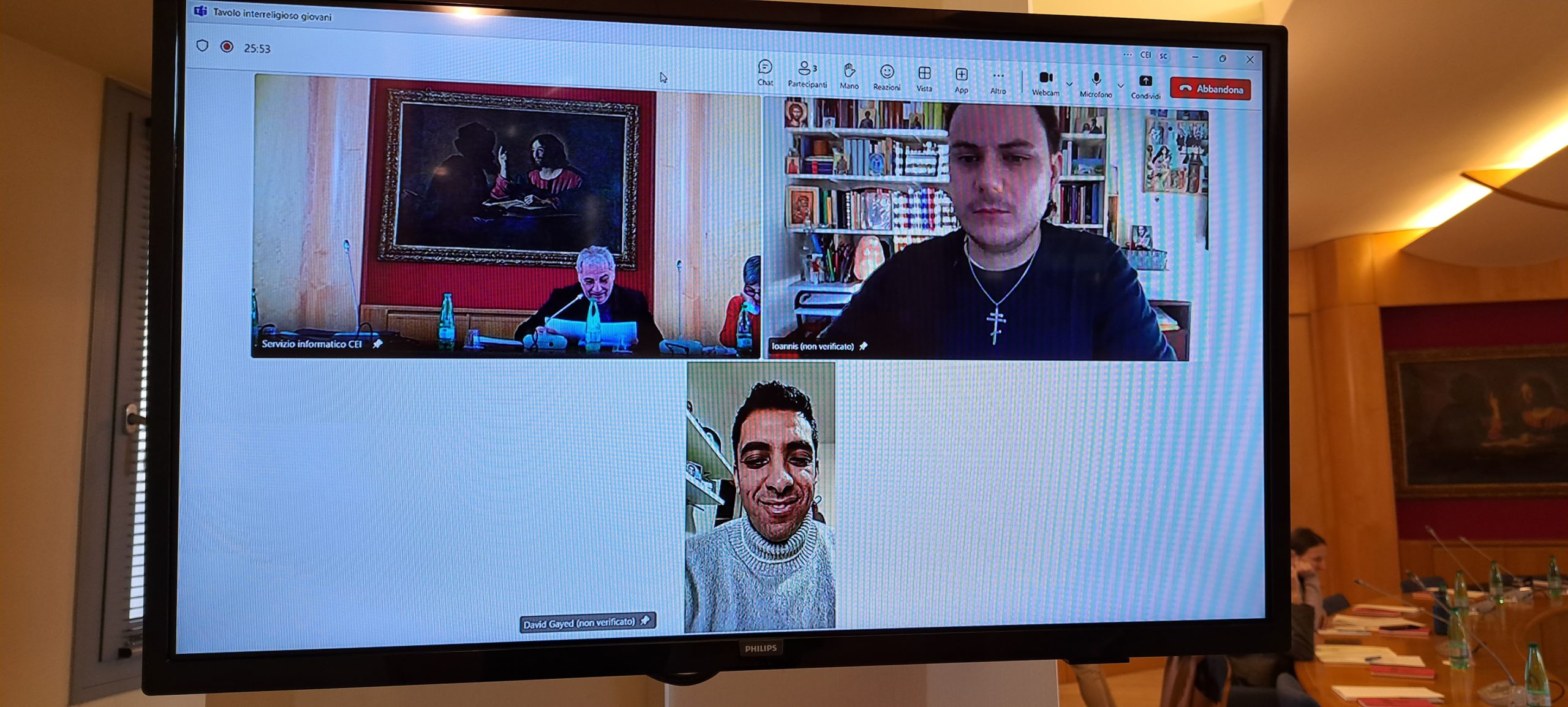
There are problems and they are not being hidden. The declining number of under-30s in the communities concerned and the absence of young people “especially in decision-making processes” were also highlighted during the meeting. But this does not mean that young people are no longer part of the process. On the contrary. “Young people have something to say and they can also surprise us. Mohamed Afifi, an Italian of Egyptian origin representing the Young Muslims of Italy, was the first to comment. “Young people have a fundamental role to play in promoting social cohesion,” he says, “simply because we have an innate sense of integration. We were born and brought up in Italy. We know the religion and culture of the country to which we belong. At the same time, we practise our faith. Therefore, no one can be a better promoter of cohesion than we are.” However, “dialogue should be practised not only when things are going well, but especially when our communities are facing difficulties.” Luca Spizzichino, president of the Union of Young Italian Jews (UGEI), echoed these sentiments, pointing to the widespread climate of hatred today. “Anti-Semitism and Islamophobia are forms of hatred, and hatred must always be condemned.” “These are indeed difficult times,” said Amina Croce from COREIS, “but I believe that difficulties also bring opportunities.”
“We should not be afraid of others, but rather focus on our common humanity,” said Father Riccardo Pincerato, Director of the National Service for Youth Ministry. “We should not be afraid to hold each other’s hand, to tell each other who we are and to enter into dialogue. From this dialogue, from this discussion, we will come to understand that there is a much greater reality, greater than ourselves.” “Young people,” he said, “have a yearning to dream, despite the narrative of a world that insists that dreams don’t come true. They need to discover an adult world that offers them a possible alternative to the resignation in which, unfortunately, they are all immersed. We hope to prove that it is possible to keep on dreaming.”