
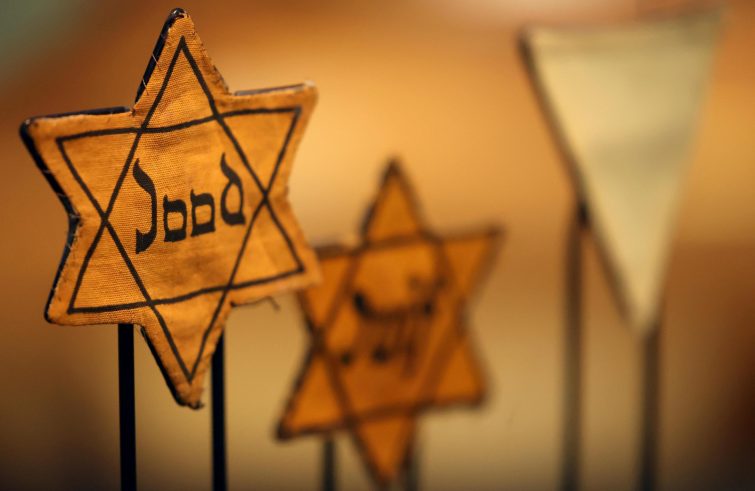
This year marks the eightieth anniversary of the liberation of Auschwitz extermination camp. While until recently it was generally expected that the forthcoming Holocaust Remembrance Day would be marked by widespread and high-profile ceremonies, this year’s commemorations are set to be marked by a more subdued and discreet tone. It is even possible that the event may entirely exclude any reference to the Jewish deportation from the commemorations thereby transforming the day into a reflection on ‘genocides’ perpetrated across the globe, with a particular emphasis on the ongoing conflicts in the Middle East and Gaza.
Due reference should be made to Article 1 of the Italian law which, 25 years ago this July, finally established a day to remember the racist crimes committed by Fascism in Italy: The Italian Republic recognizes the day of 27 January, when the gates of Auschwitz were torn down, as “Remembrance Day [Giorno della Memoria],” to remember the Shoah (“extermination of the Jewish people”), the racial laws, Italy’s persecution of its Jewish citizens, Italians who were victims of deportation, imprisonment and death, as well as those, with differing positions and allegiances, who opposed the extermination project and, risking their own lives, saved others and protected the persecuted.
It is a very specific law that calls on society to carry out a demanding – yet explicit – exercise of remembrance. It is also a law that should undoubtedly be complemented by other, equally specific, occasions for remembrance, for example of the Roma and Sinti, Italian citizens: they too faced persecution and deportation. But this is not some general law, it is not a universal appeal for peace or a call for greater human fraternity between peoples.
It is a request, enshrined in law, that calls on Italian society to reflect on the fact that only three generations ago racism was institutionalised as a legal basis of civil life, along with State-sanctioned prejudice and discrimination.
The 1938 laws and the subsequent persecution thus acquired a clearly defined denomination and identity in the form of racist and anti-Jewish legislation enshrining the “solution to the Jewish problem.” Any attempt, whether intentional or not, to tarnish this memory, to disguise it with a blurred mist or, taking it to the extreme, to draw false parallels with what is being done elsewhere today by the descendants of those victims, is nothing more than an attempt, whether intentional or not, to obscure the memory, to spare the conscience of our society, to refuse once again to come to terms with its past, on the pretext of the alleged complicity of the Jewish world in other atrocities elsewhere. I shall not repeat here for the umpteenth time the distinction between Jews and Israelis: that is not the point.
The point is that the fight against anti-Semitism is not a necessity because Jews are “good” people. Rather, it is driven by the recognition that anti-Semitism, like all forms of racism, is a deep-rooted disease within our societies.
And anti-Semitism is a specific disease that is deeply rooted in Italian and European culture and is hard to eradicate. This, besides being enshrined in a national law, is a necessary task. For the record, the Jewish community is not shying away from the debate, nor is it demanding censorship of discussions on the war in the Middle East. We mourn each and every victim, in Gaza and elsewhere. We firmly believe that the world’s attention is needed in regions where armed conflict is raging. Indeed, we would like that attention to be even greater, perhaps not only in relation to what is happening in the Israeli context, of course, but without exclusions.
We wish we could bring dialogue and peace where the guns are roaring.
Although we do not represent any of the parties involved, we would like to contribute to any reflection, including on current events and the war, perhaps occasionally expressing opinions that differ from those of the people who ask for them, but with sensitivity and consideration. As always, we are ready and willing to participate in public and private events, debates and discussions.
Not on 27 January, not on Holocaust Memorial Day. Especially today, in the face of escalating populist dictatorships and racism around the world, we condemn as a grave offence all efforts to diminish anti-fascist vigilance. Those are attempts to dilute the meaning of the Day of Remembrance and to favour the Holocaust deniers, fascists and racists of yesterday and today.
(*) President of the Jewish Community of Florence