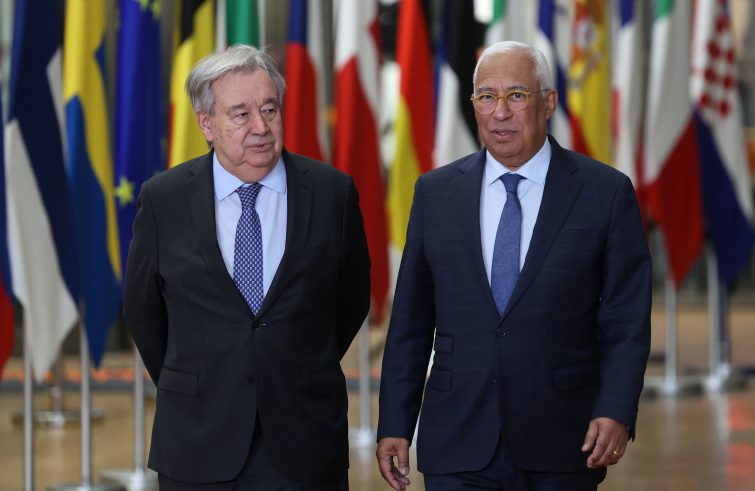
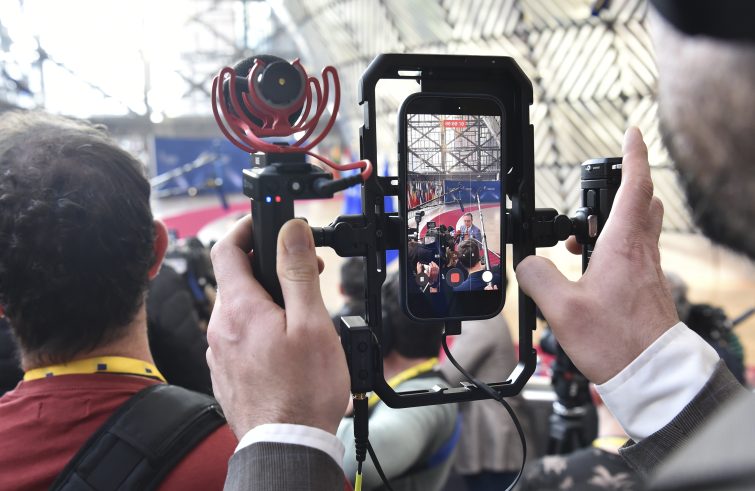
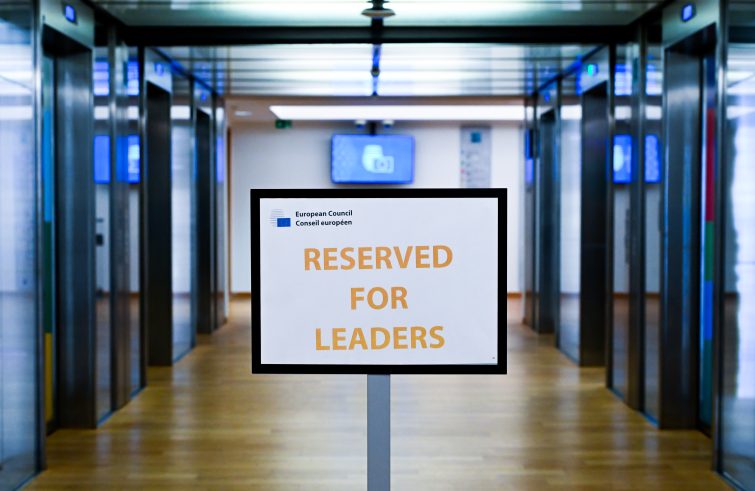
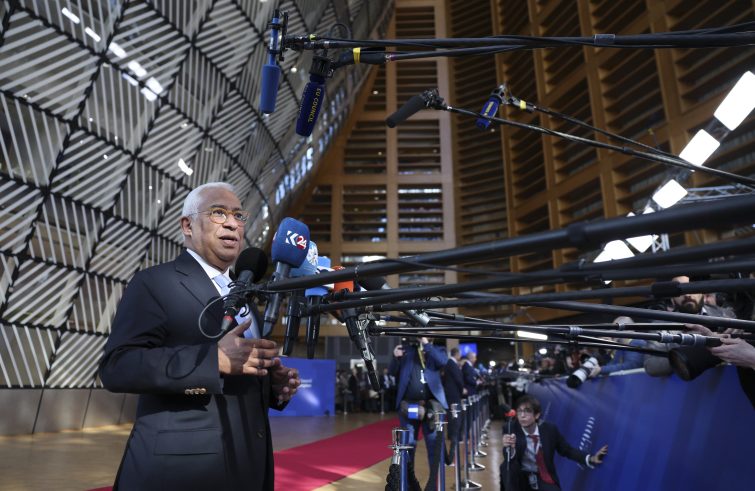
(Brussels) “2026 is the European Year of Competitiveness. And today, the leaders will focus on competitiveness. To boost economic competitiveness is essential to increase our economic growth, to create quality jobs, but it is also essential to increase our strategic autonomy. And today, we will deliver on our ‘One Europe, one market’ agenda, as we promised some weeks ago in our retreat in Alden Biesen. The 28th regime, the so-called ‘EU Inc.’, is a very good first step”. António Costa, President of the European Council, speaks about the economy and competitiveness on the day when EU leaders meet in Brussels. Yet the summit is overshadowed by the situation in the Middle East, the issue of the loan to Ukraine, internal divisions among Member States, and the surge in energy costs. Among those present at the summit is also the UN Secretary-General Guterres, for an exchange of views on a multipolar order threatened by an increasingly turbulent international context and by the decisions of US President Donald Trump.
-
- (Photo European Union)
-
- (Photo European Union)
“We need to continue, we need to integrate energy and telecommunications sector in the single market, we need to pursue our simplification agenda, and we need to invest more in innovation in the new sectors: AI, quantum computing. We need to invest more in skills, reskills, upskills, life-long learning”, President Costa insists. Finally, “we need to have a next long-term budget fit for this purpose. And of course, we need also to mobilise the European savings to support investment. And for this, we need to conclude the Savings and Investment Union, it is very, very important. That is why today we will approve very concrete measures, with a concrete timeline, to deliver our agenda by the end of 2027 at the latest, but with several measures that we need to adopt until the end of this year”.
“Of course, nobody can ignore that we are facing challenging times on energy, and we need to address them”, President Costa acknowledges.
“The current conflict in Iran shows, once again, that the best way to have a predictable and reliable horizon on our energy is to increase the homegrown production of energy. This is the only way to become autonomous, independent, and secure our energy system. For this, we need to pursue our energy transition, and this is our main task”. He adds: “we need to do this taking into account the specificity of different member states, the specificity of some economic sectors, that are intensive in the use of energy. But we need to do this together and never forget that we need to not only protect our companies today, but we need also to ensure that the next generation continues to have a planet to live in. This is part of the climate and the environmental goal”. “It is clear that energy means security. We need to build our own capacity to produce our own energy, because it’s the only way to be secure”.
-
- (Photo European Union)
-
- (Photo European Union)
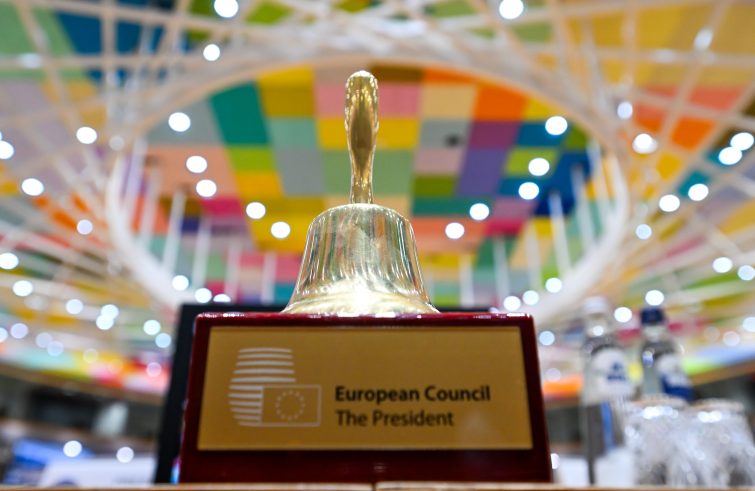
Finally, “we will have the opportunity to meet with the Secretary-General of the United Nations, António Guterres. The multilateral system is a basic instrument to protect the international rules-based order. And it is clear that there is no alternative to the international rules-based order, because the alternative is the war in Ukraine, the alternative is unfair competition on trade, it is the threat on the sovereignty of Greenland, it is the threat to sovereignty in other parts of the world. Then, if you want to preserve stability, if you want to preserve peace, we need to uphold the international law and uphold the multilateral system”.
The meeting with António Guterres is considered “very important, not only to address the dramatic situation now in the Middle East, namely what is happening in Lebanon, that is dramatic”, but also
“to never forget that it is urgent to mobilise the international community to support the Gaza population,
because you need to clean the rubble, we need to ensure water supply, energy supply, emergency shelter for people living in Gaza. Because we are moving from a conflict to another conflict, but unfortunately, the war in Ukraine did not stop, the situation in Gaza remains dramatic, and we need to address all of this”.
The summit is scheduled over two days, 19 and 20 March, although in recent times leaders have often concluded their work after the first day. However, given such a complex agenda and the many internal divisions, it is possible that discussions in Brussels will continue tomorrow as well. In addition to economic issues (competitiveness, the single market), the agenda includes Ukraine (with an address by President Zelenskyy), the Middle East, the multiannual budget (MFF), defence and security, and migration. As always, an exchange of views is also scheduled with the President of the European Parliament, Roberta Metsola.