

Putin and Trump, Israel and Hamas, Venezuela, Iran and Greenland… International current affairs thrust figures and issues to the fore around which a profound “change of era” is taking shape. Indeed, each day we are disoriented by events as they unfold, by words and decisions that until yesterday we would not even have imagined. We discuss this with Sebastiano Nerozzi (pictured), full professor of History of Economic Thought at the Catholic University of Milan. Nerozzi is secretary of the Scientific Committee and organiser of the Social Weeks of Italian Catholics, and among the promoters and drafters of the Code for a New Europe.
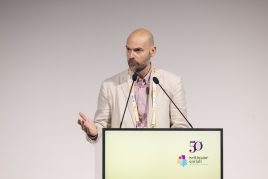
(Foto Siciliani-Gennari/SIR)
Professor, is there a key to interpreting this historical phase and finding our bearings?
The interpretative key lies in a profound change – indeed, a genuine rupture – in the system of international relations that emerged after the Second World War. This means that terms such as “alliance”, “cooperation”, “international institutions”, “human rights” and “international law” are being severely weakened and must be entirely rethought. Alliances lose their character as stable, long-term relationships focused on a broad and coherent set of issues, and are replaced by short-term agreements serving specific interests and limited to individual questions.
Cooperation between countries is confined to the pursuit of immediate objectives and designed along strongly asymmetrical lines.
Multilateral institutions are left to their fate, openly derided and replaced by coalitions convened by the hegemonic superpower on the basis of objectives and decision-making mechanisms that enhance its command power rather than its capacity for persuasion and for fostering a shared vision. Human rights and international law are openly bypassed, or else invoked selectively and instrumentally, in order to legitimise ex post the use of force in the service of national interest. More generally, the typical forms of diplomacy are abandoned in favour of an ostentatious display of economic, technological and military strength, aimed at obtaining advantages and compensations that fuel the leader’s domestic consensus and serve the interests of companies, business networks and social elites linked to him. It is a foreign power politics at the service of an authoritarian drift at home, which trades the reduction of democratic space for promises of security and economic well-being that in reality are reserved for a few.
One point seems clear: Eurocentrism, if it ever existed, has come to an end. And Europe – which, it must be acknowledged, overall remains a land of democracy, rights and development – appears disoriented, voiceless and constrained. Can the European Union still play a role on the international stage? What steps should be taken in this direction?
The European Union can still play a role on the international stage, but not by inertia or by the mere evocation of its past. Rather, it must recognise that the context in which it was able to exert influence – a relatively stable multilateral order, founded on shared rules and on progressive economic integration – has profoundly changed. In this new scenario, Europe risks irrelevance not so much because of a lack of resources, but because of the absence of a common political vision and of adequate instruments to support it.
The first step, therefore, is political: overcoming the illusion that normative power and the attractiveness of its model are sufficient in a world increasingly structured around power relations.This implies equipping itself with a genuine capacity for common decision-making in foreign policy, security and defence, reducing the weight of national vetoes and accepting a greater degree of sovereign integration. Without a credible capacity for deterrence and projection, Europe will continue to be a predominantly reactive actor. At the same time, the European role cannot be a simple imitation of others’ power politics. Its specificity could lie in the ability to combine interests and values, pragmatism and the protection of global public goods, starting with trade, climate, technological regulation and development cooperation. But for this ambition not to remain rhetorical, it is necessary to invest in common instruments, speak with a single voice and accept that unity carries an immediate political cost: this represents the only possibility of counting in the medium to long term.
Security and defence, economy and welfare, the digital challenge, the demographic crisis, migratory pressures, climate change: these are just some of the dossiers on European leaders’ tables. In your view, what are the first and real urgencies that need to be addressed?
The urgencies that European leaders are facing are not separate compartments, but interconnected elements of a single structural crisis. External and internal security, the sustainability of welfare systems, economic and technological competition, the ecological transition, the demographic crisis and the management of migration flows all feed into one another and cannot be effectively addressed at a purely national level. The first urgency is to recognise this interdependence and translate it into stable, non-emergency common policies. In particular, security and defence can no longer be conceived as a sphere separate from industrial, technological and energy policies. Investing in strategic autonomy means strengthening European productive capacity, reducing critical dependencies, supporting innovation and protecting social cohesion.
Can common responses to common problems therefore be envisaged?
Common responses to common problems are not only possible, but necessary. However, they require a qualitative leap in internal solidarity and in the sharing of the costs and benefits of integration. This applies in particular to the management of migration and to social policies, where the absence of European solutions fuels internal tensions and nationalist narratives.
Without a strengthening of the Union’s social pillar, the European project risks losing legitimacy precisely at the moment when it would most need consensus. It is along these lines that the “Code for a New Europe”,
recently formulated by a group of 120 scholars and experts and presented in September 2025 at the Monastery of Camaldoli, is moving. The Code proposes that a group of States open a constituent phase for the creation of an authentic federation. It is not possible today to envisage a federal government that immediately brings together all 27 EU countries. On the other hand, the formation of a federal core among some countries is not in contradiction with participation in the current European Union and would facilitate the necessary enlargement of the EU to other countries (Ukraine above all). The federation itself would be an attractive nucleus, open to cooperation with all and to the inclusion of those who wish to join it.
Finally, is it possible to “draw” from Europe’s cultural and spiritual heritage useful elements – and shared values – to interpret our age and perhaps identify possible “ways out”?
Drawing on Europe’s cultural and spiritual heritage does not mean retreating into identity-based nostalgia or claiming a supposed moral superiority. Rather, it means recovering certain categories of thought that have historically enabled the continent to confront profound crises: the value of limits, the centrality and inviolability of the human person, the importance of dialogue and participation, the idea that power must be subject to rules and that conflict can be institutionalised rather than absolutised.
In an era marked by the brutalisation of political language and by the reduction of complexity to slogans, this tradition can offer valuable critical tools.The idea of pluralism, the importance of the search for truth through dialogue and the comparison of different experiences, and the tension – never fully resolved – between freedom and social justice are elements that can still orient political action and prevent authoritarian drifts presented as inevitable. The “ways out” therefore do not lie in a return to the past, but in the capacity to reinterpret this heritage and place it at the service of a project of coexistence and civilisation. A Europe capable of recognising its own fragility, without renouncing its fundamental principles, could offer not a model to be imposed, but a political space in which power and responsibility are once again held together. It is a difficult wager, but probably the only one consistent with the history and the declared ambitions of the European project.