
Kharkiv has been subject to a war-imposed reality for nearly four years. A curfew is in effect from 11 p.m. to 5 a.m , when the city ceases to function. Darkness falls, the silence broken only by the sound of air raid sirens. Attacks are constantly being launched on the city, which is located a mere 25 kilometres from the battlefront: rockets, guided bombs, Shahed drones, missiles. ‘People have learned to find a way to endure this situation, even though war is something you will never truly become accustomed to,” says Sergii Chernov, a Ukrainian politician from Kharkiv who is currently accompanying a group of Italian MEAN peace activists who have travelled to the city to take part in the Jubilee of Hope. They have chosen to pass through the Holy Doors of the cathedrals of this city, which is situated 120 kilometres from Vovchansk, 70 from Kupyansk and a mere 25 from Lyptsi – all areas of intense fighting along the entire front line. Risk is not an option. When the air raid sirens go off, people must go to the shelters and remove geolocation data from all computers and smartphones.
Before the Russian invasion, this city — renowned for its academic institutions, artistic and musical heritage, and first-rate sports facilities — had a population of almost 1.5 million. Today, nearly one million remain. In addition, there are almost 1,300 displaced people who have lost everything, including their homes.
Many of them have been given shelter in university buildings that were vacated when students left, or in specially designated locations.
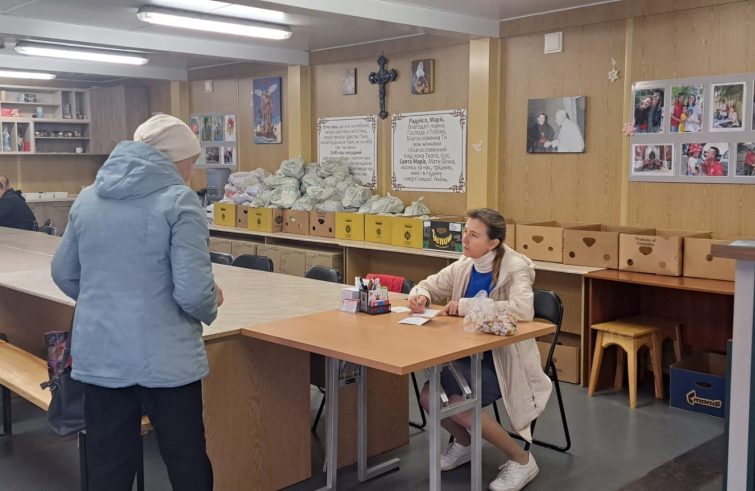
Life here is hard. Attending school is impossible for all children. The prospect of a future is bleak. Almost 600 businesses have had to shut down because of the war. The consequences of the crisis are being felt, with increasing numbers of people standing in line in front of the city’s Caritas and the Greek Catholic cathedral. “Despite everything,” says Chernov, “people are not giving up. They remain committed to their city, their families and their jobs. Even in these conditions, they continue to pay their taxes. They protect children, the sick and disabled, and those who lack mobility. It is a moral responsibility as well as a civic duty.”
On Thursday, the day dedicated to Ukraine’s defenders, President Volodymyr Zelensky awarded Kharkiv the honourary title of “Hero City of Ukraine”, also bestowing the same distinction upon Kupyansk.
The key to understanding this city is ‘resistance’. “After almost four years of war, it is natural to feel tired, both physically and mentally,” says Chernov. But the citizens of Kharkiv are doing everything they can to keep up their spirits. Being depressed does not help anyone; it is useless. They will not succumb, not even in the knowledge that the city could fall into Russian hands. On this point, Chernov is categorical: “They couldn’t capture it in the early days of the war, it’s impossible now.”
Despite being in a remote part of Ukraine, residents are closely following the media coverage of peace negotiations, territorial settlements and the return of the prisoners. The prospect of an agreement seems distant. However, Chernov adds, “there is hope that a peace agreement will be reached, but not at the cost of the dignity and freedom we have fought for”. He explains: “Every war, sooner or later, ends in peace.” The real questions are when, and at what price. Human lives and personal destinies are the heaviest cost. Territory comes second. Safeguarding Ukraine as a sovereign, free and democratic state must be the absolute priority. In areas occupied since 2014, ideological indoctrination has taken root. “This will be more difficult. Ultimately, however, the choice of where to live will be up to the people, and a rebuilt, modern and open Ukraine will attract those who are currently living elsewhere.”
Entire cities need to be rebuilt and deep wounds need to be healed. From Kharkiv, does the future of the country look daunting? “Thinking about the burden ahead of us is frightening, but it is an inevitable step.”
Other options are out of the question. Ending up under Russian occupation is what people fear most. Chernov explains that in countries of the former Soviet Union, people with disabilities are still seen as having limited capabilities. This is what is most frightening. The lack of freedom, democracy and respect for human rights is what is most frightening. This is the reason for the country’s resistance. They want to continue to be protagonists of their own future.