
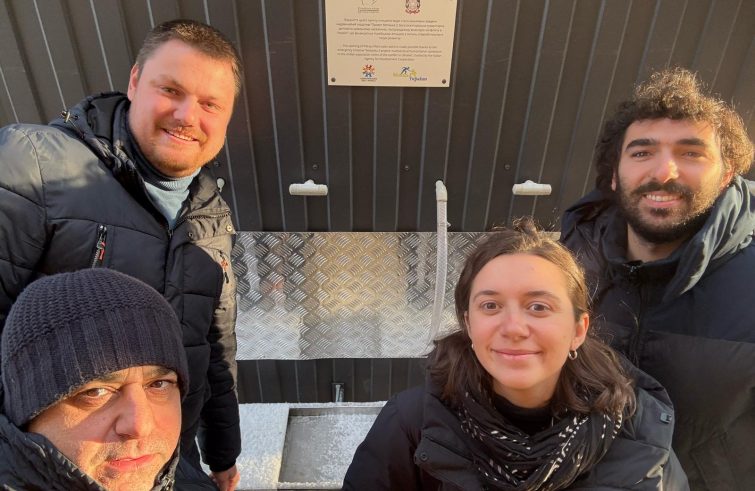
Kherson, Ukraine. Alberto and I entered Ukraine just three days after the outbreak of the war. Little did we know that the decision to ‘inhabit the conflict’ we made over thirty years ago in the Balkans, together with the young people of Dove Operation (‘Operazione Colomba’, a civilian non-violent peace corps of the Pope John XXIII Community), would remind us so intensely of that decision.
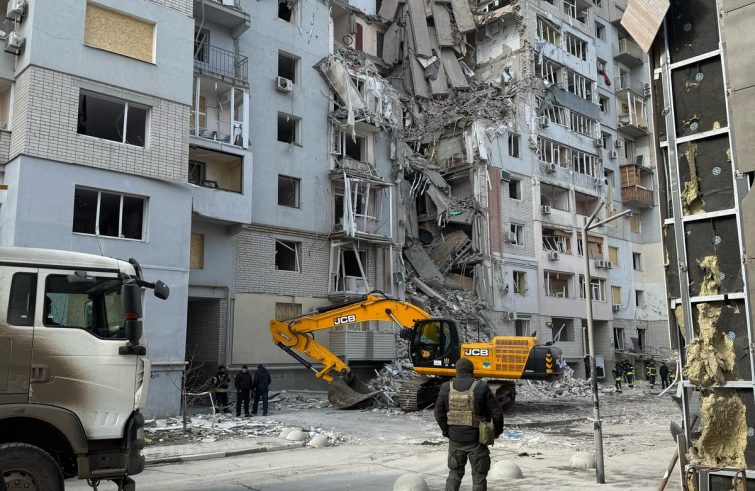
Here we are again in Kherson three years after we first arrived, unfortunately on the front line. On Wednesday night, a ballistic missile crashed into a ten-storey building in the city centre, causing huge damage and killing seven more people. But perhaps the most painful toll is the growing number of orphans. There are two young children who have lost both their parents, innocent victims of their tragic fate. Maksym, a Ukrainian friend who is working with us in the search and rescue operations, addressed me in despair: “They say it was a secret NATO base, that’s why they bombed it!” Sarcasm has become the only response to such absurd propaganda.
Three years ago, we decided to “inhabit this conflict” with many like-minded young people who believe in a non-violent approach.
For more than a year, we have been carrying out activities every day at the Dom Kultury (House of Culture) in Kherson, a historic building that has been bombed several times, and has been partially rebuilt after each attack with the help of many volunteers. Hundreds of people are sheltering inside, most of them elderly people who have chosen not to leave Kherson, despite it being one of the hardest hit cities in Ukraine. Before the war it had a population of around 400,000. It is estimated that fewer than 30,000 people are left today. At this facility, when donor generosity makes it possible, food parcels are distributed and a group of about fifty elderly people are offered a cooked meal for lunch. This is a precious moment of sharing and socialising in what is now a deserted town with no services, cafes or restaurants.
A few days ago, a child of about one year appeared in this room.
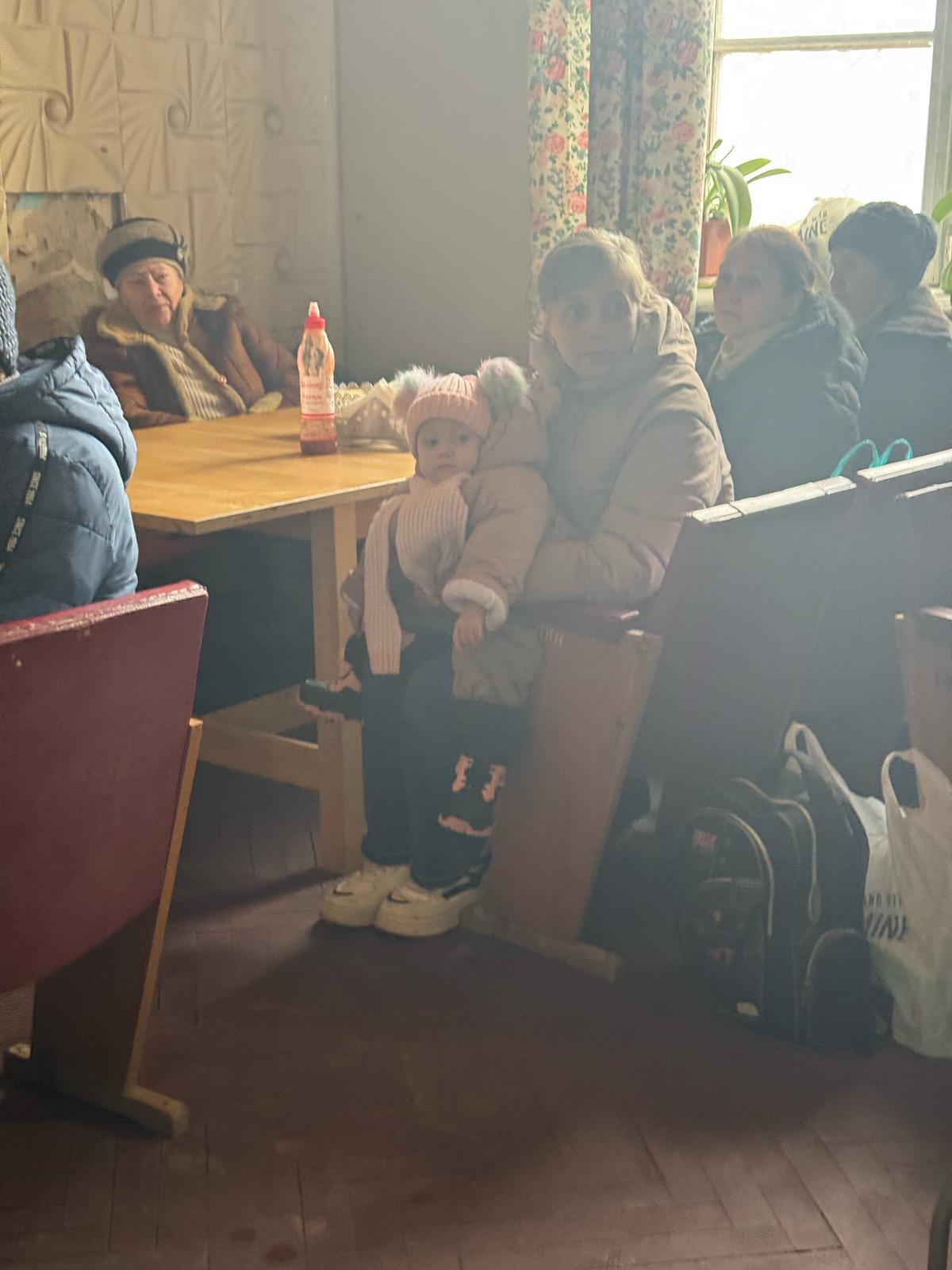
Alberto was taken aback: “For two entire years in Kherson, I had never seen a newborn baby, and rarely any older children. Wrapped in a padded romper suit, the baby was not with his mother as one would expect, but with his grandmother. We wondered why the baby had been left there, in such dangerous conditions, instead of being taken to a safer place. But it was the look on his face that really broke our hearts: he was surrounded by shivering adults (the temperature outside was -10°C and there were frequent power cuts). Yet this defenceless child never uttered a word of complaint or a cry – nor, sadly, a smile. At that age, he was already forced to endure a terrible ordeal: holding out his little hand for a bowl of hot soup.
The cruel reality of this war, the suffering of a war-torn people, is encapsulated in the gaze of this small, silent, starving child.
We made a commitment to the people in charge of this humble, dilapidated relief centre: we promised to do everything in our power to ensure truckloads of food aid from Italy. The last distribution of food parcels containing tinned food and flour was over two months ago. Unfortunately, solidarity sometimes runs out of steam, and the initial generosity tends to fade with the passage of time. But that image of a ‘child Jesus’ surrounded by rubble reminds us that we cannot look the other way.
Although we don’t know exactly how we will be able to keep our promise, we cannot abandon those who are still here. With them we share daily hardships and risks. But more needs to be done!
Non-violence is a remedy that can heal the wounds, but it needs to be accompanied by concrete action in order to be effective.
Inaction is not an option, nor can we afford to allow those in power to play political games with the lives and possessions of others. To love is to never abandon. Working for peace means putting oneself on the line for a better future, a better future for all, not just for a privileged few. I am leaving Kerson behind with its wreckage and silence, and the dull gaze of that child who is barely asking to survive, and I am convinced that we can continue to believe in a humanity capable of care and solidarity.
* International Projects Manager, Pope John XXIII Community