
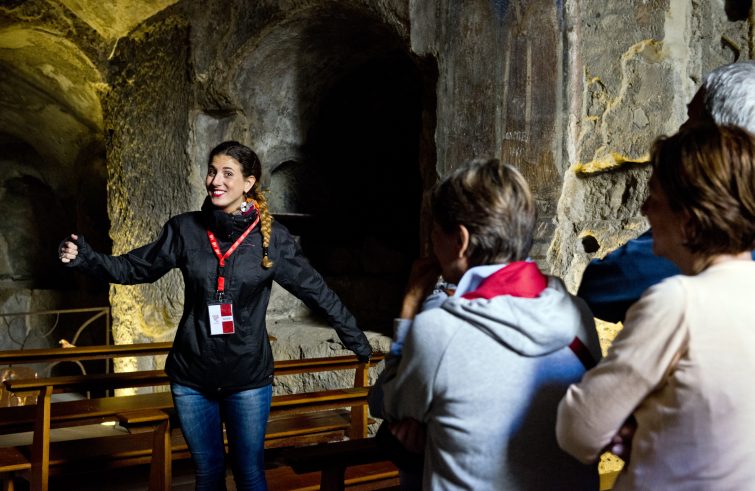
Memory of the past nourishes hope. Leo XIV states this clearly in the Apostolic Letter published today to commemorate the centenary of the Pontifical Institute of Christian Archaeology, founded in 1925 by Pius XI with the motu proprio I Primitivi Cemeteri. The hundredth anniversary coincides with a new Jubilee, almost sealing a transition: from healing the wounds of the First World War to offering new horizons of hope to a humanity afflicted by war and crises. “The present age is marked by rapid changes, humanitarian crises and cultural transitions, and requires that we not only draw on ancient and new knowledge, but also search for a profound wisdom capable of preserving and passing on to future generations what is truly essential,” the Pope affirms. Over the past century, the Institute has trained hundreds of archaeologists of ancient Christianity from across the world, promoted research in Rome and throughout the Christian world, and played an international role through conferences and close cooperation with universities and academic centres.
The Pontifical Institute of Christian Archaeology
The Institute was established by Pius XI on 11 December 1925 with the motu proprio I Primitivi Cemeteri, an idea first conceived in 1900 and developed during the First World War. Initially intended to honour Giovanni Battista de Rossi, the Institute has been housed since 1927 in the building assigned by the Pope. Its mission is carried out in collaboration with the Pontifical Roman Academy of Archaeology and the Pontifical Commission for Sacred Archaeology. After its early years shaped by renowned scholars, the Institute consolidated its academic and scientific activity in the post-war period. Today, it continues to form specialists and to contribute to the study of Christian antiquity.
A tactile knowledge that educates in an incarnate faith
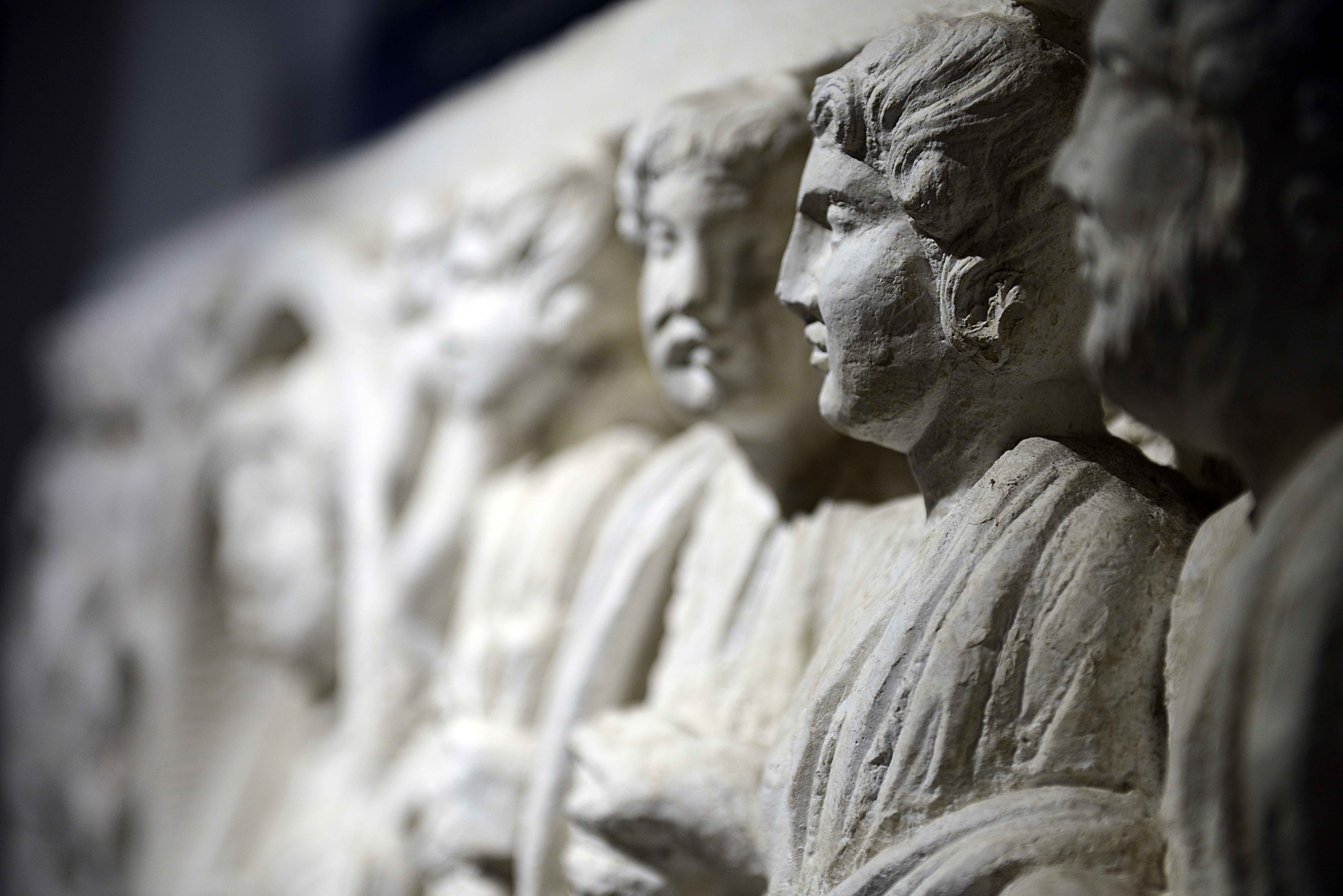
“Christianity was not born from an idea, but through flesh,” Leo XIV writes. It was not born from an abstract concept, but through a womb, a body and a tomb. Christian faith is grounded in specific events, faces, gestures and words spoken in a particular language, era and environment. This is what archaeology uncovers and makes tangible. “It reminds us that God chose to speak in a human language, to walk the earth and to inhabit places, houses, synagogues and streets,” the Pope notes. Christian archaeology thus becomes a theology of the senses: a discipline that sees, touches, listens and even discerns what has long been forgotten.
“Even a fragment of a mosaic, a forgotten inscription, or graffiti on a catacomb wall can recount the story of faith,” Leo XIV explains.
Archaeology is also a school of humility: “it teaches us not to despise what is small or seemingly secondary,” the Pope says. It teaches us to read the signs, interpret the silence and recognise the enigma of reality. “It is a science that lies at the threshold between history and faith, matter and Spirit, the ancient and the eternal.” From the earliest days of Christianity, memory has played a fundamental role in evangelisation. The first communities preserved not only the words of Jesus, but also the places, objects and signs of His presence. Everything bore witness to the truth that God had truly entered history. “True Christian archaeology is not a matter of sterile conservation, but of living memory. It is the ability to make the past speak to the present,” the Pope stresses.
(Foto Siciliani-Gennari/SIR)
Educating in memory in a time of forgetfulness
“In today’s fast-paced world, there is a tendency to forget and to consume images and words without reflecting on their meaning,” Leo XIV observes. The Church, by contrast, is called to educate people in memory, and Christian archaeology is one of its noblest tools. Not in order to take refuge in the past, but to consciously inhabit the present and work towards an enduring future. “Those who know their own history know who they are. They know where to go. They know whose children they are and the hope to which they are called,” the Pope writes. Christians are not orphans: “They have a genealogy of faith, a living tradition and a communion of witnesses.” Christian archaeology makes this lineage visible, preserves its signs, interprets them and passes them on.
“It shows that faith has already survived difficult times and resisted persecution, crises and changes,” Leo XIV recalls.
Marking the centenary of the Institute, Leo XIV emphasises the importance of communion among the institutions dedicated to archaeology: the Pontifical Roman Academy of Archaeology, the Pontifical Commission for Sacred Archaeology, the Pontifical Academy Cultorum Martyrum, and the Pontifical Institute of Christian Archaeology. “It is essential that they cooperate and communicate with each other, as well as provide mutual support. They should develop synergies, organize joint projects and promote international networks,” he notes. Christian archaeology is not a privilege for a select few, but a resource for all. The Pope encourages scholars, teachers, students and researchers not to be discouraged by difficulties: “Christian archaeology is a service, a vocation and a form of love for the Church and for humanity.” Those who study the origins of Christianity discover that the Gospel has always had a generative force, that the Church is always reborn, and that hope has never faded.