

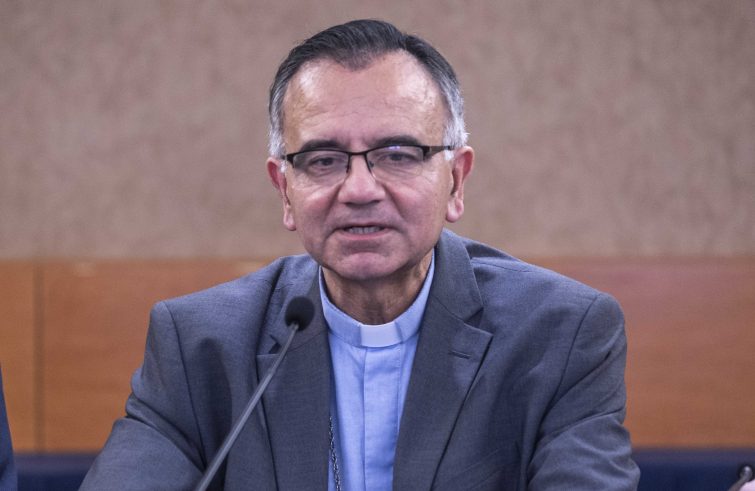
The reception of the Synodal Process in Italy will be guided by three key factors: co-responsibility, formation and structural reforms. Archbishop Erio Castellucci of Modena-Nonantola, President of the National Committee for the Synodal Journey, looks ahead with realism and confidence, emphasising that synodality is not just a temporary phase, but a lasting style of the Church. The bishop further comments on a highly debated topic: homo-affectivity. He clarifies that “recognition” does not imply moral legitimisation, but rather respect for individual persons. He adds that what is needed is transparency, a stronger role of the lay faithful and the courage not to fear confrontation.
Your Excellency, you referred to the past four years as “beautiful”. What constitutes the true ecclesial beauty of the Synodal Way today? And how can it be transformed into a steady path forward, rather than just being remembered as a significant season?
These have been intense and beautiful years, because, as I said, Gospel-inspired beauty does not coincide with harmony or aesthetics, but with service, dedication and, sometimes, fatigue. Jesus presents himself as “the good shepherd” who lays down his life for his sheep. It is this beauty that I have seen the joy of walking together and finding common ground, even amidst differences.
What tools can be used to guarantee the long-term continuation of this Synodal style?
The challenge now is to firmly establish this approach:
This involves renewal of participatory bodies, promotion of lay ministries, and giving women a clearer and more meaningful role in ecclesial life.
It has been recognised that co-responsibility is key to ensuring the continuity of the shared process.
While the vote marked the end of one stage of the journey, it also marks the beginning of the delicate implementation phase. Do you foresee challenges in translating the proposals into concrete action at diocesan level?
It will certainly be challenging. Of the over a hundred proposals that have been approved, many remain somewhat open-ended. Some proposals are more appropriate for certain local contexts than others, and some are already operational. The local Churches vary in their approaches and paces, so not everything can be decided at the central level.
Which concrete steps will be taken?
It is important to identify a number of common goals that can be achieved through shared guidelines or texts. The dioceses will then be required to continue the work, and hopefully the synodal groups, delegates and representatives will remain actively involved in the process. This is a journey that will resume immediately: tomorrow, the Presidency of the Italian Bishops’ Conference (CEI) will meet to prepare proposals for the November Assembly.
However, this process will take time: synodality cannot be improvised; it requires maturation and consistency.
Some issues, such as formation, met with broad consensus. Others, such as the role of women, met with more resistance. How do you interpret this variety of responses?
I consider it a positive sign. I would have been concerned if the vote had been completely unanimous, as this would have indicated conformism. Instead, 15–17% of voters expressed doubts about certain aspects.
Timeline of the Synodal Journey
- 2013 – Pope Francis publishes Evangelii gaudium, which inspired a synodal journey in Italy.
- 2019 – Pope Francis mentions an ‘Italian synod’ at the 73rd Assembly of the CEI, marking the official beginning of the listening process of the people of God.
- 2021 – The CEI approves the Synodal Journey, creating the Charter of Intent. The narrative phase begins, which will last until 2023.
- 2022 – The Cantieri di Betania (Bethany Workshops) become the heart of the second year of the listening phase. Involving more than 500,000 people.
- 2023 – The wisdom phase begins. The Guidelines and Regulations are approved.
- 2024 – First Synodal Assembly (November): the Working Tool for the final phase, known as the “prophetic” phase, is established.
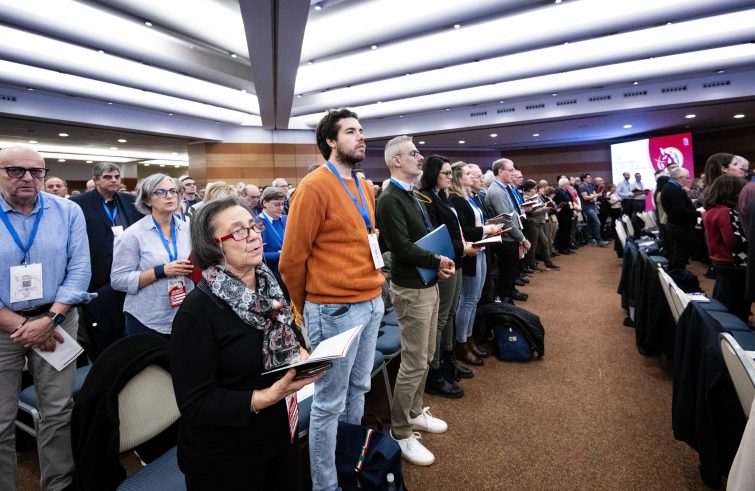
- 2025 – The Second and Third Synodal Assemblies are scheduled to take place in April and October, respectively, to give final approval to the Summary Document.
How can these different views be addressed?
It is important to understand whether some proposals were considered too innovative or, conversely, not bold enough. The message we received was: “let us reflect further.” Some issues require further analysis.
The Italian Episcopal Conference will need to establish a clear set of priorities, as some decisions can pave the way for others.
For example, it will be difficult to initiate real reform of Christian initiation without first enhancing co-responsibility.
The publication of the voting results is a new development. Is this a methodological choice? Or is it an ecclesial vision?
Both. The desire to make the results of the votes known was something that had already been expressed by Pope Francis himself at Rome’s synods. Initially, even during our own deliberations, it was discussed whether or not to make the summaries public. Over time, however, we came to the conclusion that transparency promotes dialogue and dispels suspicion.
Is this a significant change compared to the past?
After the second assembly, when the text was not made public, we realised the importance of sharing in strengthening communion. Moreover, the documents tend to circulate anyway, so it is better to publish them in an orderly and complete manner.
The mention of homosexuality in the document has sparked controversial interpretations. Could you please provide a clarification of the terms “recognition” and “accompaniment”? This theme arose in the early stages due to its topical relevance and symbolic significance.
Many people, especially young people, view the Church’s attitude towards homosexuals as a key indicator of its openness or lack thereof.
How should this terminology be understood?
The expressions “recognition” and “accompaniment” underwent careful consideration. “Recognising” does not imply moral approval; rather, it involves acknowledging the individual’s reality and inherent dignity. “Accompanying” means walking alongside the person, welcoming them without oversimplifying, as Pope Francis invites us to do. This is a challenging approach, but one that is deeply evangelical. As was the case for remarried divorcees after Amoris Laetitia, this is a process that will require further steps.
One passage in the text has caused some confusion, notably with regard to the participation of the Italian Episcopal Conference in “Days promoted by civil society.” What does this refer to?
There has been some misunderstanding, with some interpreting it as an implicit reference to Pride events. In reality,
The expression refers to designated dates in the civil calendar, such as the Day Against Homophobia or the Day Against Abuse, during which some dioceses may organise prayer or reflection services.
The intention is not to endorse ideological approaches, but to demonstrate respect for and protection of human dignity.
What is expected from the upcoming November and May CEI Assemblies?
These events are of the utmost importance. The November assembly will establish the initial definitive form of the guidelines that have emerged. In May, however, the CEI will approve a text designed to provide guidance for the upcoming five-year implementation phase.
Will it be a document similar to past Pastoral Guidelines?
There is one substantial difference: this time, the guidelines do not arise from a theoretical analysis, but from a journey shared by the communities. The final format is yet to be decided – it could be guidelines or thematic dossiers – however, it is crucial that the synodal process is consolidated and that the Churches integrate it gradually and on an ongoing basis.