

“The Church is not her true self without the poor, because it is in them that God reveals his face. Father Frédéric-Marie Le Méhauté, a Franciscan theologian and author of the book Rivelato ai più piccoli (Castelvecchi), shares his thoughts on Pope Leo XIV’s apostolic exhortation Dilexi te. Central to the text is the Pontiff’s vision of poverty as a theological locus and the Church as a community that can only rediscover her truth by embracing and walking alongside the most underprivileged.
Father Le Méhauté, the Pope writes, “The poor are not a problem to be solved, but brothers and sisters to be welcomed.” How does this perspective change the Church’s outlook?
We are accustomed to viewing poverty solely in terms of lack and deprivation. We tend to describe the poor as being “without”: without money, without history, without a voice and without power. I would argue that the poor are those who are always referred to in their absence. However, the Scriptures urge us to adopt a different perspective. Dilexi te reminds us that God’s preferential option for the poor is His choice above all else. This option does not stem from a human initiative, but from the heart of God.
The poor are not “a problem to be solved” but “brothers and sisters to be welcomed”.
This perspective has an impact on the theology of poverty. Indeed. Pope Leo XIV elaborates on Benedict XVI’s statement that poverty is a place of revelation. The Pope does not merely state that Jesus dwells in the poor; he takes it a step further by stating that God reaches out to the poor before anyone else does. When I come across a person on the street, I am not automatically encountering Jesus. I meet a person in flesh and blood, and in that encounter there is the potential for revelation. God has chosen the poor – not because they are better – and this is why they become a locus of his presence. As Gustavo Gutiérrez says:
“God does not choose the poor because they are good, but because He is good.”
Some people question whether God’s preference for the poor means that others are excluded.
This is an age-old objection. However, God’s preferential option is universal, not exclusive: God has chosen the poor for the salvation of all. Father Joseph Wresinski referred to this as “exhaustiveness”: if the strongest are prioritised, the neediest will inevitably be left behind. If, on the other hand, the most disadvantaged are prioritised, everyone will ultimately feel included. The message is clear: the only way to ensure the inclusion of every member of society is for the Church and society to be founded on the needs of the most vulnerable.
The Pope urges us not to “ignore the poor and live as if they do not exist”. You have had some significant experiences in this regard.
My first such experience came as a shock. At the beginning of my religious life, I worked with a group of Fourth World Christians. After introducing myself as a priest, a man asked me, “What does a priest do?” I answered, “A priest is someone who has taken vows of chastity, obedience, and poverty.” As soon as he heard the word ‘poverty’, the man grabbed me round the neck and said, “Don’t talk to me about poverty. You have no idea what it’s like”. He was right. I have never slept under a bridge, been hungry or lived in solitude. My poverty is a choice. Theirs is not.
Fact sheet: Frédéric‑Marie Le Méhauté
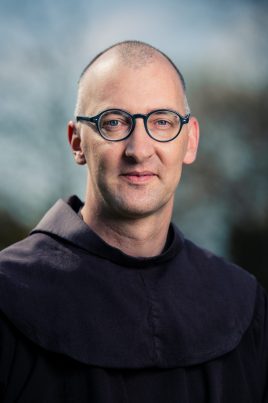
Frédéric-Marie Le Méhauté is a Franciscan theologian who has been working with marginalised communities for many years. The focus of his theological work is poverty as a ‘theological locus’, finding God’s revelation in the lives of the most vulnerable. Having had first-hand experience of so-called Fourth World groups and street children, he often emphasises that daily engagement and active presence significantly enrich our understanding of the Gospel. Combining doctrinal reflection and pastoral praxis, his perspective elevates the dignity and subjectivity of the poor.
This awareness changes the way we understand the vow of poverty. It surely does. There is a difference between vulnerability and precariousness. We are all vulnerable, but not all of us are precarious. Vulnerability is universal, but precariousness is not. This is not about idealising poverty. Poverty must be eradicated, along with its structural causes. However, choosing to embrace the lives of the poor is a sign of communion.
There is a difference between vulnerability and precariousness. We are all vulnerable, but not all of us are precarious.
Can you recall a time when you experienced concrete communion?
One evening, during the time I was living in a home for street children in Congo, I heard them say, “Frédéric is a white man, but he’s not like the others.” I asked why. One of the children replied, “Because you eat rice with us.” To them, that overcooked, tasteless rice was a token of brotherhood. No grand speeches are needed; simply being there with them and sharing was enough. The poor do not ask for words, but for presence. It is there that we experience God’s closeness.
The poor do not ask for words, but for presence. It is there that God reveals himself in his closeness to us.
The Pope adds that living as the poor do exemplifies the truth of our mission. It is there that we experience God’s self-giving. If we encounter God in the poor, then living with them is the only way to receive revelation. The Pope is very clear when he warns: “any Church community,if it thinks it can comfortably go its own way without creative concern and effective cooperation in helping the poor to live with dignity and reaching out to everyone, will also risk breaking down, however much it may talk about social issues or criticize governments.” This message concerns us all.
“Reality is best viewed from the sidelines,” writes Leo XIV. What does this mean in theological terms? It means that we must adopt a different perspective. Pope Francis frequently spoke of the “mysterious wisdom of the poor”. It is a truth of the Gospel: “You have hidden these things from the wise and revealed them to children.” The poor offer us an extraordinary experience when we meditate on the Passion with them. “They spat on me too,” they say. “When you fall like Jesus, it’s hard to pull yourself up again.” The story of Christ is not in the past for them; it is in the present.
The poor are teachers of the Gospel. For them, the story of Christ is not in the past; it is in the present.
The preferential option for the poor
The “preferential option for the poor” is a key tenet of the Church’s social doctrine. It asserts that all ecclesial activities, ranging from theology to pastoral care and liturgy to social engagement, should be grounded in the experiences and circumstances of the most disadvantaged members of society. First introduced into the Magisterium with the Puebla Document (1979), it was later adopted by John Paul II and Benedict XVI, who further developed it. Pope Francis describes it as “primarily a theological category rather than a cultural, sociological, political or philosophical one.” This does not mean excluding others, but rather adopting the perspective of the suffering as a means of interpreting the Gospel and establishing an inclusive Church rooted in the Gospel. Ultimately, it is a criterion of truth and discernment in Christ’s discipleship.
How can this wisdom effect change within the Church?
Dilexi te states that the acceleration of technological and social change not only impacted the lives of the poor, but also became the object of debate and reflection on their part. This means that the poor have their own insights. They analyse reality and can offer solutions. They are not objects of compassion, but agents of history, voice and responsibility. The Pope denounces a system ruled by the “happy few” who accumulate wealth and impose sacrifices on the poor. It is a cry against the invisibility of the poor.
You also refer to a form of ‘blindness’ within the Church. What do you mean by that?
Pope Leo XIV does not just criticise the world’s structures; he openly admits that the Church can suffer from the same blindness. In France, for instance, we have only recently realised the crucial importance of listening to abuse survivors in order to effectively address the tragedy of child abuse.
Seeing reality from the sidelines means listening to those who have suffered, been excluded or been silenced.
This is the only way to fully grasp the wounds that plague society and the Church.
The Pope realistically acknowledges that “we find it easier to turn a blind eye to the poor”. It is a very powerful statement.
Yes, and it is very true. The poor unsettle our habits by confronting us with our limitations, which we would prefer to ignore. But that is precisely where conversion begins. For St Francis, it all started with his kiss to the leper. Behind every wounded face, he saw a brother: the brigand, the wolf and the sultan. Everything became brotherhood.
This vision permeates the history of the Church.
Dilexi te connects this to Dilexit nos, Pope Francis’s encyclical on the divine love of the heart of Christ. Pope Leo XIV demonstrates that the two loves — for God and for the poor — are inseparable.
Attending to the poor is not a consequence of faith; it is an epiphany and an almost liturgical act because one cannot separate the worship of God from attention to the poor. Without the poor, the Church is not complete.
In your opinion, what is the most pressing message of Dilexi Te?
That caring for the poor is not just one aspect of the Church’s activity, but an integral part of its core essence: “Love for the poor is the evangelical hallmark of a Church faithful to the heart of God.” It is the measure of its truth. If we want to encounter the true Jesus and not an icon, we will encounter him only beside and alongside the poor.