

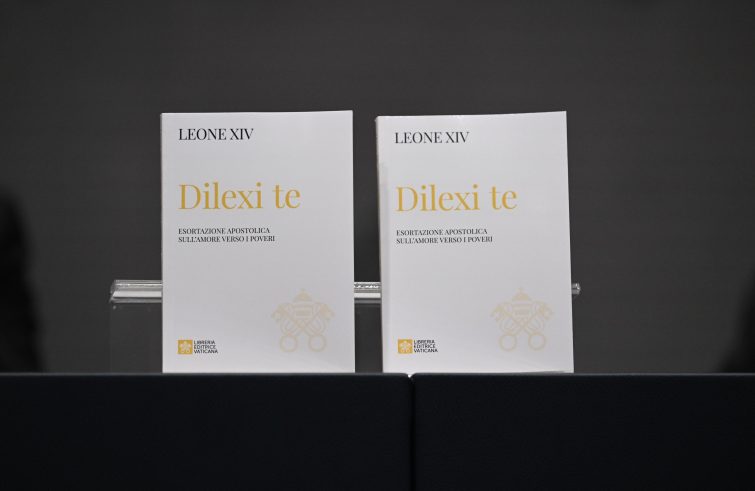
The cries of the poor and of the earth are a single plea for justice, conversion and closeness. Dilexi Te, Pope Leo XIV’s first Apostolic Exhortation, gives renewed impetus to the Gospel as a call to practical, all-encompassing love grounded in real-world action. Cardinal Michael Czerny, Prefect of the Dicastery for Promoting Integral Human Development, delves into its core message, offering a pathway made of small, transformative gestures that can regenerate communities at their core.
Your Eminence, ‘Dilexi te’ highlights the “preferential option for the poor” as a core theme of God’s love. In an era characterised by growing inequalities and frequent self-referential communication, how can we heed this Divinely inspired option?
We must avoid relying on ready-made solutions or top-down strategies.
It is a journey that must be undertaken in the everyday lives of communities, beginning with parish churches. This is where we can encourage the faithful to
rediscover the fact that helping the poor is not just an occasional act of generosity or goodwill, but an authentic experience of active listening and engagement.
By hearing the voices of the poor, we allow ourselves to be transformed and welcome their words as a means through which God speaks to us.
The exhortation highlights the connection between education, the Eucharist and service. How can the communities, so often tested by daily struggles, be encouraged to embrace this path?
It does not require any exceptional gestures or elaborate words. We sometimes idealise our service to the extent that it becomes unattainable, and eventually become unable to progress. The way forward lies in taking small, concrete and manageable steps. For example, a mother who cooks a little more can share her dinner with others. A father, despite his many commitments, can set aside an hour of his time. These are not big projects, but rather everyday life transformed by love. This is how faith is made credible and close.
The document refers to the need for a “conversion of structures” What structural injustices are standing in the way of creating a fairer world today?
Every context has its hurts, but there are common problems that cannot be ignored. Climate change and environmental disasters are among them. The important point here is to take the first step, not to try and do everything.
By taking small but determined steps, we can make an impact. Above all, we should raise awareness among our political representatives of the fact that a just society hinges on sustainability and on the dignity of every member of society.
We must no longer distance ourselves from political responsibility that stems from the faith.
(Foto Siciliani – Gennari/SIR)
The public dimension of faith is often overlooked. Can ‘Dilexi te’ also be interpreted as a call to civil engagement for Catholics?
Indeed, and it is a matter of pressing concern. We are all too familiar with voicing our concerns in private, yet we often lack the readiness to articulate our views in the settings where decisions are made. Indignation is not enough: we must also be proactive.
Not only is co-responsibility an ecclesial principle, it is also a style of citizenship.
Believers cannot remain on the sidelines while history is unfolding. Faith and civic engagement go hand in hand, especially when the common good is at stake.
The Pope draws a close connection between the cry of the poor and the ecological crisis. How does this vision challenge Christian peace today?
This is one of the most powerful and timely insights of the Magisterium. The suffering of the poor and that of the planet are two facets that form part of a single wound.
The ecological crisis is also a social crisis, and vice versa. However, we often fail to recognise this.
Those who display concern for social justice and those committed to environmental protection are two separate groups. True peace, however, can only stem from a holistic view that recognises the intimate connection between human suffering and the suffering of creation.
What is the significance of Leo XIV’s first document, “Dilexi te”?
It document holds great significance. It is not an addendum, but a return to the roots of the Gospel. The Exhortation reminds us that following Christ means supporting the most vulnerable in society, sharing in the world’s suffering and walking alongside those who are left behind. It is a call to return to what is essential: to love as Jesus loved, not in the abstract, but in the concrete circumstances of real life. This is the beginning of every possible reform, both within and outside the Church.