
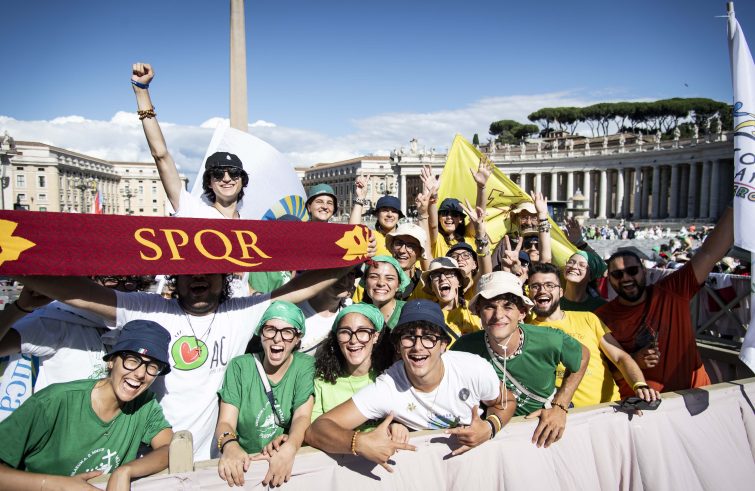
“Rome is a city wounded by inequalities, yet rich in humanity and thirsty for hope.” Cardinal Vicar Baldassare Reina describes the face of a Church that reaches out to individuals, families, young people, and the poor during this Jubilee. This journey calls on the ecclesial community to go forth, listen, and provide accompaniment amidst urban inequalities, the rediscovery of faith, the parishes’ commitment, illuminating our time, and taking up the challenge of being credible witnesses to the Gospel.
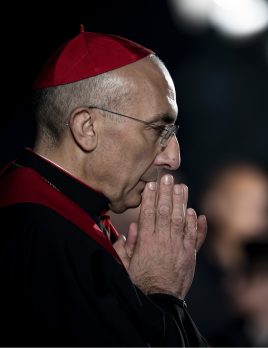
(Foto Siciliani-Gennari/SIR)
Your Eminence, how is the Diocese of Rome experiencing this Jubilee Year? What signs have you noticed in the communities that you have visited?
We began preparing for the Jubilee in 2023 by taking inspiration from the 1974 conference. We held five meetings, each focusing on a different form of poverty: housing, education, healthcare, employment, and relationships. A clear picture emerged: Rome is plagued by severe inequalities. While it is a welcoming city, it is also home to many “cities within the city.”
The peripheries are wounded from the outset, while the downtown area has become a transit zone. It is no longer inhabited, but rather traversed by tourists, commuters, and workers.
Our goal was to enter the Jubilee Year with this awareness, to be a Church that offers signs of hope. Examples of these signs include the emergency housing fund dedicated to Don Roberto Sardelli and the free after-school programs for children of immigrant families, which are present in about eighty parishes today.
Established in memory of the priest who lived among the shanty dwellers of the Felice Aqueduct, the Don Roberto Sardelli Fund supports housing and rehabilitation projects for people facing housing insecurity. At a time marked by precariousness and evictions, the fund promotes solidarity-based cohabitation and social integration initiatives in partnership with parishes, non-profit organizations, and local institutions. This commitment builds on the efforts of those who have made the right to housing a matter of justice and fraternity.
Your perspective originates from a different part of Italy. What impressed you most about Rome during the first months of your ministry?
I grew up in a much smaller town, Agrigento. Rome was an overwhelming place at first, but I immediately immersed myself in pastoral visits. Every evening, when I return home, I carry in my heart the faces of the many volunteers, families, nuns, and priests who devote themselves daily to the most disadvantaged neighborhoods. This is what motivates me.
How is the Jubilee journey being received on a pastoral and cultural level?
The communities are devoting thoughtful consideration to this. Data from the Italian research institute Censis, with which we have collaborated, shows that 95% of Catholics did not participate in parish life. There has been a significant disconnect, especially after the pandemic. However, we are noticing a renewed interest in faith that is more substantial and less formal.
The peripheries are wounded from the outset, while the downtown area has become a transit zone. It is no longer inhabited, but rather traversed by tourists, commuters, and workers.
Is there any real space for credible proclamation of the Gospel among younger generations?
Absolutely. Today’s young people suffer, often in silence. They want to be heard, not judged. When the body of Blessed Pier Giorgio Frassati was brought to the Basilica of Santa Maria Sopra Minerva, the church filled up in minutes. Young people gathered in prayer with great respect. They are looking for credible witnesses. I also see this in the demanding paths led by priests like Fr. Fabio Rosini and Fr. Alessandro Di Medio. The higher the bar is set, the more young people respond. They are searching for meaning, depth, and authenticity.
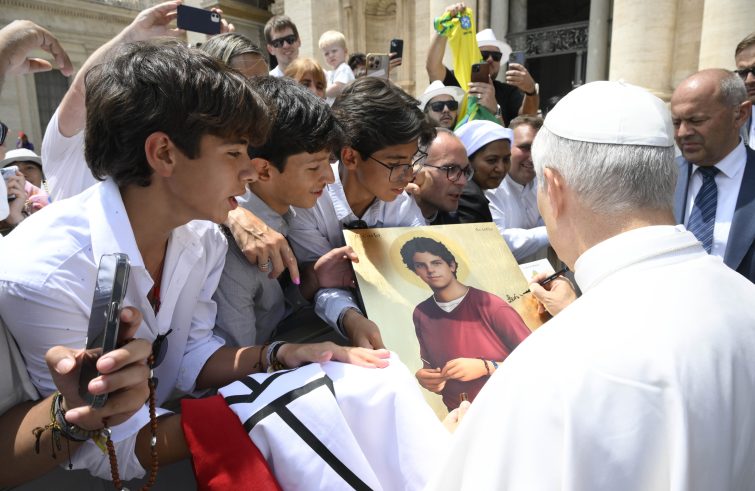
(Foto Vatican Media/SIR)
Are Frassati and Acutis still relevant role models for young people?
Yes, they are. Acutis is more connected to the digital world, while Frassati embodies active, committed, and practical living. They are both role models whose examples touch the hearts of young people. It’s important to present them not in a rhetorical way, but as companions on life’s journey. Despite the difficulties, our youth communities are offering meaningful experiences. Frassati and Acutis are powerful witnesses for young people.
Pier Giorgio Frassati
He was a sports enthusiast and mountain climber committed to social causes. He lived his faith in a simple and radical way, close to the underprivileged. His body is being venerated in Rome during the Jubilee of Youth, attracting crowds of young people gathered in prayer.Carlo Acutis
Born in 1991 and beatified in 2020. An IT enthusiast, he organized an exhibition on Eucharistic miracles. He will be proclaimed a saint in September 2025. He is a role model for many young people searching for meaning and authenticity.
How is the Church in Rome responding to the city’s needs, from charity to structural problems?
Our communities are extraordinarily generous. Nearly all parishes have counseling services and Caritas outreach centers. For several years, we have promoted the Emporio della Carità (Charity Store), which helps people regain their dignity. Those in need can enter and choose what they need instead of receiving pre-packaged items. The same goes for after-school programs. The response was immediate when we proposed them. However, there are also significant structural issues, particularly regarding housing. Rents are unaffordable. Some students have to drop out of college because they can’t afford a place to live.
I continue to appeal to politicians and institutions, urging them to make bold decisions.
The Jubilee of Youth brought enthusiasm to the city. What do you expect from this event?
We welcomed approximately 150,000 young people to our parishes and religious houses. It was wonderful to see the city filled with groups, songs, and enthusiastic faces. I hope this is the beginning of a long-term commitment, not just a one-off event. I hope young people will realize that the Church is a welcoming home where they can experience the fullness of life.
Families and young people are often the two most vulnerable groups. How are you supporting them?
In pastoral councils, these two groups inevitably emerge: young people and families. Our diocese is committed to family ministry and has established a network of contact persons in the prefectures to ensure our presence in the communities where families live. We know that there is no such thing as a perfect family; accompaniment is the key. Both Pope Francis and Pope Leo have asked us to support families of all kinds.
What do you hope will be the lasting legacy of this Jubilee of Hope?
I hope the theme chosen by Pope Francis—hope—will not remain just a slogan. If it is embraced as a responsibility, it can become a valuable legacy. Bearing witness to hope means expressing it through our daily actions and relationships. If we succeed in this, hope will truly be a living legacy. It’s a legacy that can be shared.