
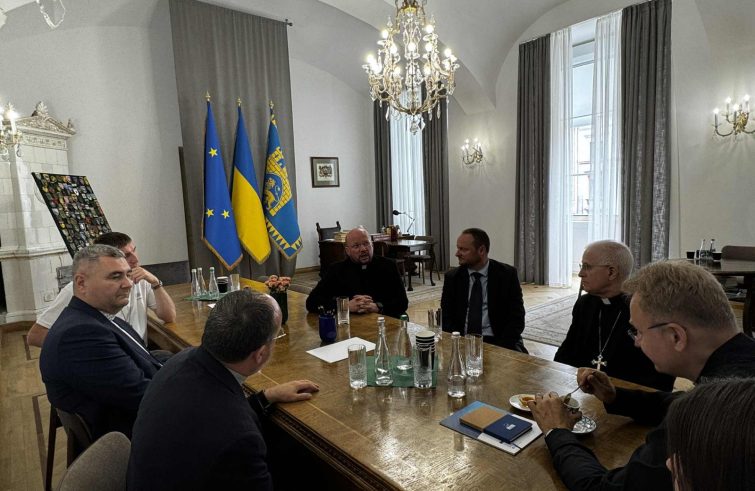
“Witnessing first-hand the wounds inflicted upon this land and its people by Russia’s brutal war of aggression has touched us deeply. We were moved by the steadfast faith, courage and hope that animate local communities despite so many hardships”, said Monsignor Mariano Crociata, president of the Commission of the Bishops’ Conferences of the European Union (COMECE), at the close of a three-day visit to the Lviv region of Ukraine (16-18 July). The COMECE delegation met with representatives of the Greek Catholic and Roman Catholic Churches in Ukraine, as well as with local authorities, members of civil society, and academia. In a statement, COMECE writes that with this visit, the EU bishops renew their call to the European Union to remain firmly united in its commitment to supporting Ukraine and upholding the dignity and fundamental rights of all its people.
While in Lviv, Monsignor Crociata called upon EU leaders to intensify “all diplomatic efforts aimed at achieving a comprehensive, just and lasting peace, rooted in international law and the principles of justice”. SIR interviewed Monsignor Crociata upon his return to Italy.
 What is your impression of Ukraine?
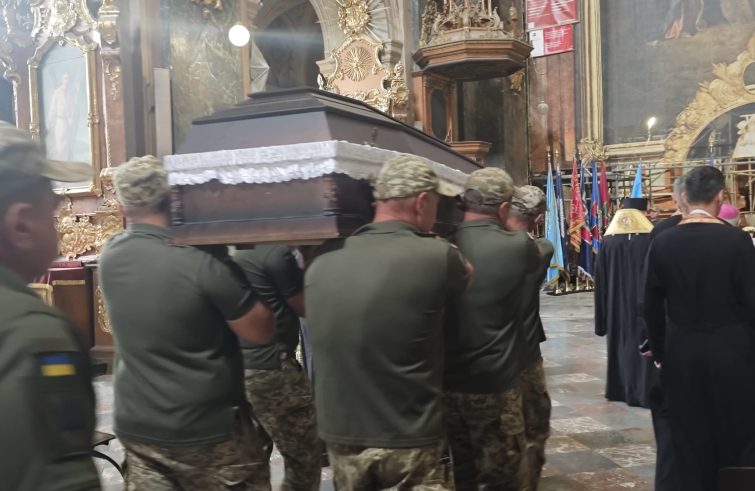
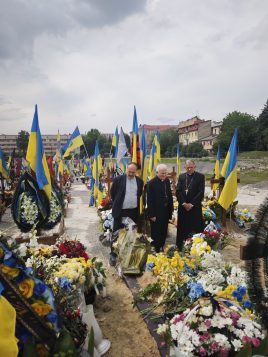
First of all, it should be said that the COMECE delegation — consisting of Secretary General Don Manuel Barrios Prieto; Marek Misak, the European Union’s foreign affairs expert; and myself — visited western Ukraine, specifically Lviv. While the city may appear relatively calm at first glance, upon closer inspection the tension and concerns that permeate everyday life are readily perceivable. Visiting the treatment centre for war-traumatised veterans is a stark reminder of the extent of the physical and mental health issues affecting soldiers, and of the damage caused to families and social relationships. Not to mention the indirect impact on the younger generation and on society as a whole. Nevertheless, the desire to maintain a normal lifestyle is striking. This reflects a widespread determination to fight back and remain resilient, and to refuse to let the war take away people’s daily life, jobs, studies, creativity and even a little bit of fun, so as to avoid being crushed by the conflict. Despite the daily funerals of soldiers killed at the front and the ever-expanding cemetery for fallen soldiers visible from the city, this strikes me as a social condition of tremendous moral fortitude.
The Catholic Church in Ukraine stands out for its role in providing relief to families and victims of the war, while also paving the way for a future of dialogue and reconciliation.
 What has prompted this visit?
For some time we felt for some time the need to demonstrate our concern and solidarity in a tangible way, a sentiment that has been expressed in various forms over the years, primarily through the invitation extended to representatives of the Greek Catholic and Latin Catholic Churches of Ukraine to serve as permanent observers to COMECE. The Commission’s position is that the solidarity it has expressed and continues to express in support of Ukraine – in alignment with the European Union and, to an even greater extent, the Holy See – requires tangible demonstration to both the Ukrainian people and all those affected by the country’s ongoing tragedy.
The peace process appears to have reached a standstill. Any prospect of dialogue opens up only to fail. What steps are necessary to achieve peace?
As you rightly observed, the circumstances are extremely challenging. I don’t know to what extent daily news reports accurately reflect the ongoing efforts being made to end the war. Moreover, the various positions expressed by world leaders often appear chaotic and, in some cases, contradictory. Contrary to the discussions about talks and negotiations, the bombing seems to be intensifying, especially on the part of the aggressors. Humanitarian efforts are ongoing, laying the groundwork for dialogue or facilitating its pursuit. What is certain is that the two parties whose presence at the negotiating table is essential are the aggressor and the victim, together with all those willing and able to contribute to ending the war and rebuilding peace.
Diplomatic efforts must be intensified at all levels.
In this regard, the European Union should play a more proactive role. Let us hope that all parties involved, starting with the two countries at war, heed the Pope’s words and welcome his willingness to support any initiative that could help bring about peace.
The European Union is struggling to manage conflict situations effectively, highlighting its inadequacies in this area. What practical steps can the EU take to achieve a just and lasting peace?
It is important to acknowledge the European Union’s substantial consistency and unity, albeit sometimes hesitant, in its defence of Ukraine and condemnation of the unjustifiable aggression it has suffered and continues to suffer. This is important in the overarching dynamic, although it should certainly grow stronger and become more determined. However, political unity is hindered by challenges, largely internal, stemming from populist and ultra-nationalist views that are simply unacceptable in the face of clear aggression and a war that blatantly disregards international law and the rules of conduct in conflict situations.
It is incumbent upon the European Union to raise its voice and take bold steps towards a broader and more comprehensive diplomatic initiative.
Should weapons be sent to Ukraine? What is COMECE’s position?
Our position is that of the Church, namely that every possible and appropriate effort must be made to end the conflict and pave the way for peace. At the same time, however, the origin, motivation and objectives of the aggression must not be overlooked. Every effort must be made to deter the aggressor, whose ruthlessness necessitates firmness that leaves no room for the belief that the continuation of the aggression is either convenient or possible. Of course, a distinction must be made between aggression, resistance and deterrence. Moreover, it is crucial to ensure that investment in defence does not come at the expense of the welfare state and of the most vulnerable members of society.