
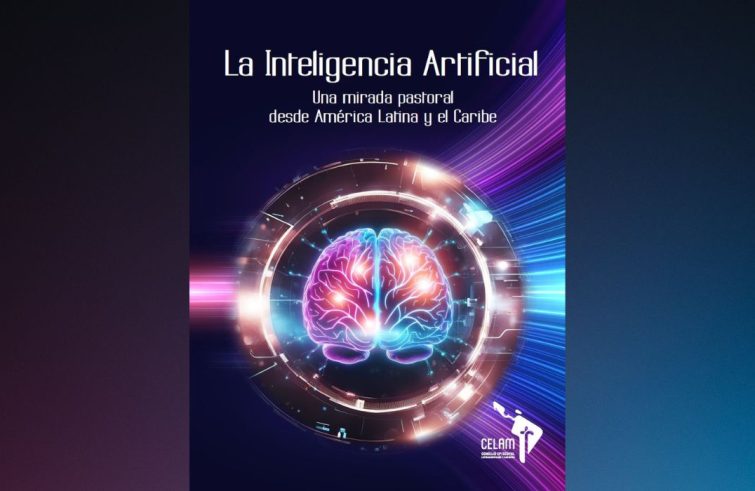
The document, “Artificial Intelligence: A Pastoral Perspective from Latin America and the Caribbean” is the recent contribution of the Latin American and Caribbean Episcopal Council to the highly topical debate on artificial intelligence, its impact on society and cultural life, and its ethical implications. This comprehensive 100-page text was in the preparatory stages for some time, but was published a few days after the election of Pope Leo XIV. The Pope has highlighted on several occasions that artificial intelligence is one of the priority issues of his pontificate and that Catholic social teaching is key to addressing the associated challenges. The text, a broad reflection produced by an interdisciplinary team of experts from various countries, explores the ways in which this technology influences and will continue to influence human life, and how these issues should be addressed from the perspectives of faith and pastoral responsibility. Summoned by the Latin American Episcopal Council (CELAM), the working group comprised theologians, philosophers, bioethicists, educators, economists, engineers, communicators, labour experts, and entrepreneurs. Guillermo Sandoval, a Chilean sociologist and director of CELAM’s Knowledge Management Centre, coordinated the working group. He told SIR that the initiative “was prompted by a request put forward by the episcopates of a number of countries during the CELAM Assembly in Puerto Rico in 2023. I clearly remember the presence of Monsignor Robert Francis Prevost on that occasion. He had been appointed Prefect for the Bishops a few weeks earlier, but had not yet been made a cardinal.”
📌 About: CELAM
The Latin American Episcopal Council (CELAM) is an organization that works to foster communion and coordination among the 22 Episcopal Conferences in Latin America and the Caribbean. Founded seventy years ago, it underwent significant structural changes in 2019, adopting a synodal approach and transforming its previous departments into “pastoral networks” to engage with other ecclesial, cultural, and civil society organisations.
Five thematic areas and pastoral recommendations.
The document features five major thematic areas. The first two of these are “General notions on artificial intelligence” and “History and evolution of AI”. The third, titled “Ethical, anthropological and theological aspects of AI”, criticises the ideology behind attempts to overcome biological limits through technology while ignoring spiritual transcendence. The text advocates
the application of ‘algorethics’ (ethics for algorithms) to promote justice, inclusion and peace,
emphasising that AI must serve integral human development. The fourth section, “Applications and impacts of AI”, discusses the impact of AI on the economy, politics, human rights, health, social communication, education, employment, and the environment. The fifth thematic area, “Calls to action: pastoral recommendations and proposals”, sets out practical recommendations including digital ethics training for ecclesial leaders and communities, using AI for pastoral purposes without replacing human encounters; promoting norms to ensure human rights are respected and prevent abuse; researching the social impacts of AI in Catholic universities; and ensuring vulnerable populations are included in the digital world.
Discernment and ethical challenges for the future
“Enthusiasm and concern are two distinctly human approaches to the issue of artificial intelligence,” writes CELAM Secretary General Monsignor Lizardo Estrada Herrera, Auxiliary Bishop of Cusco, in his introduction. Sandoval concurs: “The key point is not to be afraid of technology and innovation; rather, exercise discernment, as Pope Francis has repeatedly urged us to do. Our gaze, to some extent, is extremely practical and ‘technical’.” It is important that communities educate their members on how to use artificial intelligence properly, bearing in mind that many people, particularly on our continent, are excluded from accessing these important innovations, many of them living in poverty. There is also an ethical dimension, however, which calls for profound discernment, as is the case with all new technologies.
“We should reflect on the possibility that artificial intelligence could be misused or used for manipulative purposes,
and that it could somehow ‘exert control’ over politics and the economy and over the ongoing conflicts affecting many parts of the world.” “The analogy made by the Pope with the first industrial revolution is particularly apt – remarks Sandoval – We are currently experiencing the fourth, if not the fifth, industrial revolution, which is centred on artificial intelligence. We applaud the Pope’s choice of the name Leo, in reference to Rerum Novarum, and his acknowledgement of the central role of social teaching, which, as he said, is intended for formation and discernment, not indoctrination. We are therefore considering producing a concise, ‘popular’ version of the reflections we have been engaged in over the past few years and will continue to engage in.”