
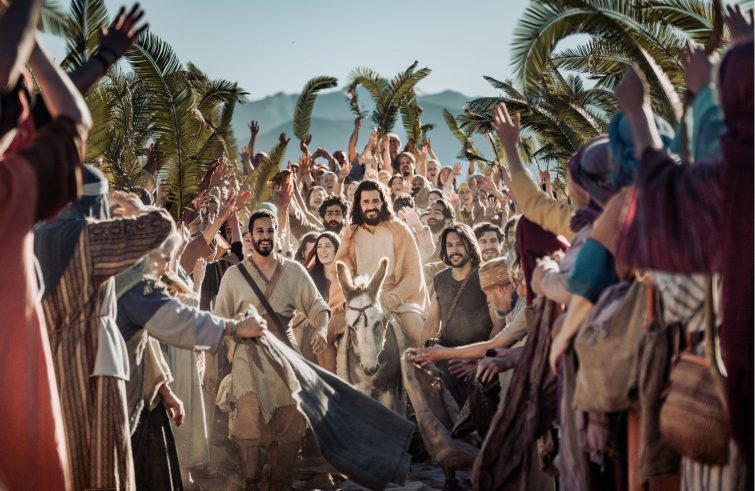
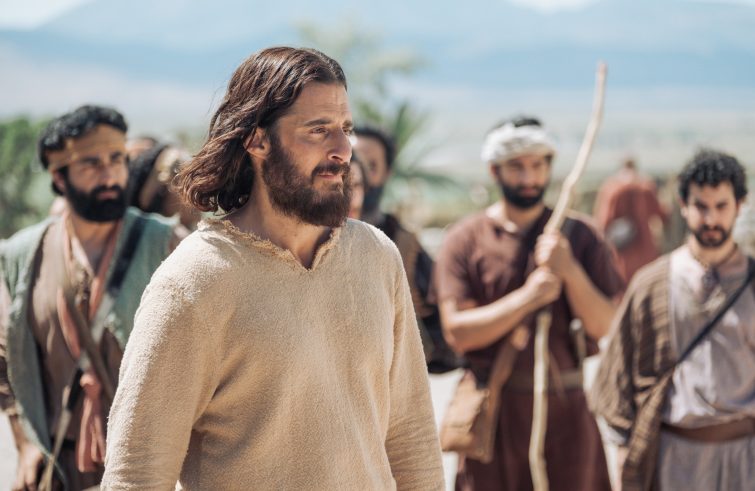
The Chosen is the first multi-season television series dedicated to the life of Jesus. A global success, born from the intuition of American director Dallas Jenkins, it combines Gospel fidelity with narrative depth. Translated into dozens of languages and followed by millions of viewers, the series has become a cultural and spiritual phenomenon. It has surpassed 800 million views in 175 countries and has over 250 million viewers. Translated into 75 languages, it is set to reach 600 subtitle translations and 100 dubbed versions. Jenkins explains how it all began, what it means today to portray Christ on screen, and the responsibility involved in conveying His message through contemporary language.
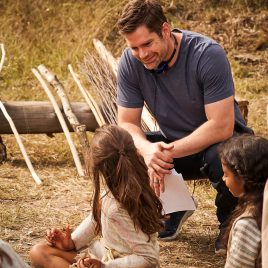
(Foto The Chosen)
The Chosen offers a fresh and engaging portrayal of Jesus’ life, while remaining faithful to the Gospel message. What inspired you to tell the story of the Gospels through a serialized narrative?
There have been movies and miniseries about Jesus, but there’s never been a multi-season show that gives you the time to explore the backstories, relationships, and context that cause you to follow a TV show from episode to episode, season to season. I felt like a TV show would allow me a chance to understand Jesus and his followers and enemies more than a movie, where it goes from Bible verse to Bible verse quickly, without much character development.
Unlike films, which often move quickly from one verse of Scripture to another, a series allows the development of characters and reveals their nuances.
In developing the series, how did you balance biblical accuracy, storytelling demands, and creative freedom?
We don’t change what’s from the Bible, but when we do portray things that aren’t directly from Scripture, our key word is plausible. Could this have happened? Is it historically or culturally possible, and does it accurately reflect the character and intentions of Jesus and the Gospels?
I feel free to pursue artistic imagination, but I never want to contradict the Word of God or the profound truth of Christ’s character.
-
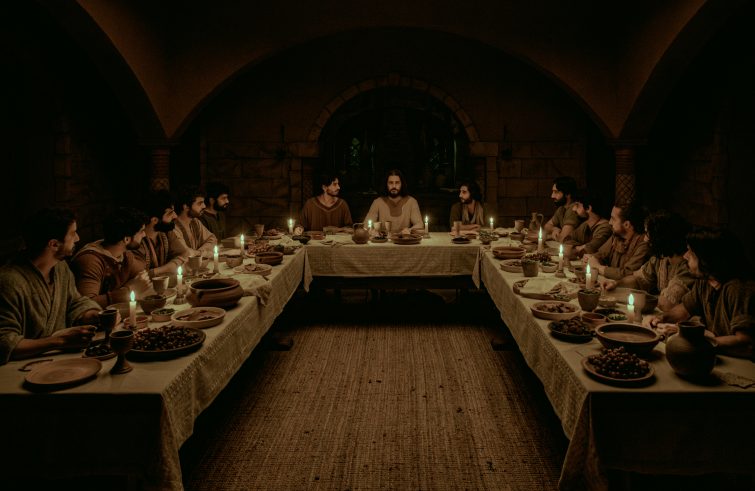
- (Foto The Chosen)
-
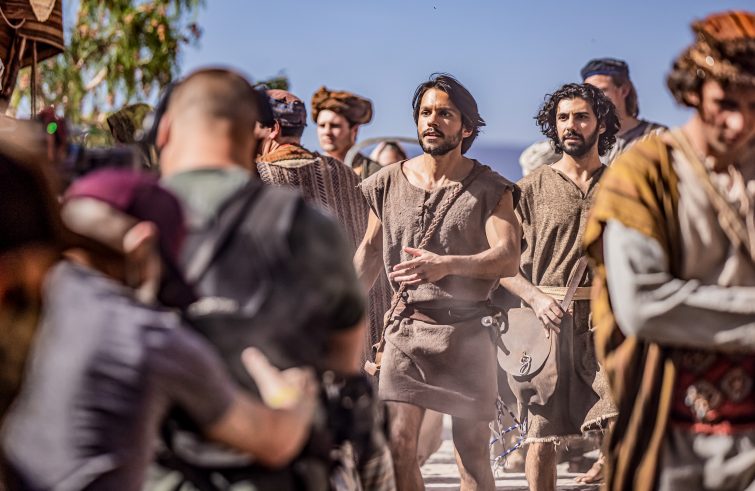
- (Foto The Chosen)
What has been the most difficult—or spiritually intense—moment to direct in the series, and what has it meant to you personally?
It just happened, with the filming of the crucifixion sequences in Matera, Italy. It’s the hardest thing I’ve ever done as a filmmaker. Emotionally, intellectually, and spiritually, I was challenged and exhausted every day because of the remote setting, the language barrier with a new crew, and of course, the content itself. Multiple times I cried out to God asking Him to sustain me. But I believe God would have it no other way for the filming of the crucifixion. You cannot tell the story of the crucifixion without entering, at least in part, into the mystery of suffering.
It was, in a certain sense, a small taste of His offering.
How has the audience reacted around the world, both among Christian viewers and others? Have there been any particular responses that deeply moved you?
The response has been overwhelming. We hear every day from believers who’ve deepened or renewed their faith, and from non-believers who are moved by the show. I’ll always remember hearing from the family in China that didn’t speak English but still loved the show, including their young kids. That was early on, and that really humbled me, because all these words I was proud of writing, this family didn’t understand anyway. Yet the message came through.
(Foto The Chosen)
The Chosen is the first multi-season television series dedicated to the life of Jesus. Created and directed by American filmmaker Dallas Jenkins, the series premiered in 2019 as an independent project, funded through one of the largest crowdfunding campaigns in cinema history. Translated into over 60 languages, it is distributed freely via app, web, and streaming platforms, and has surpassed one billion views. The fourth season is currently underway, with the filming of the Passion scenes taking place in Matera and the Sassi, Italy. The series is praised for its original narrative, psychological depth of characters, and accessible language even for non-believing audiences. The cast met with Pope Leo XIV on Wednesday 25 June, during the general audience in St Peter’s Square.
In your opinion, what role can a production like The Chosen play today in the work of evangelisation and in the dialogue between faith and contemporary culture?
Storytelling engages people on a deep level. We all feel it when we listen to or share a good story; there’s a process of “leaning in” on the part of the listener. Jesus told stories all the time as His primary way to illustrate truth. So we’ve seen a unique response from viewers who tell us they’re understanding many of these stories for the first time.
In recent months, The Chosen has also attracted the attention of mainstream media and a broader audience beyond ecclesial circles. What does this kind of recognition mean to you?
It’s truly moving to see the series becoming part of popular culture. When a project about Jesus captures the attention of the general public, many people are led to engage with stories they might otherwise have dismissed as “Christian stuff”.
The fact that The Chosen is being taken seriously, even beyond ecclesial settings, opens up new spaces for dialogue, proclamation, and witness.