
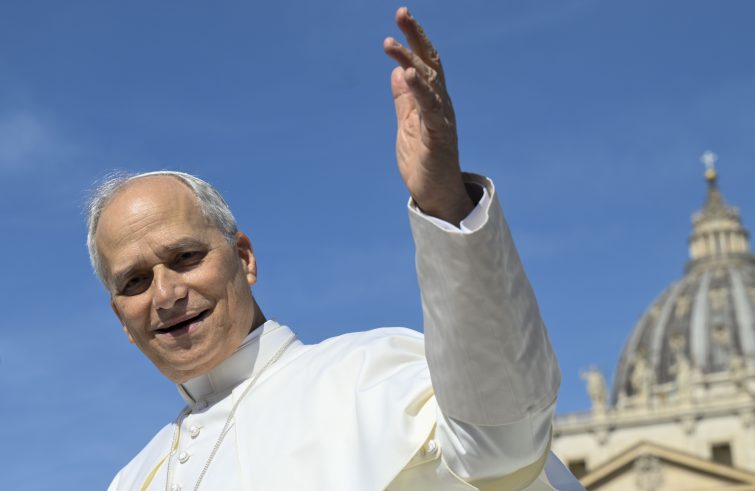
“A measured style, sober gestures, and carefully weighed words. Yet with strong spiritual continuity with Pope Francis.” Mother Ignazia Angelini, Benedictine nun and a respected voice in the renewal of the Church, offers a profound and passionate reflection on the first month of Pope Leo XIV’s pontificate. Despite a period of convalescence, Mother Ignazia firmly shares her reading of a new phase for the Church, marked by evangelical sobriety, fraternal relationships, and shared responsibility.
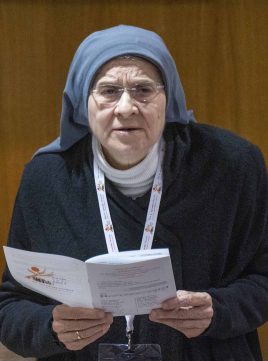
Mother Ignazia, what impression has this first month of the pontificate left you with?
I was struck by the Pope’s style: he is very measured in his gestures and careful in weighing his words. It is a different profile, one that enters respectfully and in continuity with the path already traced. Indeed, I see a deep continuity in the core goals pursued by Pope Francis: unity, peace, and attention to the human person. In the first general audiences, for instance, I recognised typically Augustinian traits in his speeches.
For me, as a Benedictine, Saint Augustine is an essential reference, a teacher also for Saint Benedict.
Augustine influenced the original intuition of monasticism: the Church is this as well. The Pope seems to me very persuasive, but now it will be necessary to observe the concrete choices he makes, starting with the formation of his team.
The name Leo sparked some contrasting reactions. How did you interpret it?
It surprised me. It is a name that evokes strength and power. I immediately thought of Brother Leo, the beloved disciple of Saint Francis, although the Pope has ruled out that interpretation. In Scripture, the “lion of the tribe of Judah” is the lamb: a paradox rich in meaning. However, I believe his primary reference is Leo XIII. I understand the need for such a shift, grounded in determination and a hierarchy of values. Pope Leo had a clear grasp of the challenges of his time.
This is a complex time for the Church. What challenges do you foresee?
Yes, it is a demanding time, involving both internal and external confrontation. For this reason, it will be important to observe the appointments and choices of collaborators. The Church needs deep reforms, as also emerged from the Synod: reforms of the Roman Curia, of canon law. Pope Leo has solid expertise in these areas, so much is expected of him.
Who is Mother Ignazia Angelini
A Benedictine nun and former Abbess of the Monastery of Viboldone (Milan), Mother Ignazia Angelini is a leading figure in the Italian ecclesial landscape. Esteemed for her spiritual depth and cultural engagement, she has been actively involved in the synodal process and collaborates with various academic and pastoral institutions. Her writings and contributions offer a sapiential reading of the Church’s life, in dialogue with monastic tradition and contemporary times.
The theme of community, so dear to monasticism, how central is it to the Church today?
It is a very strong vocational theme. It is Augustinian, but Saint Benedict internalised it, and based on the Augustinian principle of the primacy of charity—which is expressed directly in God’s prevenient love for the weak and the sinner—he developed the final version of his Rule.
What strikes me is that Pope Leo is placing it at the centre: he speaks of the unity of the Church, but also of a communion born of daily relationships and implying social responsibility.
In a catechesis at the general audience he cited the parable of the labourers in the vineyard: a call to value the human person, even in their fragility. This is decisive: without it, we risk falling back into the usual closed circles. I believe the Pope has a clear understanding of God’s gratuitous and prevenient love, which grounds ecclesial communion.
In the governance of the Church, do you see a link between the Augustinian vision of authority and the synodal journey?
Yes. Authority, as emerged from the Synod, is a service to unity. It is not magisterial power in the strict sense, but the capacity to gather, accompany, and safeguard. Pope Leo is embodying this style. He had already shown this during the Synod, also from a theological perspective. I know of some Augustinian communities that had involved him—then Prior General—at critical moments in community life and received decisive help and support in their discernments. I hope he can now extend that style to the whole Church.
Is there an expression or gesture that particularly struck you in this first month?
Yes, a phrase he has often repeated: “With you I am a Christian, for you I am a bishop.” It is a profoundly Augustinian formula, and all the more necessary today.
It is a key expression for understanding the meaning of communion and the exercise of authority.
I find it present in many of his addresses, as in the writings of Augustine. I was also struck by his Marian devotion: he is a sober, almost muscular person, but he has a deep bond with Our Lady. He does not have Franciscan expansiveness, but guards a deep intimacy.
What word would you use to describe the beginning of this pontificate?
Promising. Not so much for announcements, but for concrete signs, for the attention to relationships, for the tone of voice—revealing strong emotions, skilfully measured—with which he has presented himself. In short, a style in which the subject steps back, yet reveals deep involvement and intense attentiveness.