
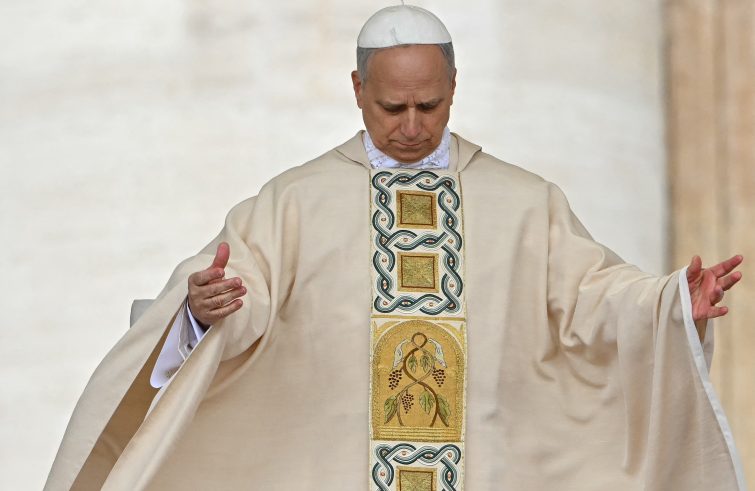
“Pope Leo XIV does not seek visibility. He has chosen a discreet presence.” For Fr Anselm Grün, a Benedictine monk and leading author on contemporary spirituality, the new Pope is pointing the way forward, that is to make room for what is essential. “A low-key approach marks a salutary act, for any authority figure”, he observes. In silence, he says, “we learn to listen to what matters. It is in silence that words that resonate with others truly emerge, today more than ever, in an age inundated with words.”
Leo XIV chose a reserved form of communication from the outset of his pontificate: profound silence, few words and simple yet expressive gestures. Can this be described as a “low-key spirituality”?
Pope Leo chose not to put himself at the forefront. He was simply there. A low-key presence is a virtuous quality for any authority figure. By doing so, he does not put himself at the centre. Instead, in silence, he listens to what is essential. It is in silence that words that resonate with others truly emerge. In today’s world overwhelmed by an avalanche of words, these sober words send an important message.
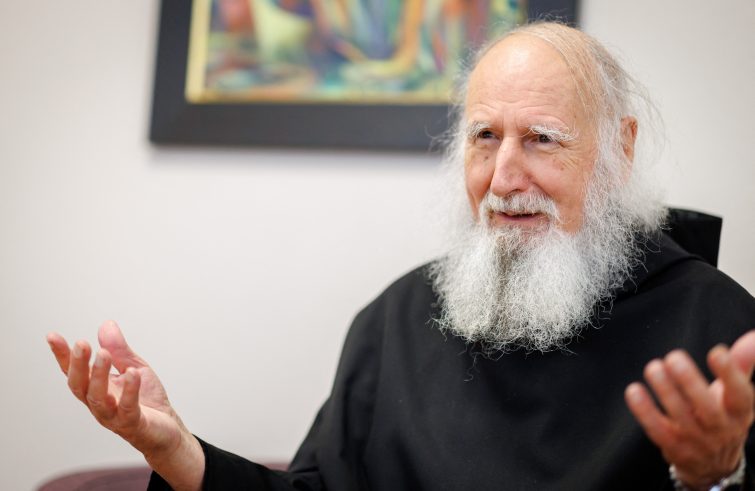
(Foto AFP/SIR)
The name he has chosen had last been used over a century ago. It evokes inner strength, vigilance, continuity, and Church tradition. What is today’s spiritual significance of a name so steeped in history?
The name Leo symbolises courage and clarity. A lion knows what it wants. It is associated with loyalty and nurturing relationships. Therefore, the image of the lion represents:
A Pope with a clear vision of his path who will pursue what he deems right while valuing human relationships.
Reflecting on the past, two popes spring to mind: Leo the Great, a great theologian who bravely confronted Attila the Hun, thereby sending a political message, Then there is Leo XIII, who wrote the first social encyclical. Justice in a globalised world is sure to be one of the new Pope’s concerns.
About: Anselm Grün
Father Anselm Grün was born Wilhelm Grün on 14 January 1945 in Junkershausen. He is a German Benedictine monk who has resided at Münsterschwarzach Abbey in Bavaria since his novitiate. He studied theology at the Sant’Anselmo Institute of Theology in Rome. He specialized in economics after obtaining his doctorate in 1974. From 1977 to 2013, he served as the abbey’s cellarer. He published his first book in 1979. In 1991, he founded the Recollectio-Haus, a centre for spiritual retreat and discernment, together with Wunibald Müller. He still runs this centre today. He was awarded the Federal Cross of Merit in 2007 and the Bavarian Order of Merit in 2011. His profound and insightful style has made him one of the most influential spiritual figures in Europe today.
The word “care” appears frequently in this first month, with references to caring for others, the community and creation. You have written extensively about caring as a spiritual and human path. Do you concur that the Pope’s emphasis on this matter reflects a genuine insight into the realm of spiritual guidance in the contemporary age?
Caring for others, as well as for creation, stems from a love for all living creatures. It is expressed through heartfelt compassion. Compassion for every living being comes first. When I feel compassion for someone, I also strive to care for them in the best possible way. Compassion and concern for others are fundamental attitudes for anyone in a leadership role today. A Pope who embodies these values is a credible role model for all those in positions of responsibility, including in the worlds of politics and economics.
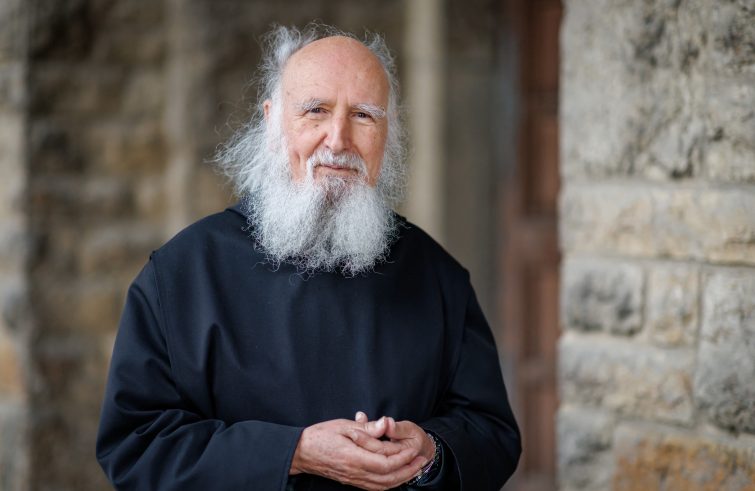
(Foto AFP/SIR)
The new Pope has, from the outset, engaged in everyday gestures of fraternity untainted by rhetoric, such as simple celebrations and lunches with the Augustinians, and showing genuine attention to community life. How important is it for a spiritual leader, in your experience of monastic and pastoral life, to acknowledge and uphold daily life experienced alongside others? Someone in a leadership role should not tower above others or withdraw into an ivory tower. Rather, they should share their daily life with others. Only then are they able to truly understand what people need. A fundamental task of every leader is to build communities.
The Pope, the Supreme Pontiff, is a builder of bridges. In today’s world, it is essential to build bridges between people, between different groups within the Church and within society.
Pope Leo recognised this mission clearly and began to implement it from the outset of his pontificate.
You wrote that true spiritual authority stems from humility and not from a desire to exercise power. Have you seen signs of humility-based spiritual authority in Pope Leo XIV in this first month?
For St Benedict, humility is the fundamental attitude of the cellarer — the person in charge of the monastery’s finances. However, it is also essential for the abbot, who must always be aware of his own weaknesses. Humility preserves us from the need to show off and feel superior to others. It enables us to fulfil our responsibility of serving others.
To serve means rekindling life in others and bringing out what they already had inside.
When authority is exercised in a spirit of humility, it becomes a blessing. However, exercising authority always carries the risk of abusing it to subjugate others and aggrandize oneself. Pope Leo embodies this humility in his exercise of ministry. There ensues that his service will undoubtedly be a blessing for many people and for our common home.