
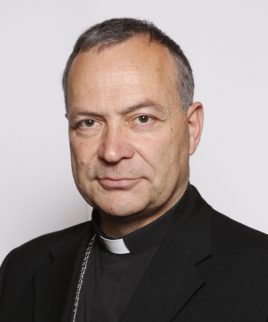
“The Ratio Nationalis is a fundamental guide for priestly formation today. At the same time, the document is an invitation to walk together in creative fidelity to the mission of the Church,” said Msgr. Stefano Manetti, Bishop of Fiesole and President of the Episcopal Commission for the Clergy and Consecrated Life, during the presentation of the Ratio Nationalis for priestly formation in the Churches of Italy.
The Ratio Nationalis places a strong emphasis on the Word of God as the foundation of priestly formation.
The Ratio begins with the Word of God, which is the foundation of formation. As noted in the presentation of the document: “The Word of God is the starting point of priestly formation, reaching the person who is called and asking to be received by him”. When this happens, “the Word begins to work effectively in that person’s whole being” and guides the priest to be configured to Christ, thereby confirming that
discipleship is a lifelong journey.
Discipleship is not only in the seminary, but in every moment of priestly life.
The Ratio divides the process of formation into two distinct stages. How do these two stages unfold?
There are two fundamental paths of formation. The first is the formation of the interior life, a very important period for candidates entering the seminary. In many cases, these young men never had the opportunity to enter into a serious and profound formative relationship: “In the seminary, many candidates for the priesthood have Fathers watching over them, for the first time they find themselves in a strong formative relationship, permeated by trust, and they start to develop self-awareness.”
The formation of interior life begins with meditation on the Word of God, prayer and sharing in the community, under the guidance of the spiritual director. This first phase includes the propaedeutic year and a two-year Discipleship stage that ends with the Admissio.
And the second stage?
The second stage is what we call initiation into the People of God. In this period the candidate is expected to learn to become an integral part of the Christian community, to recognise the charisms inspired by the Lord and to live their ministry with a joyful spirit of communion. It is also a time for the community to become more involved in the candidate’s formation. As emphasised in the narrative phase of the Synodal Journey, there is a need for “a stronger connection between the candidates’ journey of formation and the daily life of the Christian community.”
The Ratio refers to a single, uninterrupted process of discipleship. What does this mean in practice?
Priestly formation is a missionary journey of discipleship divided into two distinct phases: initial formation and ongoing formation. This principle is well expressed in the document, which reads: “Formation is a process that begins in the seminary and continues throughout the entire life of the priest.” The aim is to merge these two continuous phases in order to
accompany the priest not only during his time in the seminary but also during his ministry.
In this way, in the face of the challenges and complexities of our time, ongoing formation provides an indispensable support.
How did the Synodal Journey contribute to the elaboration of the Ratio Nationalis?
The Synodal Journey made an important contribution, especially during the narrative phase. These recommendations were accepted and integrated into the document, thus reinforcing a perspective that had been developed during the discussions with the formators and the bishops in the Assembly. In particular, the value of establishing relationships between candidates and Christian communities was reaffirmed. This synodal approach underlines the fact that the priest must be a relational figure, capable of living and exercising his ministry among the People of God.
The Ratio has been approved ad experimentum. What are the prospects for the future?
Since we are currently in the process of revising the Ordo Studiorum, the Ratio has been approved ad experimentum for three years. However, this document aims to provide clear guidance to help formators and bishops in their ministry. It is a living text which, while preserving the principle of discipleship and communion, is open to future updating as the ecclesial reality may require.