
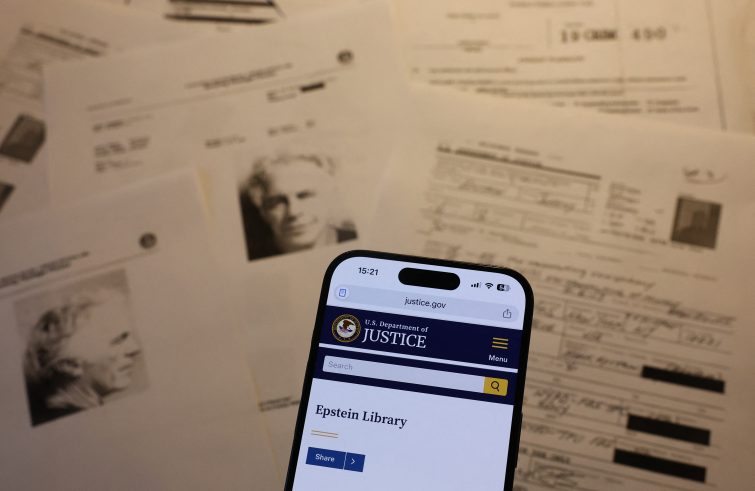
“The case is shocking. It would seem there is no limit to the depths into which human beings can sink, thus becoming ever less humane”. Fr Michele Ferrari, chaplain of the Pontifical Lateran University and the John Paul II Institute, and lecturer in moral theology, comments on the emergence of prominent names from documents linked to the Epstein case: figures with enormous public responsibilities involved in events that raise serious questions about respect for the dignity of the person.
The Epstein files reveal the names of people with significant public responsibilities. Is the separation between public and private life still sustainable?
The separation between private and public life today needs to be rethought.
We live in the age of appearances: every one of our actions is easily and swiftly under the spotlight, and this should encourage greater coherence with what we profess.
But the reason for the need for coherence should come even before all this; it should have deeper roots. As Hannah Arendt wrote in “The Banality of Evil”, evil spreads precisely because it has no roots and knows no limits. Evil prevents the human being from being rooted; it does not contribute to the development of the person, to what he or she should and could become.
Another aspect that has emerged is the loss of a sense of responsibility. Can power become a form of moral anaesthesia?
One aspect that has been lost in our age is the sense of accountability: the burden of feeling that we are responsible for the consequences of our choices and that we must answer for them. It is unfortunately true that power can lead to the temptation to feel above moral norms. It is a specific temptation, we might say, of politicians. There is the risk of forgetting that, as Catherine of Siena said, “we have been entrusted with the city”, so that it may be cared for, not abused or appropriated for oneself.
The Epstein case
Between January and February 2026, the United States Department of Justice made public more than three million pages of judicial documents linked to the Epstein case: emails, flight logs, testimonies, photographs and digital materials gathered during federal investigations launched from 2006 onwards. Part of the files were released in a non-comprehensive form, with heavily redacted sections. The documents contain more than 150 names of individuals with public, political, economic and cultural roles, mentioned in various capacities. Inclusion in the files does not amount to an indictment, but the overall picture highlights a network of relationships built around positions of power which, for years, fostered opacity, investigative delays and shortcomings in the protection of victims.
What safeguards are needed to prevent power from becoming a breeding ground for corruption?
In his essay “Politics as a Vocation”, Max Weber speaks of the need for an ethic of responsibility and an ethic of conviction.
The first safeguard is to live responsibility marked by care and attention for the common good, and to cultivate the capacity to reflect and to analyse reality
In a word: thought. I would also recall that already Plato in “The Republic” stresses the need for certain particular virtues in those who govern, virtues that seem ever more precious today, truly indispensable: wisdom, temperance and courage among them.
When the private life of a leader contradicts the values publicly professed, what kind of responsibility comes into play?
Conscience is the place where a person decides and assumes responsibility for what he or she does. When one chooses what is right, beautiful and true, conscience grows in its capacity to see reality rightly, to understand others, and to act so that one may walk towards the good of all and of each individual. Even before answering to judges outside ourselves, we answer to our conscience, which is made to seek the good.
The Apostle Paul speaks of conscience as the greatest testimony…
In the Second Letter to the Corinthians, Paul affirms that an unblemished conscience constitutes the greatest testimony before others and that this is his boast.
As far as the community is concerned, it is a priority to realise that the current situation must become an appeal to conscience.
Paul VI often dwelt on this point: in his thought, politics is a demanding way of placing oneself at the service of the human person, an eminent form of charity.
How does the social doctrine of the Church read this contradiction between public life and private life?
In the light of the principles of the social doctrine of the Church, it is clear that growth in the virtues, the development of a sense of responsibility and coherence are indispensable elements for perceiving government and politics as an essential and demanding service, capable of placing the development of the person at the centre rather than oneself.
Are there contemporary cultural elements that aggravate this situation?
It cannot go unnoticed that the extensive use of social media, the lack of genuine formation – which does not coincide with the accumulation of information – and communicative violence, including in the political sphere, do not contribute to the integral development of the person and to the common good.
What word can the Church offer in the face of scandals that reveal a crisis of responsibility?
The Church is called to exercise prophecy, by looking, judging and acting in the light of the Gospel and with principles consistent with it. Even today, the Church can rediscover the important contribution it can make by promoting the capacity to think, forming people capable of discerning what is right in a free and authentic way. Subsidiarity also teaches us to draw close to others so that the human person may become freer and more capable of acting for the good. Today more than ever, it is fundamental to devote ourselves to the formation of consciences along these lines.