
“Peace is built through education, identity and freedom”. Nicolò Govoni, writer and human rights activist, is the founder and president of Still I Rise, a humanitarian organisation that provides free, high-quality education to refugee and vulnerable children in Greece, Syria, Kenya, the Democratic Republic of the Congo, Yemen and Colombia. On Friday 6 February, he will be among the bearers of the Olympic flag at the opening ceremony of the Milano-Cortina Winter Games, at the San Siro Stadium.
You have described this role as “the greatest honour” of your life. How did you experience the news, and what does it represent for Still I Rise?
It is certainly a tremendous opportunity for me and for the organisation to bring our message before the world, before almost two billion viewers. The hope is to be able to draw attention to the issues that are closest to our hearts: the schooling crisis and children’s rights. And what better occasion than this one, in which I carry the Olympic flag that recalls peace?
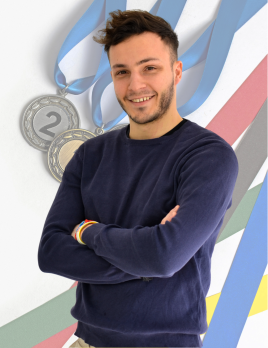
(Foto Still I Rise)
The word “peace” today risks appearing abstract. In what sense is education a concrete path to building it?
Education is a fundamental aspect of peace. Peace is built only through education, identity and freedom. When we speak about peace, it is almost taken for granted that to create it one simply needs to stop fighting. But that is not the case: people fight for a reason, which we may consider valid or not.
If we analyse the conflicts that scar the world today, we see that it is often a matter of identity: there are peoples who fight because they believe they have a right to a land, to a culture, to a religion, to resources.
For me, peace is built on awareness, on people who must be able to determine their own future. And in order to do so, they must have knowledge of who they are.
Still I Rise also works in the Democratic Republic of the Congo, marked by a protracted war. What reading do these contexts offer today of the conflicts under way in the world?
The main factor for me is always the same: the possibility for certain peoples to determine their own future. We see this a bit everywhere: in Iran, in Palestine, perhaps even in Venezuela. It is always a question of external interference that prevents a people from determining its own future, and so that people takes up arms. In the Congo, there are foreign powers that interfere very prominently on the ground, creating major dysfunctions. This does not mean that those who actually take up arms are exempt from responsibility. But it is undeniable that, when these peoples are not left in peace, they will continue to seek to assert their rights over resources and land.
The organisation’s work takes place far from the spotlight, in refugee camps and schools. How do you hold this dimension together with the global visibility of the Olympics?
Everything has to be useful and instrumental to the cause. I see this opportunity as an additional piece in relation to the objective we are trying to pursue: for me, nothing is an end in itself.
It is certainly a great honour, but it is not the opportunity in itself that is noteworthy; it is how we will then be able to use it to achieve the objectives of Still I Rise.
We work in contexts that are little known or, in any case, of little interest to most people. Every opportunity — and this one more than any other so far — will serve as a megaphone for us, amplifying these causes.
Can education be considered a political act?
Absolutely yes. Education is a weapon. An educated people is a people less inclined to be controlled and manipulated. Educating people is a subversive act, especially in certain contexts where governments and para-governmental powers exist only because the people are not equipped.
Educating is a political act, but not a partisan one: when we speak of politics, unfortunately, we always speak of factions and alignments.
There is no alignment for us: the only front is the human being.
Is your presence as a flagbearer also a message for young people?
I feel a great responsibility. I want to be able to embody Italy; I want to be able to offer tangible proof of a dream that can be achieved. I would like my presence not to be an end in itself for me and for Still I Rise, but to show many young people that pursuing a dream is worthwhile and can also lead to very concrete results. I hope this can be an inspiration. If even just one of them understands that caring for others is a possible responsibility, then that gesture will truly be meaningful.